

How to Make Homemade Chicken Stock
jump toRECIPE
Homemade chicken stock is a foundational kitchen staple that turns ordinary dishes into rich, deeply flavored meals. Whether you’re simmering soups, braising vegetables, or building sauces, this nutrient-packed stock adds savory depth and body that store-bought just can’t match. By using simple ingredients like chicken bones, vegetables, herbs, and aromatics, you’ll end up with a clear, golden stock that’s infinitely better than any store-bought version.
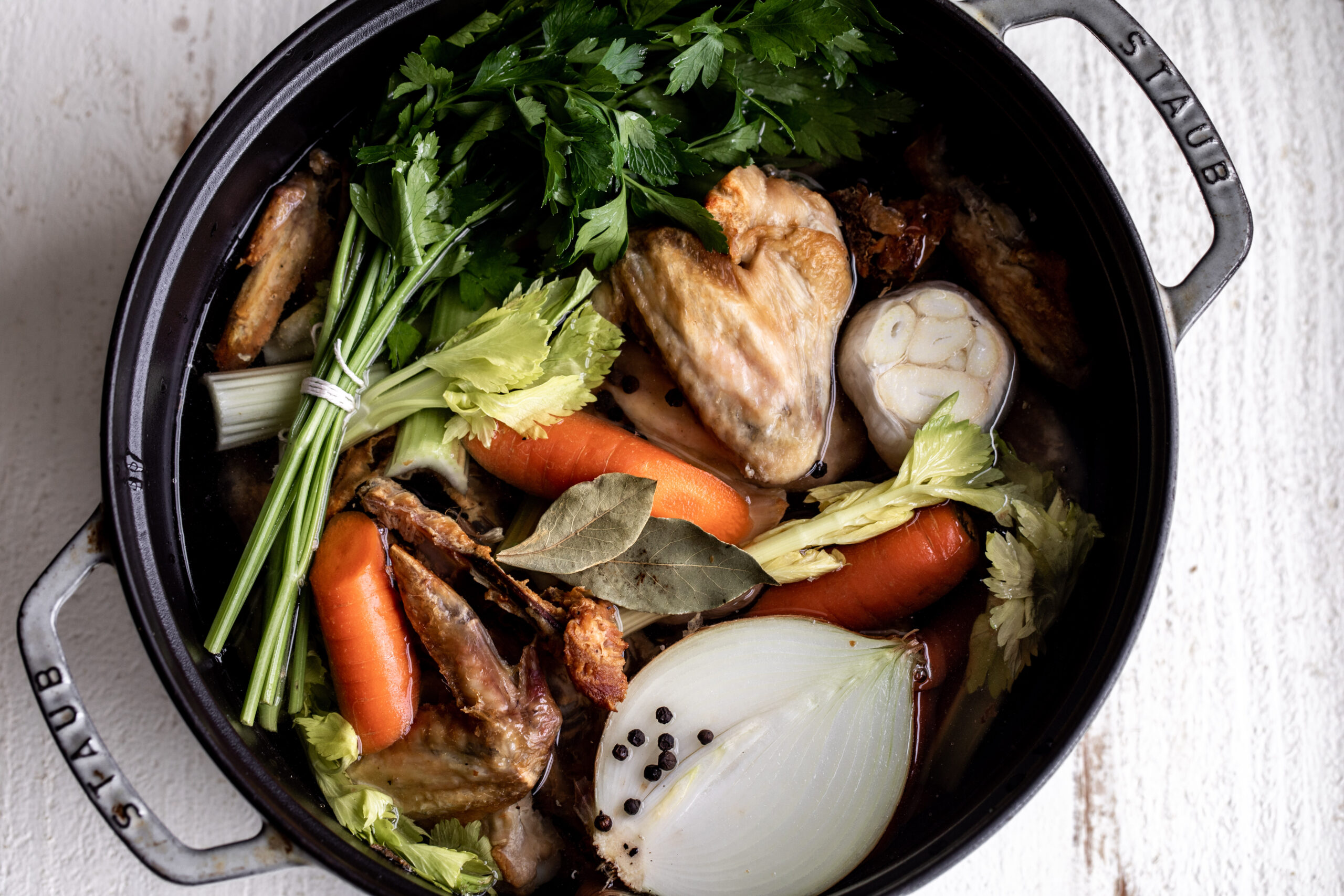
The building blocks for a good stock are simple: chicken bones + vegetables + aromatics + water in a large pot. While you can make it using other appliances like an Instant Pot or slow cooker, I prefer the old-fashioned method, simmering it in a big pot on the stove. Since you first have to roast a chicken for the bones, try this recipe for my roasted chicken or this dry-brined roast herb chicken that stores well for leftovers.
Why You’ll Love This Recipe
- Versatile – Use it in soups, stews, sauces, and grain dishes.
- Flavorful – Slow simmering extracts rich, savory depth from simple ingredients.
- Cost-effective – Make use of leftover chicken bones and veggie scraps.
What’s the Difference Between Broth and Stock?
Chicken stock is typically made from chicken bones as well as aromatics and vegetables, while broth is made with the meat (think a chicken soup). Chicken stock has a much richer, more robust flavor that comes from the collagen released from the simmering bones. On the other hand, chicken broth is much more mellow in flavor. I typically use chicken stock when cooking as it can be used for any recipe that calls for broth.
Why You Should Roast the Bones
While the bones can be added raw, roasting the bones and vegetables adds a more robust flavor and helps to remove impurities. Roasting the bones until they are browned caramelizes them and any leftover meat. It also helps to draw out any collagen from the bones and makes for a beautiful golden stock with deep flavor.
Key Ingredients in Homemade Chicken Stock
- Chicken – This chicken stock recipe is extremely flexible and can be made with any cut of chicken from the wings or backbones or whole chicken carcass. Save the bones from meals (simply freeze them in a bag), use scraps from the leftover chicken carcass from roasted or rotisserie chickens. Chicken feet are full of collagen and add great flavor. They can be purchased from the meat counter at grocery stores. While you don’t have to roast the bones, I recommend it.
- Vegetables – While just chicken bones and water can be used, any combination of roughly chopped vegetables can be added to develop the deep flavors in stock. The most common basic combination is mirepoix – a combination of onion, carrots and celery. Anise-flavored fennel, earthy mushrooms or slices of sharp ginger can also be added. Roast them or add them roughly chopped. Don’t add too many vegetables – the chicken flavor should still be the star.
- Garlic – Slice the top ¼” off a head of garlic and simply add to the pot. The paper can be left on the garlic since it will be strained out later.
- Seasoning – It’s best to add whole spices to broth so they can be strained out later while the flavor remains. I add whole peppercorns as well as fresh herbs, typically a few bay leaves, to the stock. I wait to season the stock with salt until it is ready to use – the stock can easily be added to a variety of recipes and then seasoned as needed.
- Water – For each pound of chicken you use, plan to use one quart of water. This is a general rule of course – the longer you simmer the stock the more water you may need to add.
A full ingredient list with exact amounts can be found in the recipe card below.
Pro Tip
Don’t rush the simmer — gentle, slow simmering draws out maximum flavor and yields a clearer stock without cloudy bits.
Swaps and Substitutions
- Chicken Bones: Use leftover turkey bones or a mix of chicken + turkey. Duck bones will also work but will result in a richer stock.
- Vegetables: Add leeks or parsnips in place of carrots for variation. You can also roast the vegetables for a deeper vegetable flavor. You can add aromatics like ginger or turmeric.
- Herbs: Swap parsley with cilantro stems for a different herbaceous note.
- Salt: Omit salt during stock cooking if you want full control later.
- Water: For richer flavor, replace part of the water with white wine.
Special Equipment
Using a high-sided stock pot or heavy-bottomed pot or Dutch oven helps distribute heat evenly and maintain a gentle, steady simmer, which prevents scorching and produces a clearer, more flavorful chicken stock.
How to Make Homemade Chicken Stock (Step by Step)
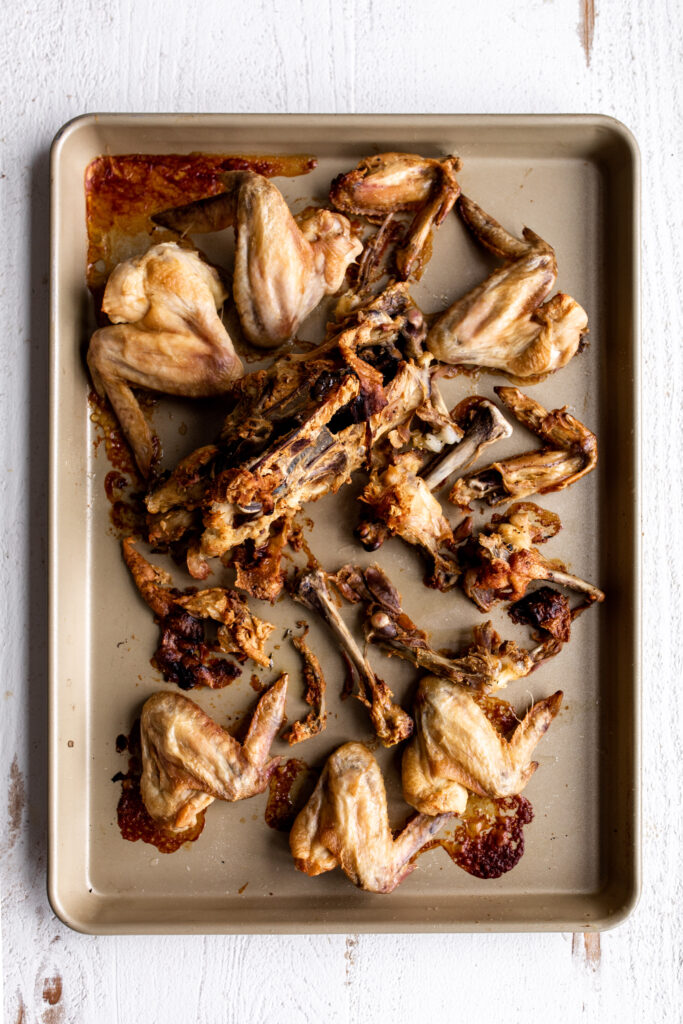
Preheat the oven to 400ºF (200ºC). Arrange the chicken bones in an even single layer on a baking sheet. Roast the bones until browned, about 1 hour.
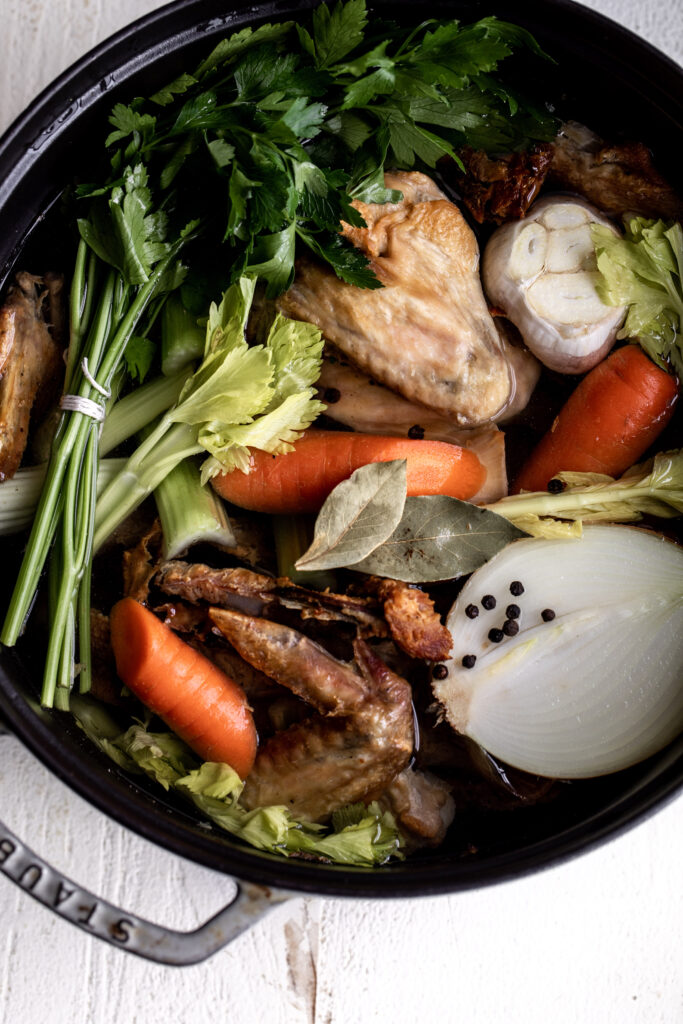
Add the bones to a large stock pot or large Dutch oven. Add the onion, celery, carrot and garlic. Cover with water (about 4 quarts / 3.8L of water) and add the parsley, bay leaves and peppercorns.
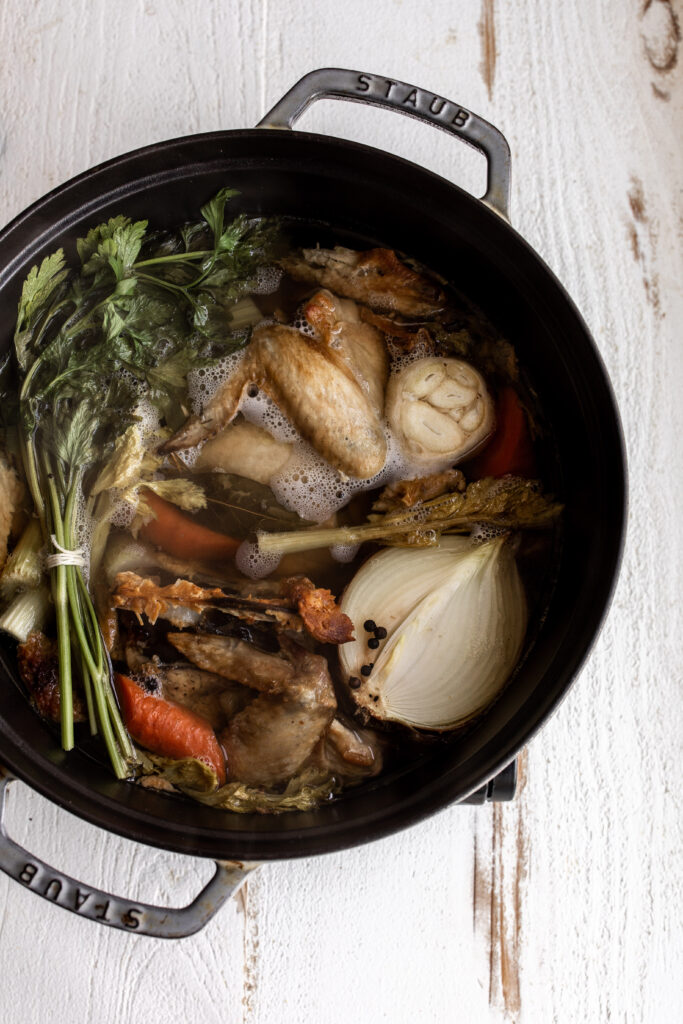
Bring to a boil over medium heat then lower the temperature and simmer, using a spoon to skim off any scum that rises to the surface and discard it.
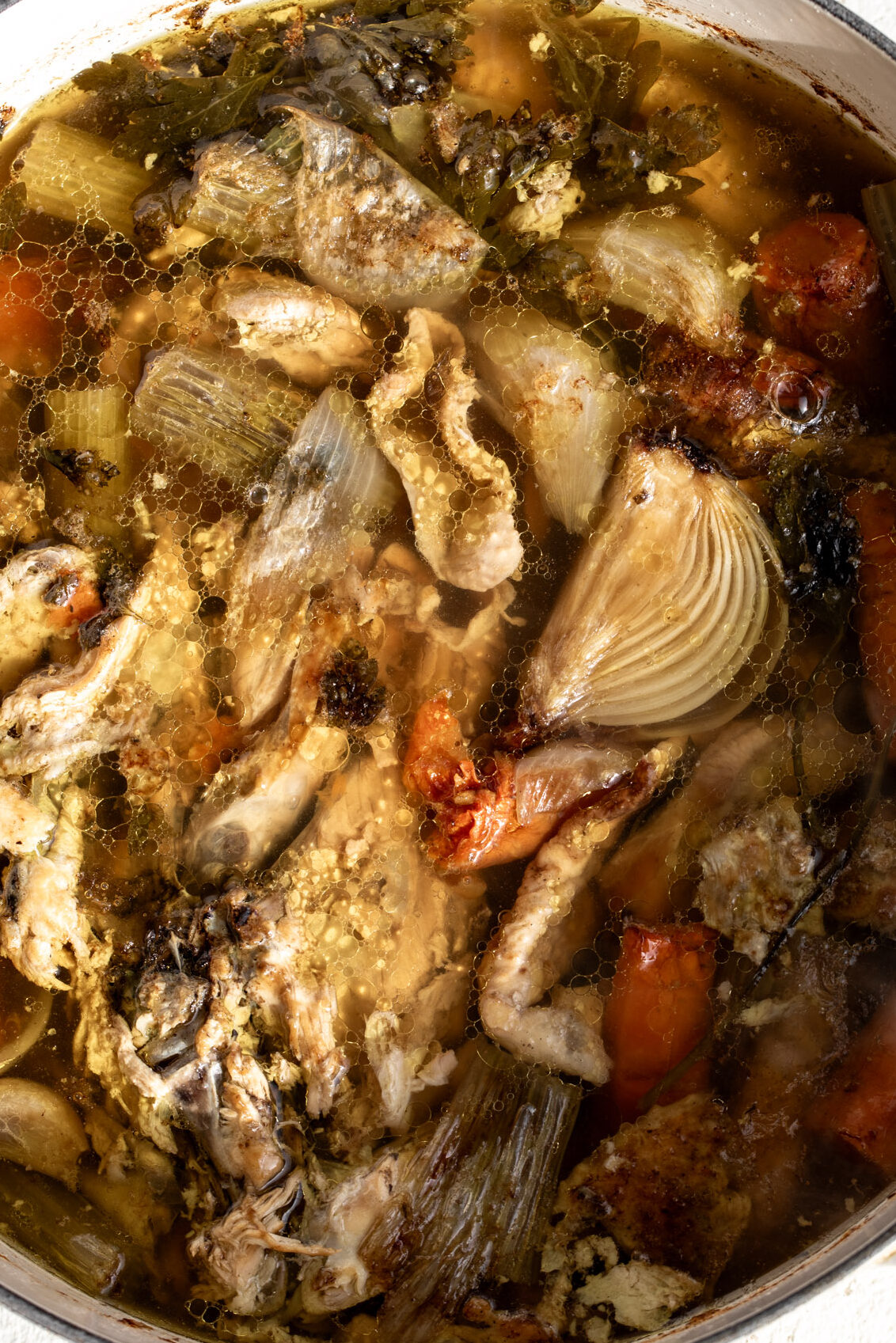
Continue to keep at a gentle simmer (just a few small bubbles) for about 6 hours, until reduced by about half. Add additional cold water as needed, continuing to skim impurities.

Once the stock is done, remove from heat and let cool. Use tongs to remove any large bones, then strain the stock through a fine mesh strainer into a large bowl, discarding any solids.
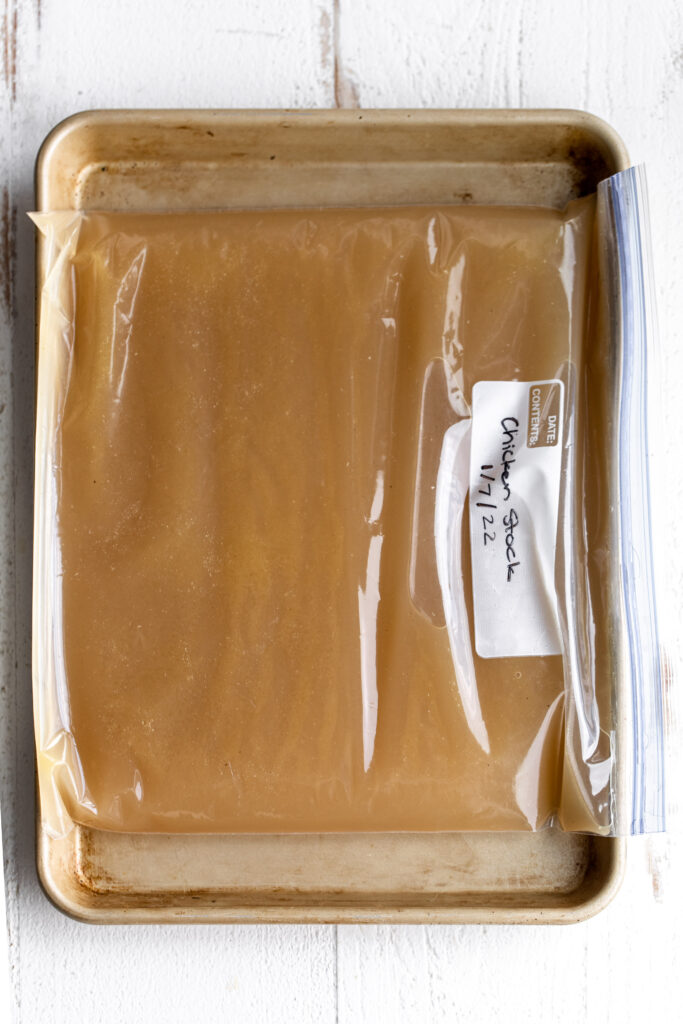
Let cool for about an hour then transfer the broth to storage containers or resealable plastic bags and refrigerate or freeze until ready to use.
Homemade Chicken Stock Nutrition Facts
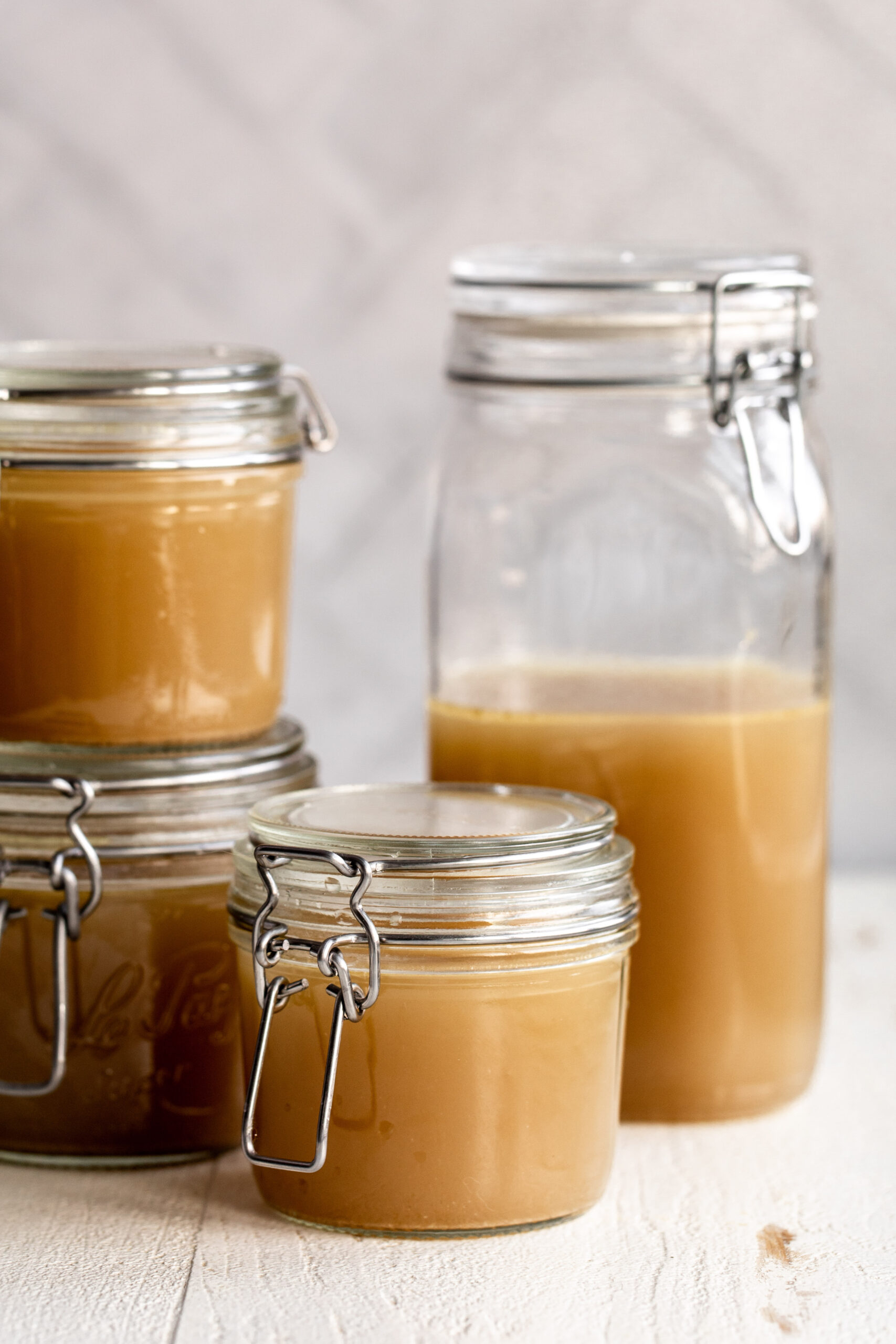
The gelatin and collagen from the bones which are released through the slow cooking process are thought to have health benefits. You will notice a jelly-like consistency on the top of the stock — that is the collagen. That’s the reason people recommend chicken soup when you’re sick! Plus it’s easy on the stomach and gut. When the stock chills, fat will rise to the top. It can be removed with a spoon and discarded – though remember, fat equals flavor!
How to Use Homemade Chicken Stock
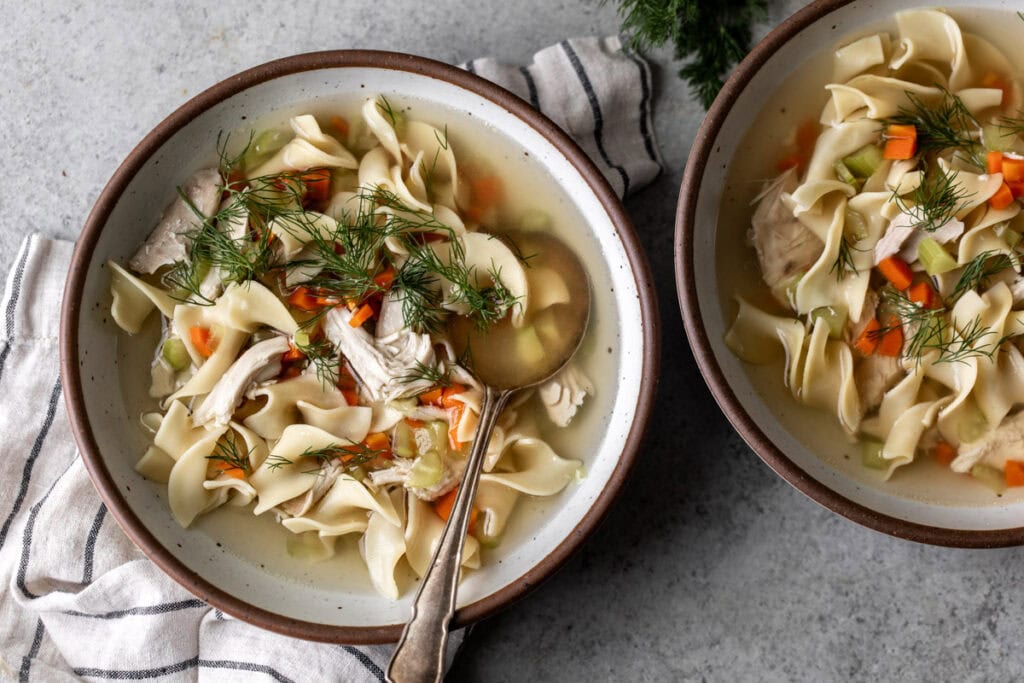
- Soup base: Use as the liquid for chicken noodle or vegetable soups.
- Grains: Cook rice, quinoa, or farro in chicken stock instead of water.
- Sauces: Use as a base for pan sauces or gravies for extra depth of flavor.
How to Store Homemade Chicken Stock
- Refrigerator: Store in an airtight container for up to 4 days.
- Freezer: Freeze in containers, resealable bags to save space, or in ice cube trays for up to 3 months.
- Reheating: Warm on the stove until steaming; skim fat if desired before use.
- Thawing Frozen Chicken Stock: Let the frozen stock sit at room temperature for about 15 minutes, then break it into pieces and heat in a saucepan. For faster thawing, submerge the sealed bag in hot water or run it under warm tap water, then warm on the stovetop or in the microwave as needed.
Pro tip
Freeze chicken stock in a few cup portions in freezer-safe plastic bags. Add them to a baking sheet and feeeze so they freeze flat! This makes it easy to stack them in the freezer.
FAQ – Frequently Asked Questions
Yes, it’s ideal to make ahead and freeze in batches so you always have flavorful stock ready.
Stock uses bones for body and collagen; broth uses meat and results in a lighter flavor.
Simmer gently for 4–8 hours for maximum flavor; longer will deepen flavor further.
Yes. Slow cooker for long, hands-off simmering; Instant Pot for faster pressure-cooked stock.
Refrigerate and then skim the solidified fat off the top before use.
Recipes to Try Using Homemade Chicken Stock
Loved making your own chicken stock from scratch? Try one (or all!) of the following recipes using your latest kitchen creation:
- Chicken and Dumpling Soup
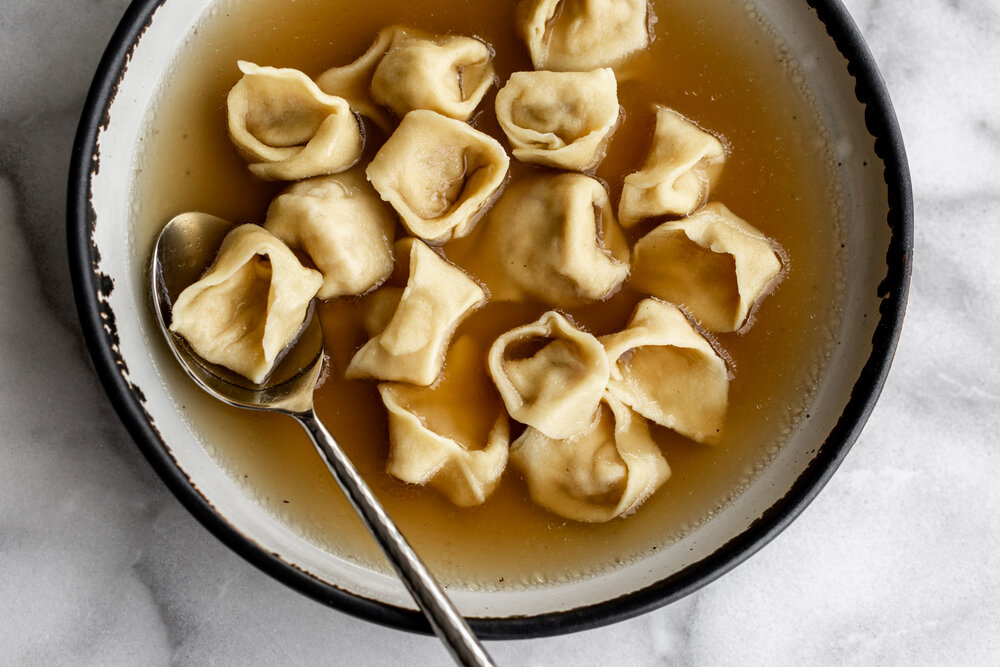
- Tortellini en Brodo
- Mixed Mushroom Risotto
- Garlic Crab Fried Rice
- Broccoli Cheddar Risotto
- Roast chicken with Braised Kale and White Beans
- Braised Lemongrass Chicken Thighs
- Roast Chicken and Gnocchi “Dumplings”
- Chicken and Andouille Sausage Gumbo
Thanks for cooking with me! If you made this recipe, leave a 🌟 rating and share your thoughts or tips below. I’d love to hear from you!
How To Make Homemade Chicken Stock
Rate this Recipe
Equipment:
Ingredients:
- 3 to 4 pounds chicken bones (any combination of bones, especially wings and backbones)
- ½ medium yellow onion, skin on
- 2 celery stalks, roughly chopped
- 1 large carrot, roughly chopped
- 1 head garlic, top ¼” trimmed
- 5 sprigs flat-leaf parsley
- 2 bay leaves
- 1 teaspoon whole black peppercorns
Instructions:
- Preheat the oven to 400ºF (200ºC). Arrange the chicken bones in an even single layer on a baking sheet. Roast the bones until browned, about 1 hour.
- Add the bones to a large stock pot or large Dutch oven. Add the onion, celery, carrot and garlic. Cover with cool water (about 4 quarts / 3.8L of water) and add the parsley, bay leaves and peppercorns.
- Bring to a boil over medium heat then lower the temperature and simmer, using a spoon to skim off any scum that rises to the surface and discard it.
- Continue to keep at a gentle simmer (just a few small bubbles) for about 6 hours, until reduced by about half. Add additional cold water as needed, continuing to skim impurities.
- Once the stock is done, remove from heat and let cool. Use tongs to remove any large bones, then strain the stock through a fine mesh strainer into a large bowl, discarding any solids.
- Let cool for about an hour then transfer the broth to storage containers or resealable plastic bags and refrigerate or freeze until ready to use.
Watch this Recipe
Notes:
- Don’t rush the simmer — gentle, slow simmering draws out maximum flavor and yields a clearer stock without cloudy bits.
- Chop the vegetables in the stock in large pieces — small pieces can disintegrate into the stock.
- Don’t press down on the vegetables when straining, it can cause the broth to become cloudy.
- Adding cold water helps to bring impurities to the surface.
Nutrition:
TAG ME ON INSTAGRAM TO BE FEATURED ON MY STORIES! @cookingwithcocktailrings
Updated for clarification 10.8.26.
This was so easy it is almost embarrassing that I haven’t done it before. I love knowing where our food is coming from.