

Creamy Gochujang Noodles
jump toRECIPE
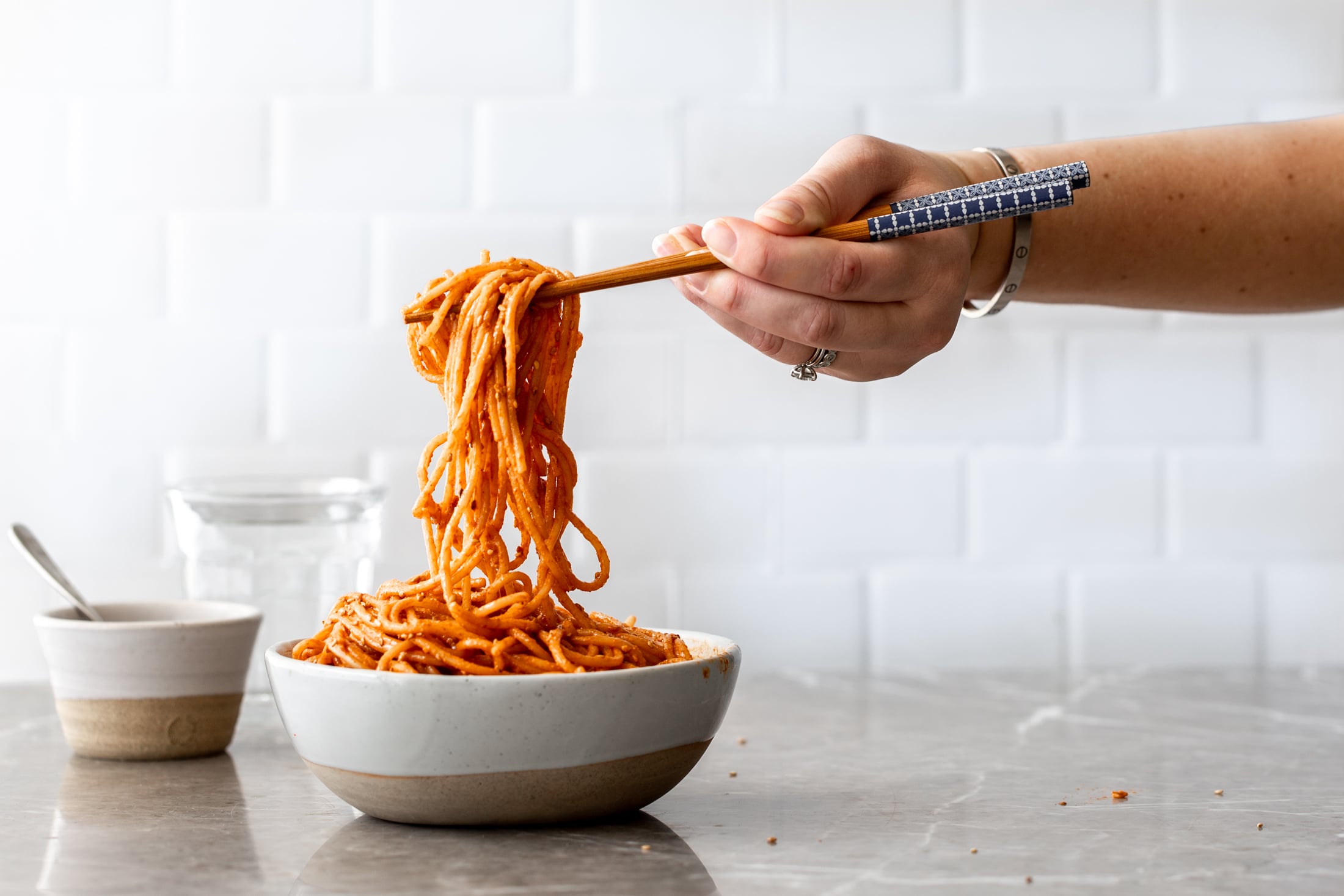
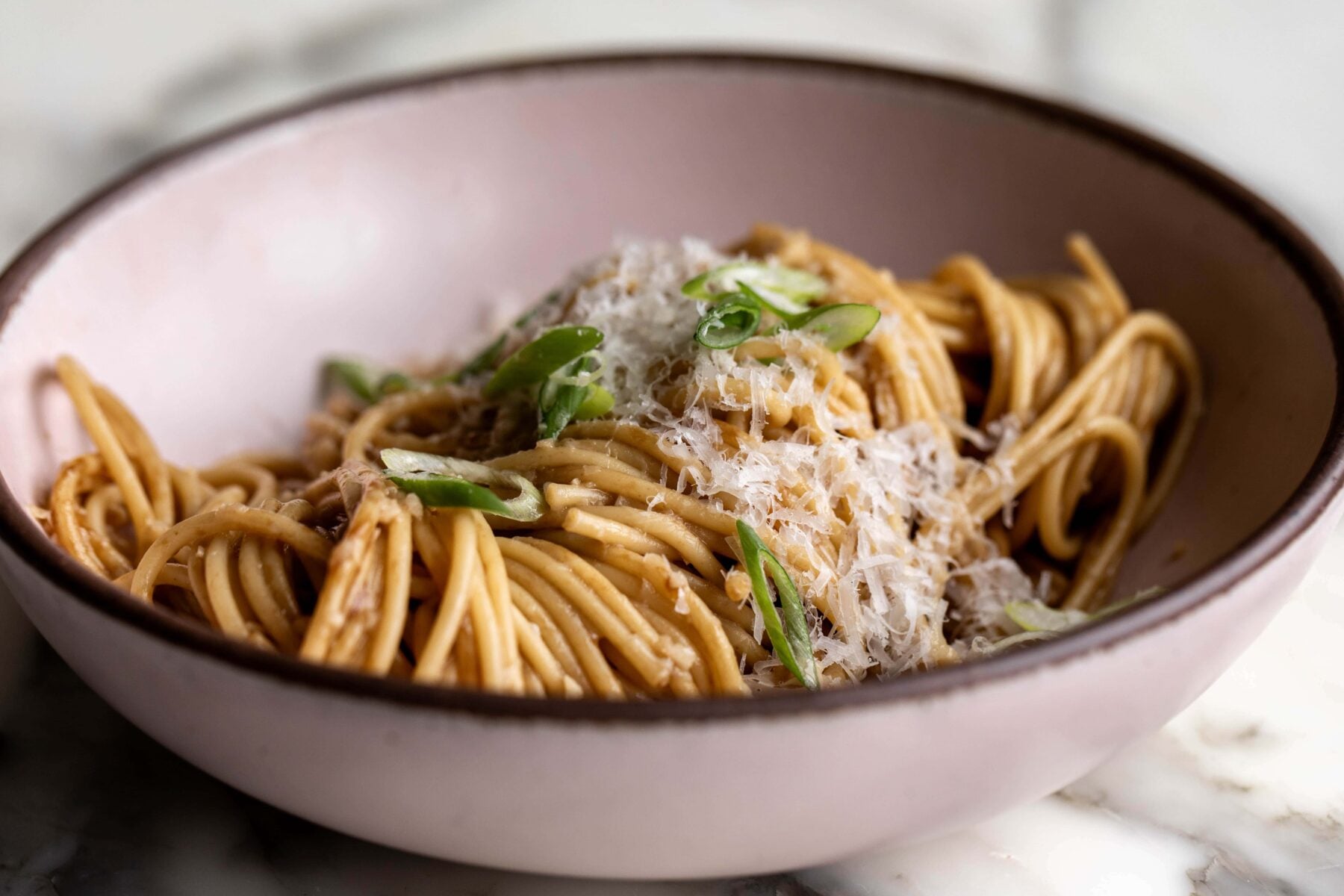
I recently went to a pop-up dinner in a warehouse in Venice (it was as trendy as it sounds), and one dish completely stole the show: creamy gochujang noodles with tender strips of squid. The moment I tasted that rich, spicy, and slightly sweet sauce, I knew I had to recreate it at home. This is my simplified, weeknight-friendly take; no fancy ingredients or techniques required without skimping on the bold flavor.
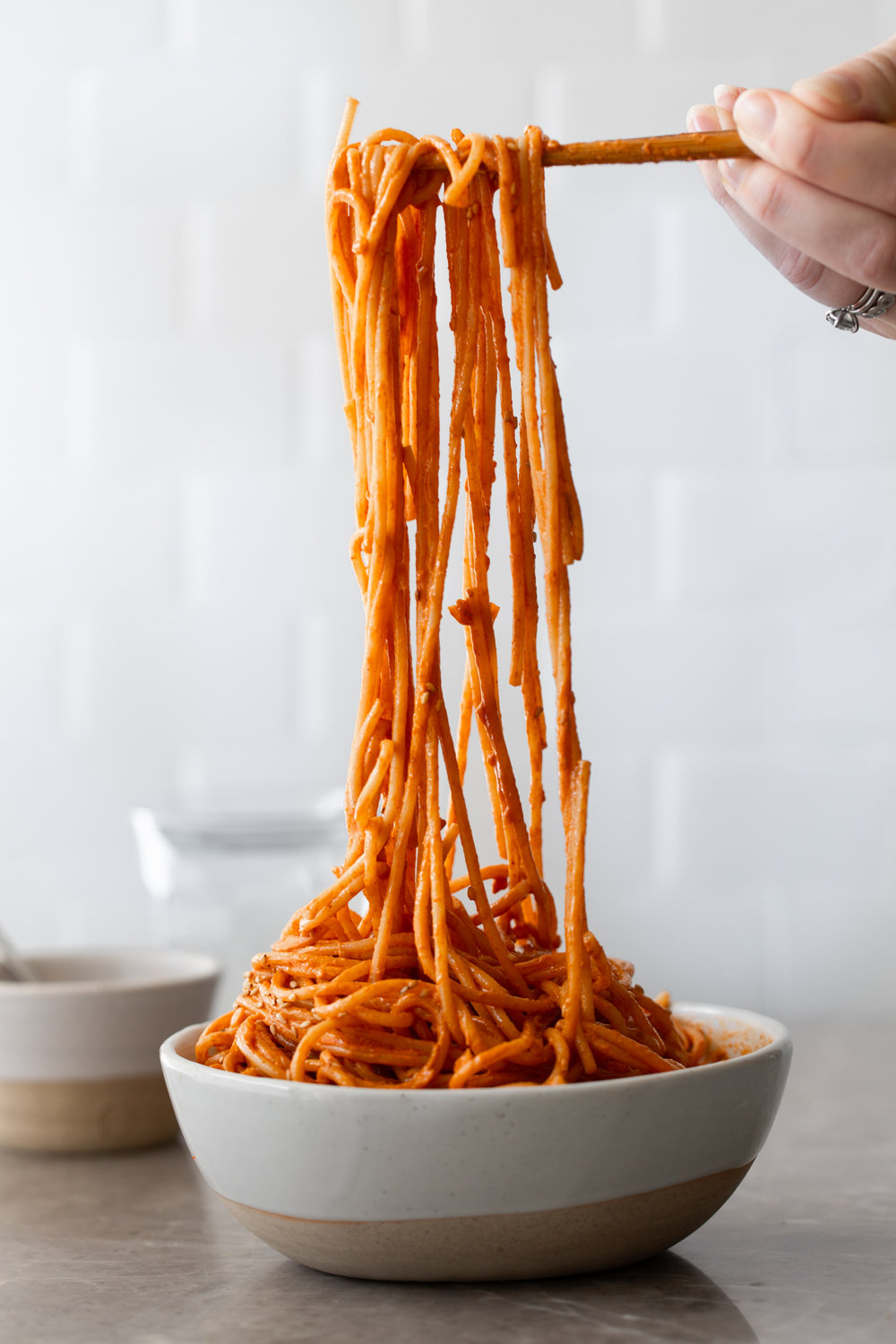
This gochujang pasta is creamy, spicy, tangy, and just a little sweet – everything you want in a comforting bowl of noodles. Plus, it comes together in under 30 minutes, making it perfect for a quick dinner that still feels a little special. Even better? It’s a budget-friendly pasta recipe that’s big on flavor. Check out more of my favorite cheap eats on a buget for more inexpensive dinner ideas!
Why you’ll love this recipe
- Comfort food with a twist. You will love this comforting Italian-Korean fusion pasta dish.
- Inexpensive! Plus most of these ingredients are under $1.00 so it makes for a cheap meal that can feed multiple people.
- Versatile. Add a protein like shrimp, chicken or ground pork (though a lean meat like ground turkey also works) to these gochujang noodles for a more complete meal. You can also add greens like sautéed spinach or kale.
What is gochujang?
If you aren’t familiar with gochujang paste, it’s a Korean fermented red pepper paste that adds some sweet and savory heat to any dish. In this recipe it’s whisked together with a base of shallots, garlic, tomato paste and cream for a non-traditional but delicious and easy noodle dish.
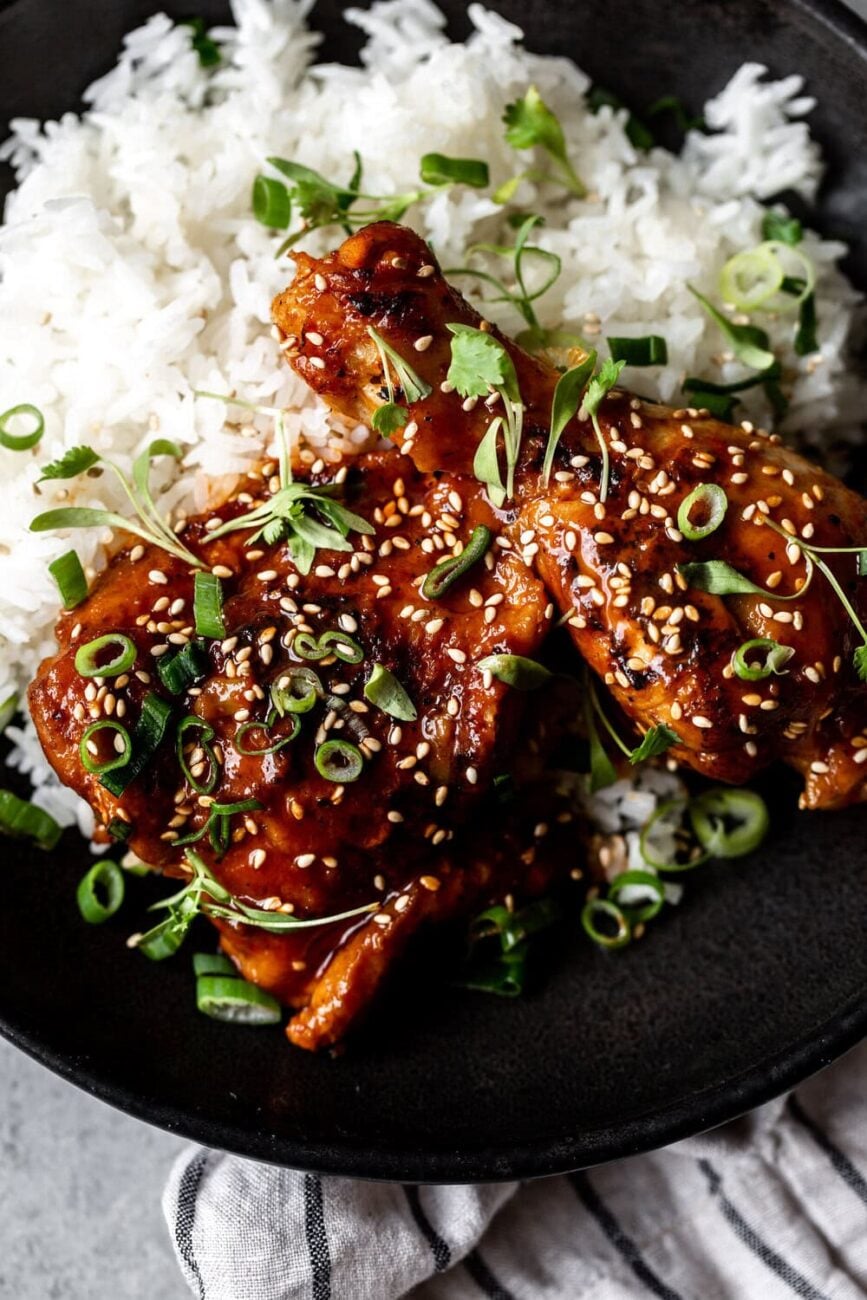
The Korean cooking staple can be found in the Asian section of most grocery stores these days. I like to keep my fridge stocked with gochujang so this recipe requires little to no shopping or foresight. For other recipes using gochujang I’d recommend these braised garlic gochujang chicken legs, sweet chili wings or crispy pork belly with a cashew gochujang sauce.
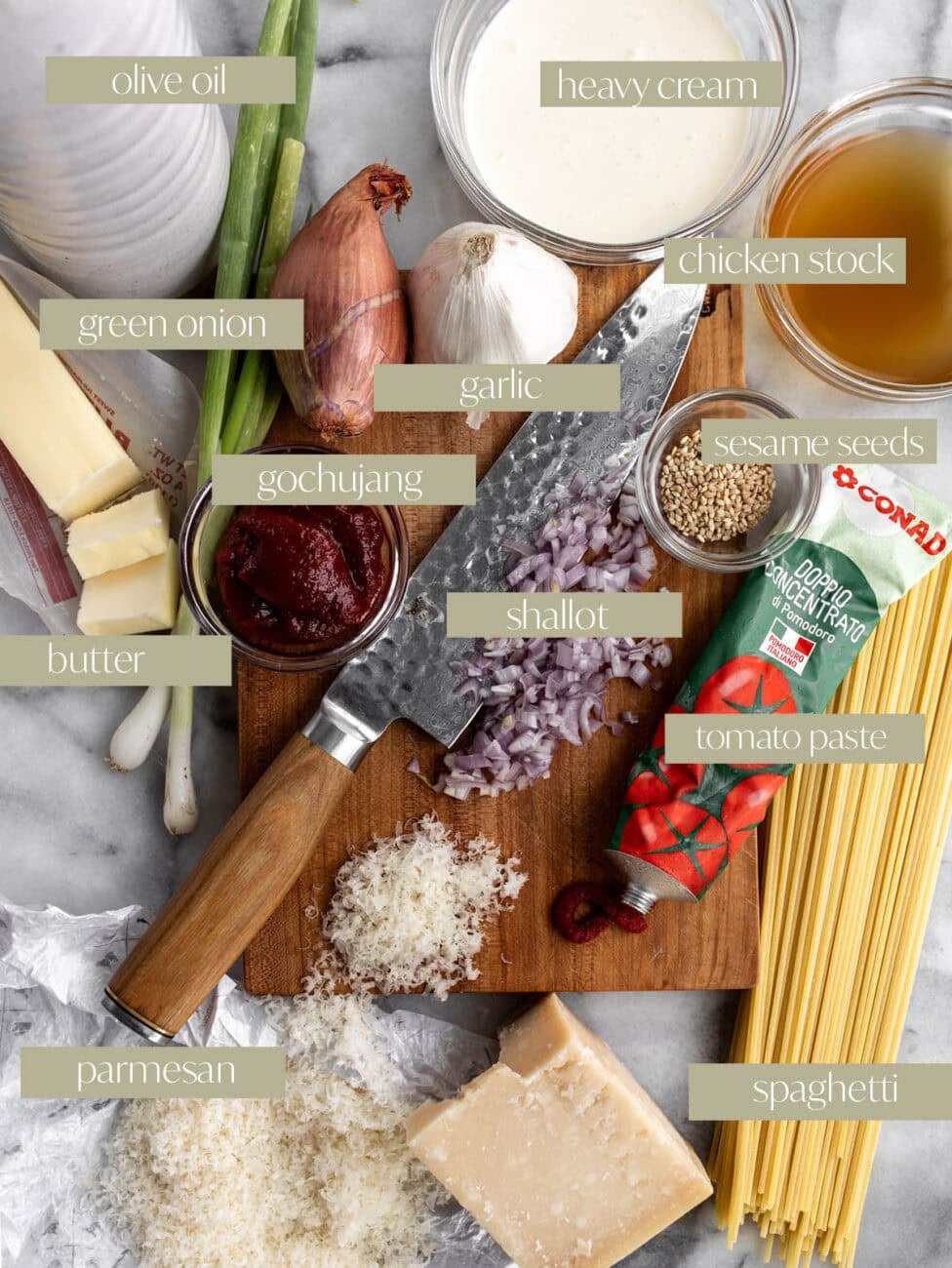
Key Ingredients in Creamy Gochujang Noodles
- Gochujang – This Korean fermented chili paste adds umami flavor and some spice to these noodles.
- Shallots – Shallots add a mild, slightly sweet flavor to this recipe and are finely chopped so the sauce is still fairly smooth. Finely chopped yellow onion can be substituted instead if needed.
- Garlic – As the garlic is sautéed the flavor mellows so it’s not very pungent. I always recommend using fresh peeled cloves rather than the pre-minced jars.
- Tomato Paste – Tomato paste is concentrated tomatoes that have been cooked down until it becomes a thick, dense paste.
- Heavy Cream – I add heavy cream, the thick part of the milk that rises to the top due to its high fat content to the pasta sauce to create a rich, creamy sauce. Adding some of the pasta cooking water makes the sauce glossy and even creamier.
- Parmesan – I always recommend freshly grating cheeses, especially when they will be used in sauces. Many pre-grated cheeses include preservatives to keep them from clumping in the bag. Freshly grated Parmesan will create a more smooth sauce.
- Spaghetti – While I use standard dried spaghetti in this recipe you can easily swap in your favorite dried pasta of choice or even ramen noodles.
A full ingredient list with exact amounts can be found in the recipe card below.
Swaps and substitutions
- Add a protein like shrimp, chicken or ground pork (though a lean meat like ground turkey also works) to these gochujang noodles for a more complete meal. Simply sauté in a skillet over medium-high heat and add over the noodles.
- Add greens like sautéed spinach or kale with the noodles.
- Veggies like sautéed mushrooms or broccoli also make a great addition.
- The spaghetti can be swapped for another favorite pasta shape or ramen noodles.
Steps to Make Creamy Gochujang Noodles
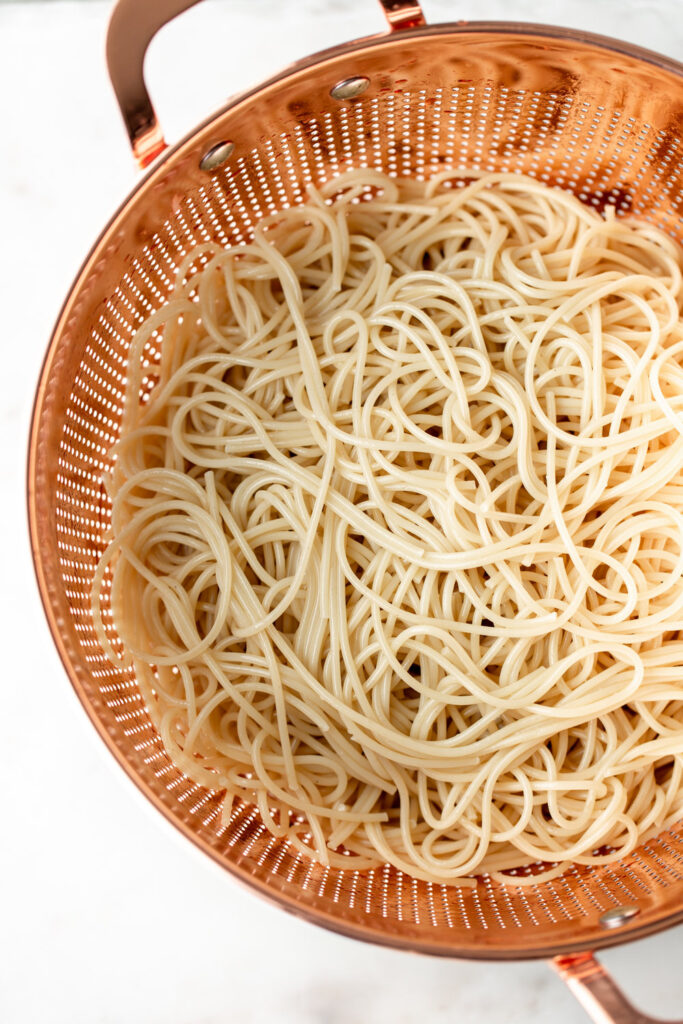
Cook the pasta, reserving some of the cooking water. Then drain and set the noodles aside.
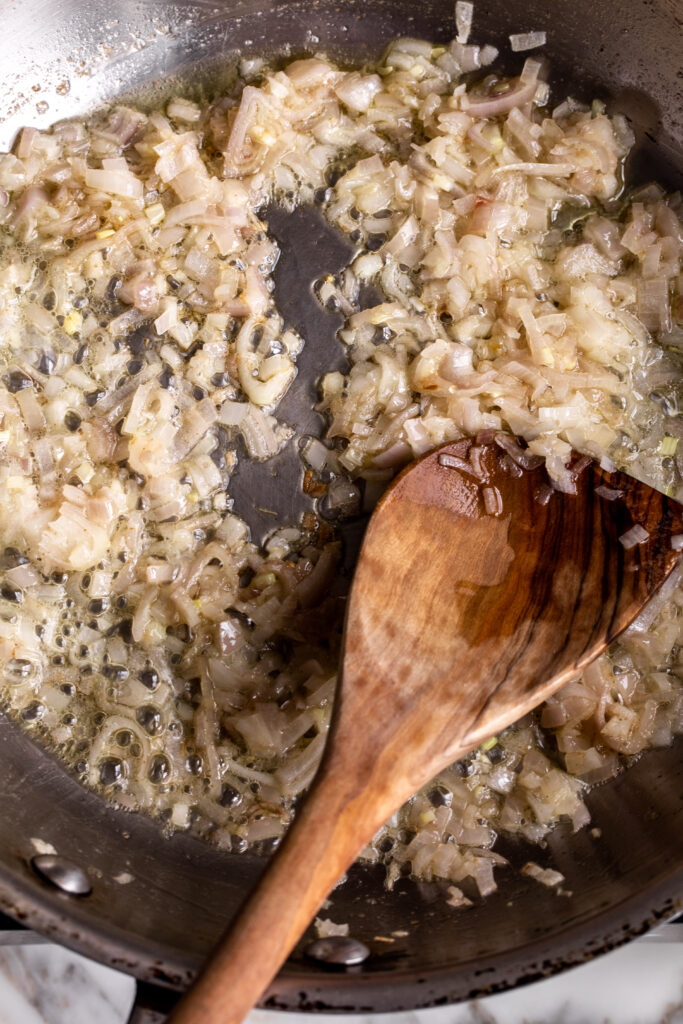
Return the pasta pot to the heat, add the remaining olive oil and butter. Sauté the shallots and garlic.
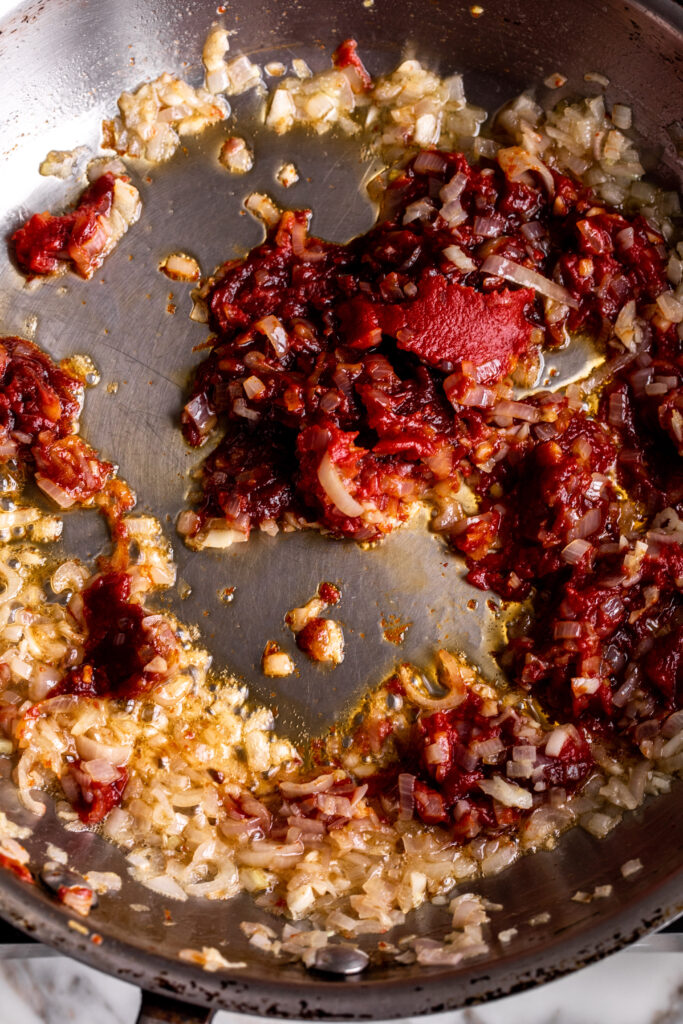
Stir in the tomato paste and gochujang, cooking for just 30 seconds to mellow the acidity.
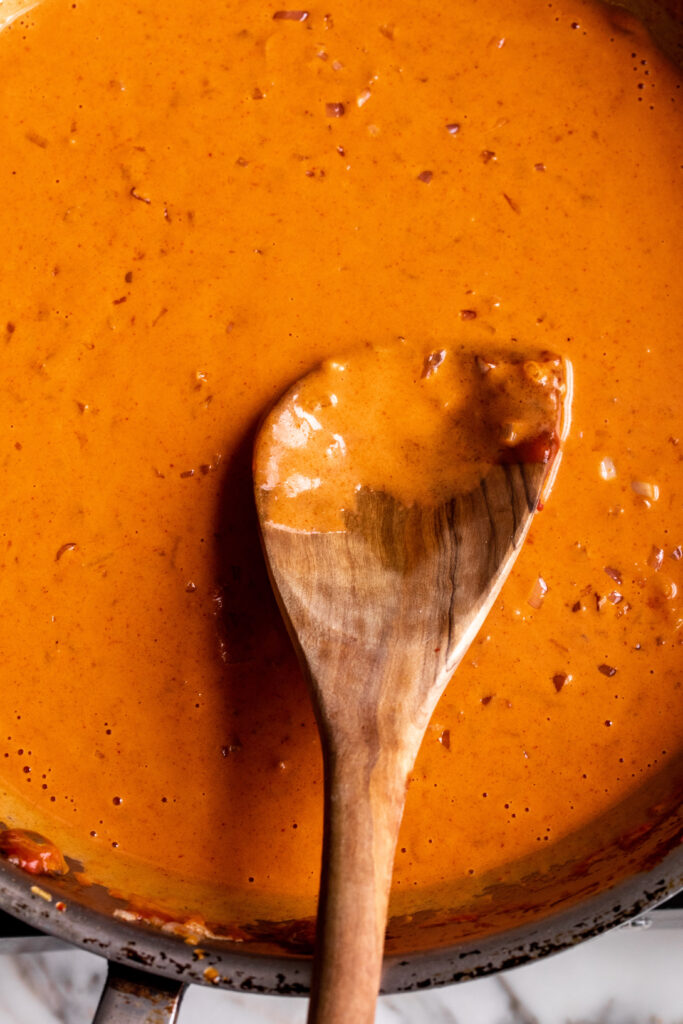
Whisk in the chicken stock until smooth then whisk in the cream and season to taste with salt and pepper.
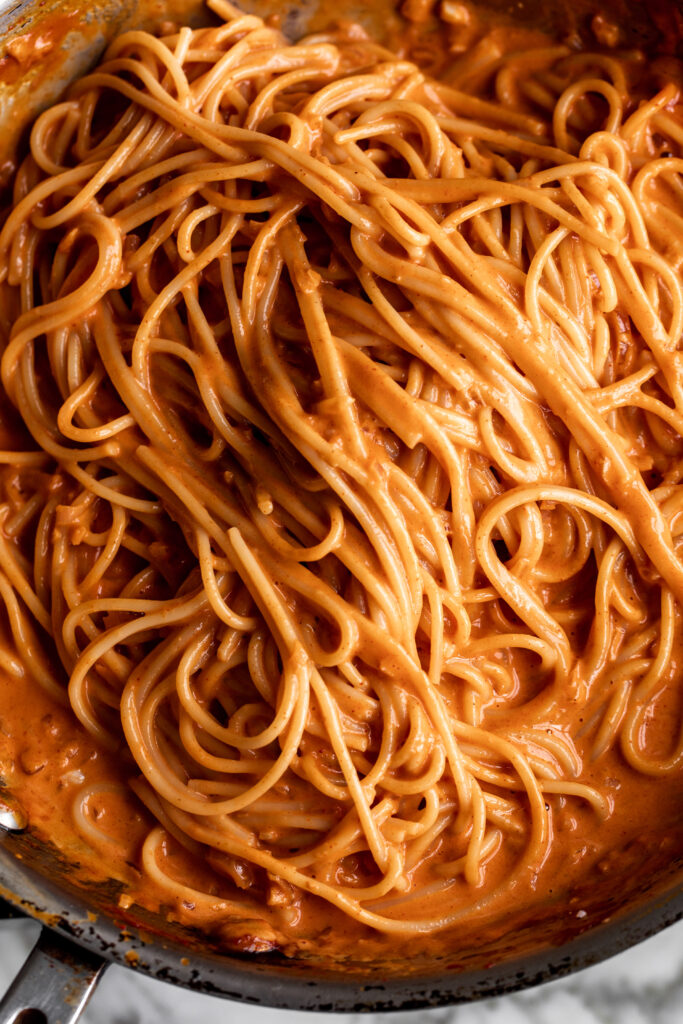
Toss the cooked noodles in the sauce, adding the Parmesan until the sauce is smooth. Add the pasta water 2 tablespoons at a time if the sauce is too clumpy until it’s creamy and smooth.
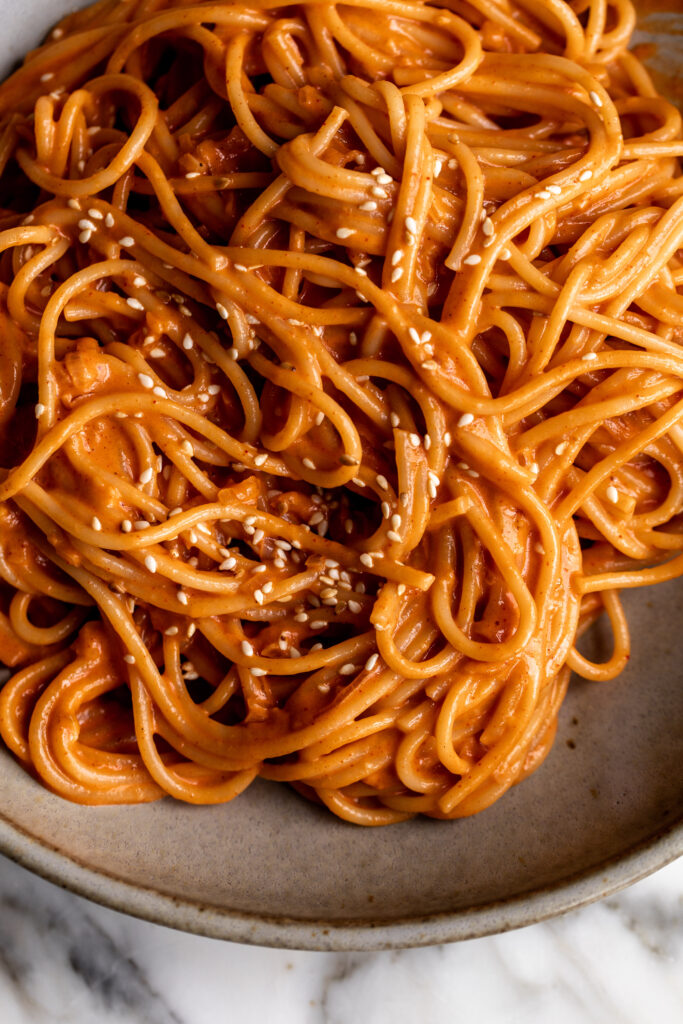
Divide between warmed pasta bowls and serve hot. Top with sesame seeds (optional).
How to make this gluten-free
For a gluten-free version swap the spaghetti for rice noodles.
How to make this dairy-free
For a dairy-free version, swap the cream for coconut cream. Based on feedback I have gotten the gochujang covers the taste of the coconut. Parmesan has a very low lactose level but if desired omit it.
How to Reheat Creamy Gochujang Noodles
To reheat creamy noodles like this, add them to a pot with a bit of water (start with adding about 1/4 cup of water). Cover with a lid and warm, stirring occasionally over medium-low heat. The water will help to loosen the sauce and make it creamy again. Add more if needed. The noodles can also be reheated in the microwave in 30 second increments.

FAQ – Frequently Asked Questions
Gochujang has a unique sweet, spicy and umami flavor profile so it is hard to replicate/ replace, but if you’re in a pinch, you can combine miso paste, sriracha, and a touch of honey or brown sugar. The substitution isn’t exact, but it works for the flavor balance.
Yes, you can store leftovers in an airtight container in the fridge for up to 3 days.
Reheat the noodles in a pan gently over low heat and add a splash of water or broth to loosen the sauce.
Save some of the pasta water and add it gradually when tossing the noodles to loosen the sauce and improve the texture. Stirring constantly while heating also helps.
Yes! For a gluten-free version swap the spaghetti for rice noodles.
Yes! For a dairy-free version, swap the cream for coconut cream. The gochujang covers the taste of the coconut. Parmesan has a very low lactose level but if desired omit it.
Other Recipes to Try
If you enjoy this quick and easy gochujang noodle recipe, I recommend checking out these:
Made this dish? Be sure to rate the recipe and drop a comment below! Your feedback means everything (and helps others find it too)!
Creamy Gochujang Noodles
Rate this Recipe
Ingredients:
- 1 pound spaghetti
- 3 tablespoons extra-virgin olive oil divided
- 2 tablespoons unsalted butter
- 3 medium shallots, diced
- 2 cloves garlic, minced
- 3 tablespoons tomato paste
- 2 tablespoons gochujang
- ½ cup chicken stock
- ½ cup heavy cream
- Kosher salt, to taste
- Freshly ground black pepper, to taste
- 1/3 cup grated Parmesan cheese
- ½ teaspoon sesame seeds (optional)
- Thinly sliced green onions (optional)
Instructions:
- Bring a large pot of water to the boil. Pour in the pasta and cook, stirring occasionally, until al dente, about 8 to 10 minutes. Reserve 1 cup of the cooking liquid then drain the noodles and set aside. Toss the noodles with 1 tablespoon of the olive oil.
- Return the pasta pot to medium heat, then add the remaining olive oil and heat through. Add the butter and allow to melt then add the shallots and sauté, stirring occasionally, until tender, about 6 minutes. Add the garlic and sauté until fragrant, just a few seconds.
- Stir in the tomato paste and gochujang, cooking for just 30 seconds to mellow the acidity.
- Whisk in the chicken stock until smooth then whisk in the cream and season to taste with salt and pepper.
- Add the pasta and toss to combine slowly add the Parmesan until the sauce is smooth; add the pasta water 2 tablespoons at a time if the sauce is too clumpy.
- Divide between warmed pasta bowls and serve hot. Top with sesame seeds and/ or green onion (optional).
Watch this Recipe
Notes:
Nutrition:
TAG ME ON INSTAGRAM TO BE FEATURED ON MY STORIES! @cookingwithcocktailrings
This looks so good! What a great weeknight meal or one to serve to guests!
Thank you!! It’s one of my favorites!
Thanks for sharing! Do they reheat well?
They do!! I recommend adding like a teaspoon or so of water when reheating to help loosen the creamy sauce when reheating!
My son always asks for this when he comes home for college.
Our favorite Sunday night dinner!!!