
Gochujang Pork Ragu with Ginger Scallion Oil over Rice Cakes
jump toRECIPE
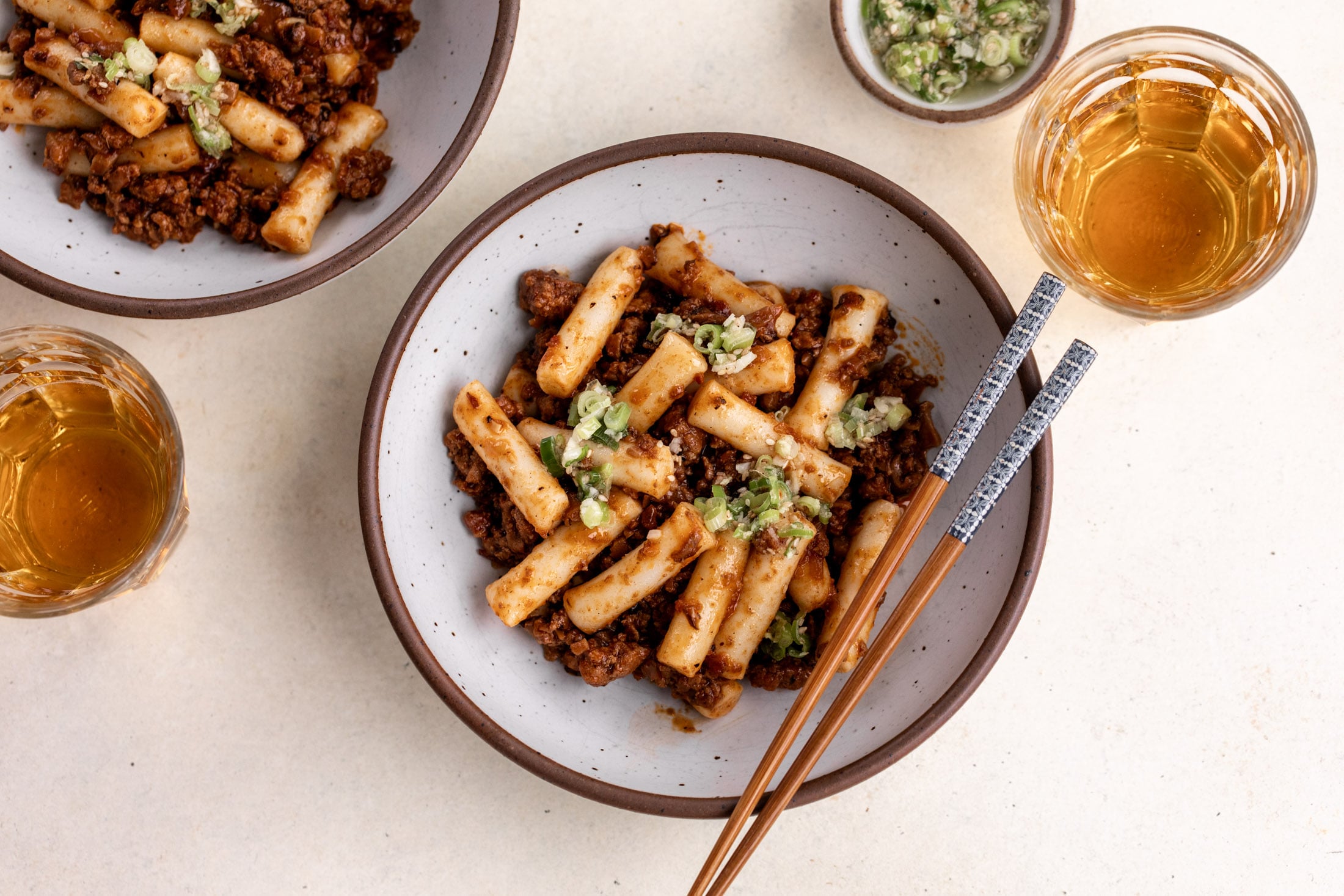
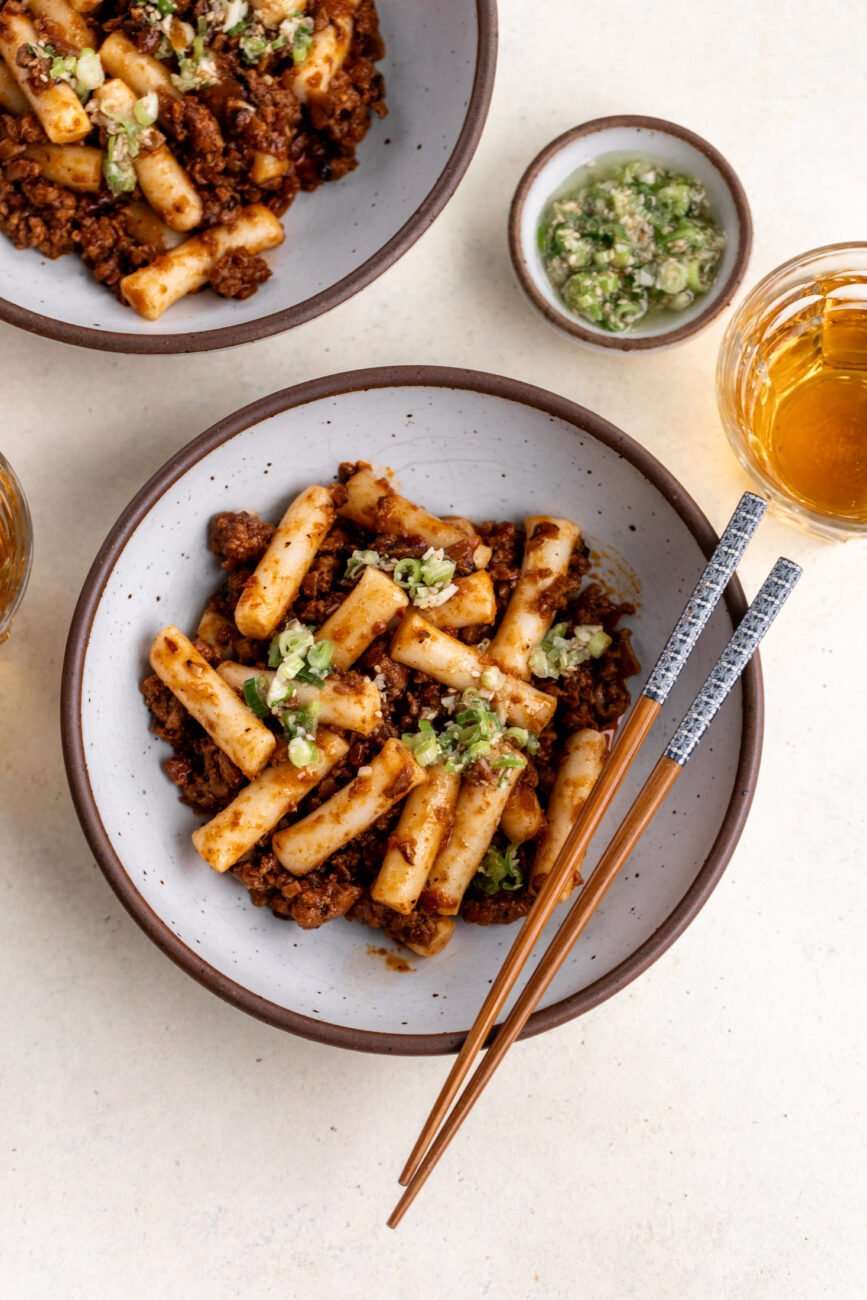
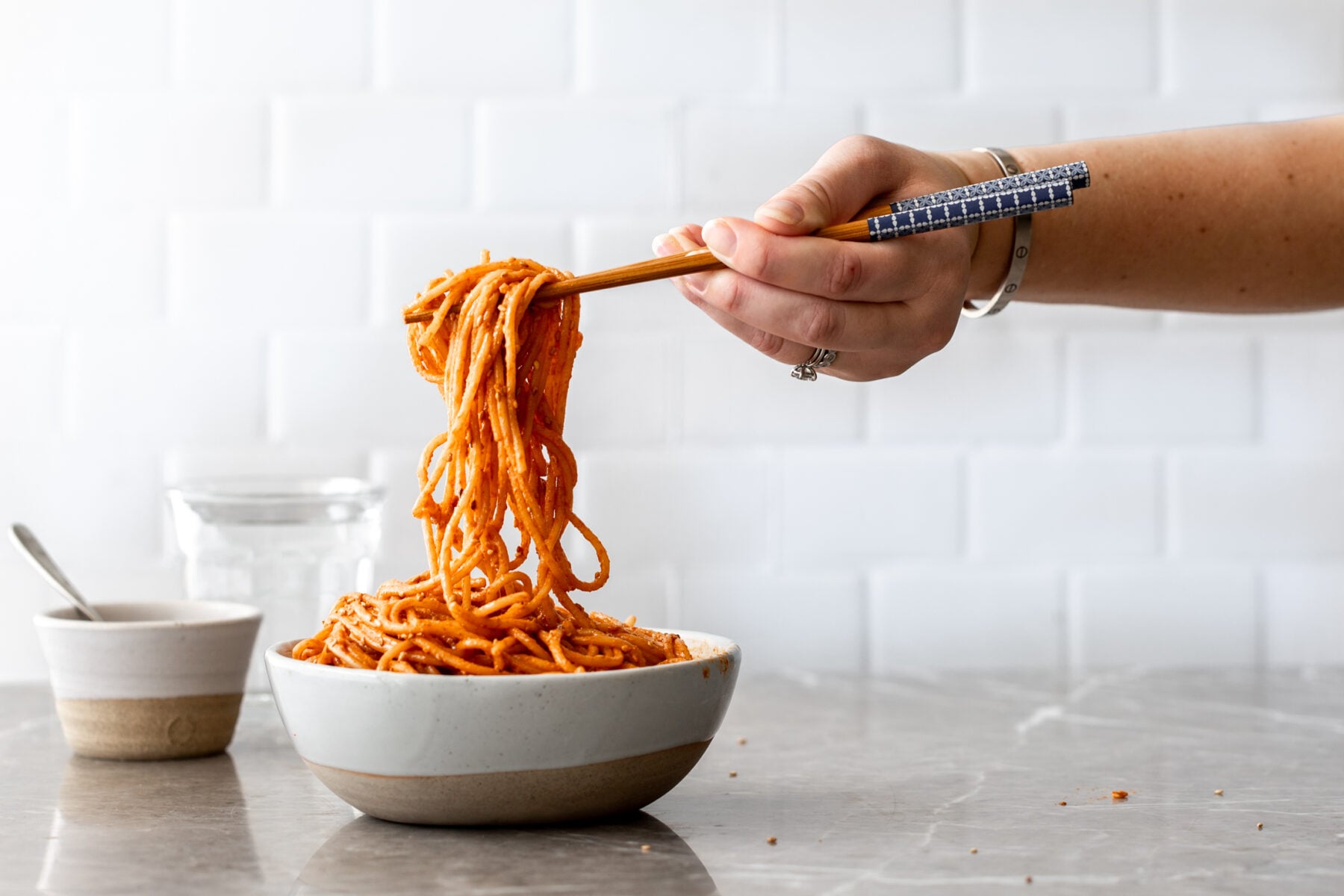
This gochujang pork ragu recipe is a bold and comforting fusion of Korean and Italian flavors. This dish takes the rich, slow-cooked essence of a classic ragu and infuses it with the deep, spicy-sweet heat of gochujang. Ground pork (or beef) and shiitake mushrooms simmer in a savory gochujang and tomato-based sauce, layered with umami and warmth, before being served over chewy Korean rice cakes for the ultimate contrast of texture. It can also be served over your favorite pasta or a bowl of white rice. A drizzle of homemade ginger scallion oil adds a fragrant, punchy finish, bringing everything together in a dish that’s both familiar and unexpected. Perfect for cozy nights or when you’re craving something adventurous yet deeply satisfying. For another take on pork ragu, give this spicy Calabrian chili pork ragu a try. If you’re looking for a more traditional comfort food recipe, try this slowly simmered 4-meat bolognese.
Why You’ll Love This Recipe
- Bold, deeply savory flavor. Gochujang brings sweet heat and umami depth, while slow-simmered pork turns to a rich ragu.
- Comfort food with a twist. This dish has the cozy, satisfying feel of a classic ragù, but with Korean-inspired flavors that make it feel exciting and new served over chewy rice cakes.
Key Ingredients in This Recipe
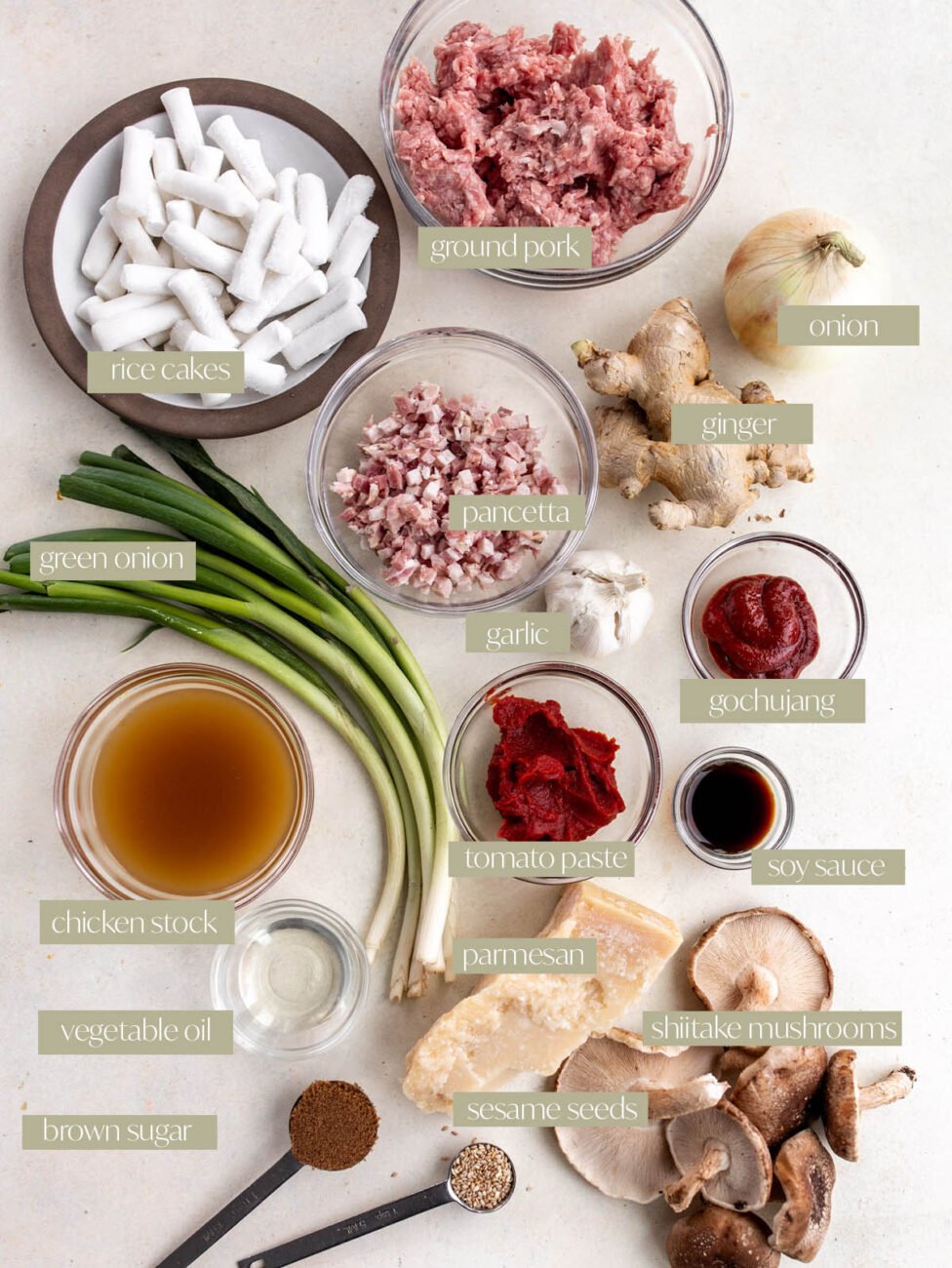
- Pancetta – Pancetta comes from pork belly and is salted, seasoned, cured and aged for an extended period of time. The rendered fat helps to add seasoning to the ragu.
- Pork – Ground pork typically comes from minced pork shoulder meat and is incredibly versatile.
- Onion – I use yellow onion in this recipe for its mellow flavor when cooked. These onions with a brownish yellow papery skin are a great all-purpose cooking onion.
- Shiitake mushrooms – Shiitakes have an earthy and woodsy flavor and meaty texture that is used to enhance and complement the pork in this recipe to develop a richer ragu.
- Garlic – Sautéed chopped garlic adds a deep more complex flavor to the sauce.
- Ginger – Peel away the skin of the ginger with a spoon, as it helps to navigate the uneven texture before grating it using a microplane.
- Tomato paste – Tomato paste is created from tomatoes that have been cooked down until they become a thick, dense paste. I try to buy tubes of tomato paste rather than small cans. The tubes allow you to reseal and keep the paste for later (they last a long time) resulting in less waste.
- Gochujang – Gochujang is a Korean fermented chili paste that adds some sweet and savory heat to any dish.
- Soy sauce – Soy sauce is used to enhance the umami flavor and deepen the overall flavor of the ragu.
- Brown sugar – The sugar slightly caramelizes, adding a slightly sweet flavor to the sauce.
- Parmesan cheese – Stirring in grated Parmesan helps emulsify the sauce and adds umami-packed flavor.
A full ingredient list with exact amounts can be found in the recipe card below.
Swaps and Substitutions
- Rice cakes: While I love serving this ragu over rice cakes, you can also serve it over rice noodles, steamed rice, or your favorite pasta shape.
- Ginger scallion oil: The ginger scallion oil can be swapped for a handful of sliced green onions to finish the dish.
- Greens: Add 3 cups of baby spinach or another leafy green, such as shredded kale, towards the end of cooking the sauce.
How to Make Gochujang Pork Ragu (Step-by-Step)
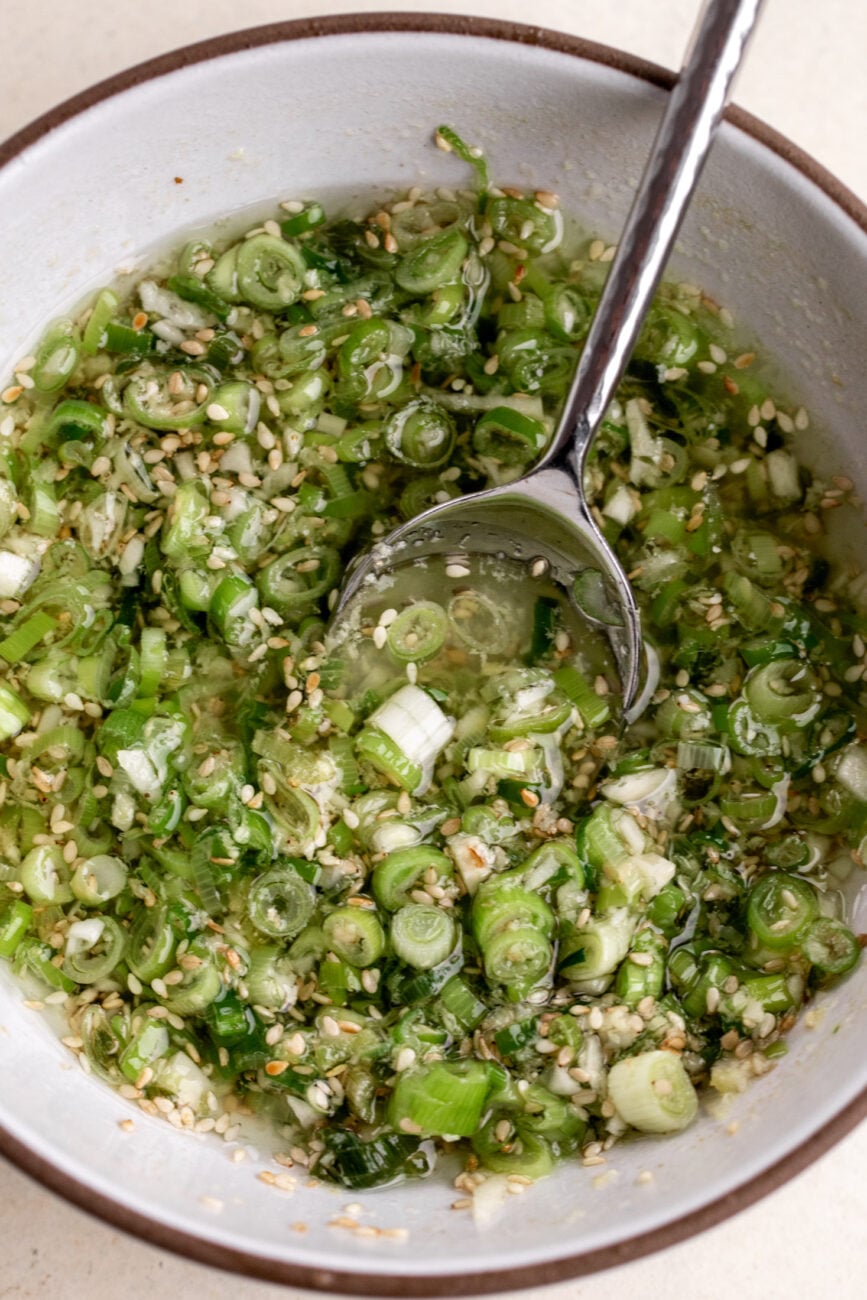
Add the oil to a small saucepan and heat over high heat until the oil sizzles when a piece of scallion is added. Add the green onion, garlic and sesame seeds to a small bowl. Carefully pour the hot oil over the green onion so it sizzles and is fragrant, stirring to combine. Let cool and season with salt. Store, refrigerated, in an airtight container until ready to use.
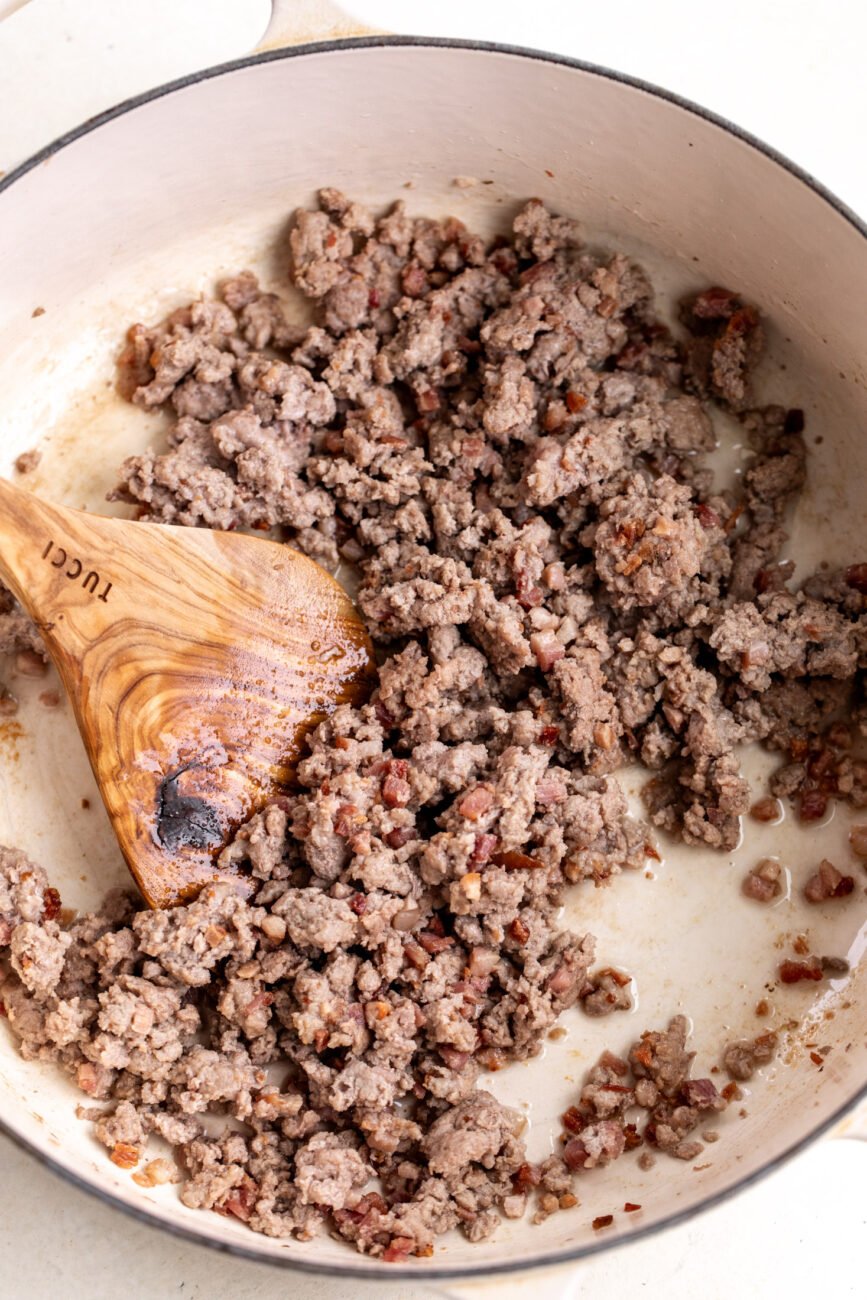
Add the pancetta to a Dutch oven or large heavy-bottomed pot and cook over medium-low heat until the fat has mostly rendered. Add the pork and use a wooden spoon to break up the meat. Season with salt and cook the pork until browned, about 6 minutes.
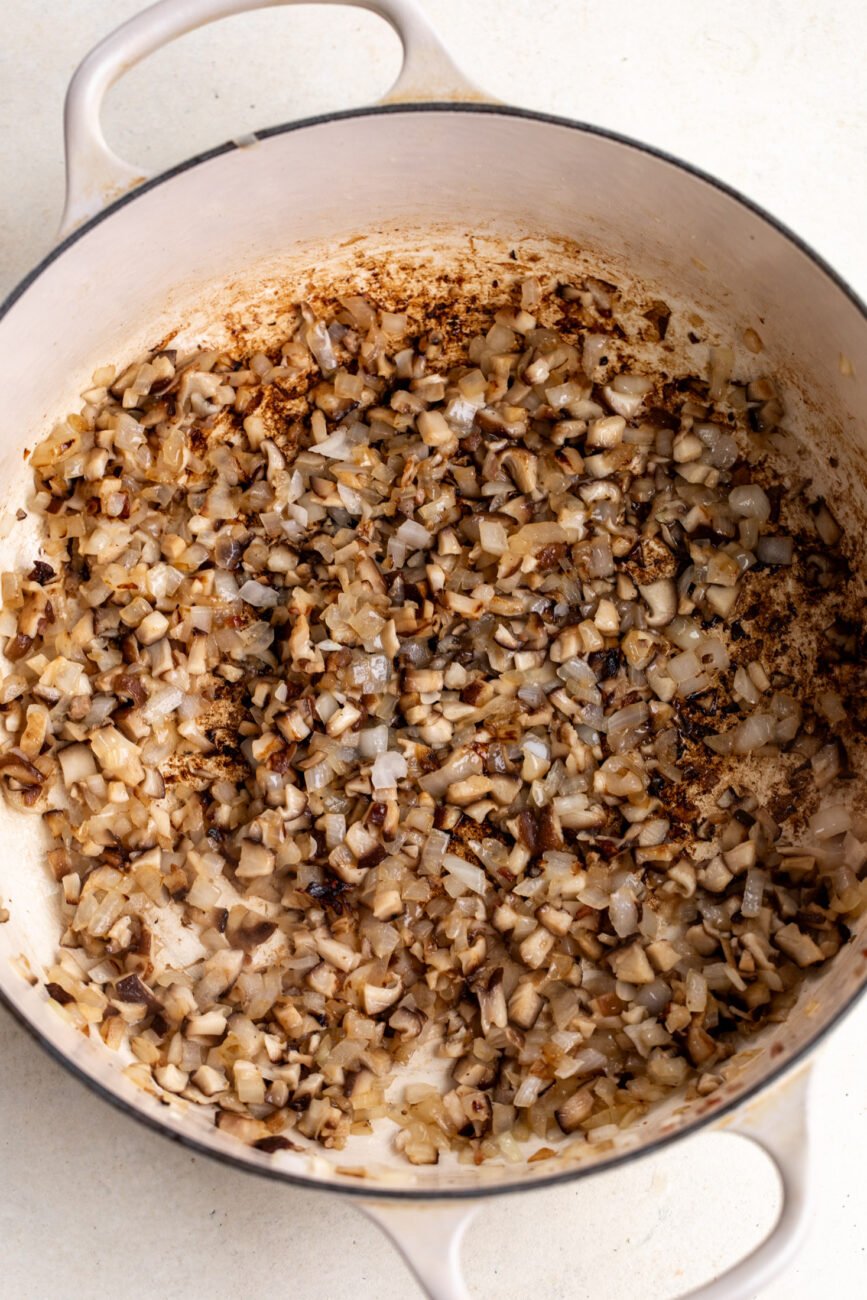
Use a slotted spoon to remove the browned meat to a bowl, reserving as much of the rendered fat in the pan as possible and set aside. Return the pot to medium heat, add the oil and heat through, then add the onion and sauté until soft and translucent, about 6 minutes. Add the mushrooms to the pan and cook until they have reduced in size, seasoning with salt.
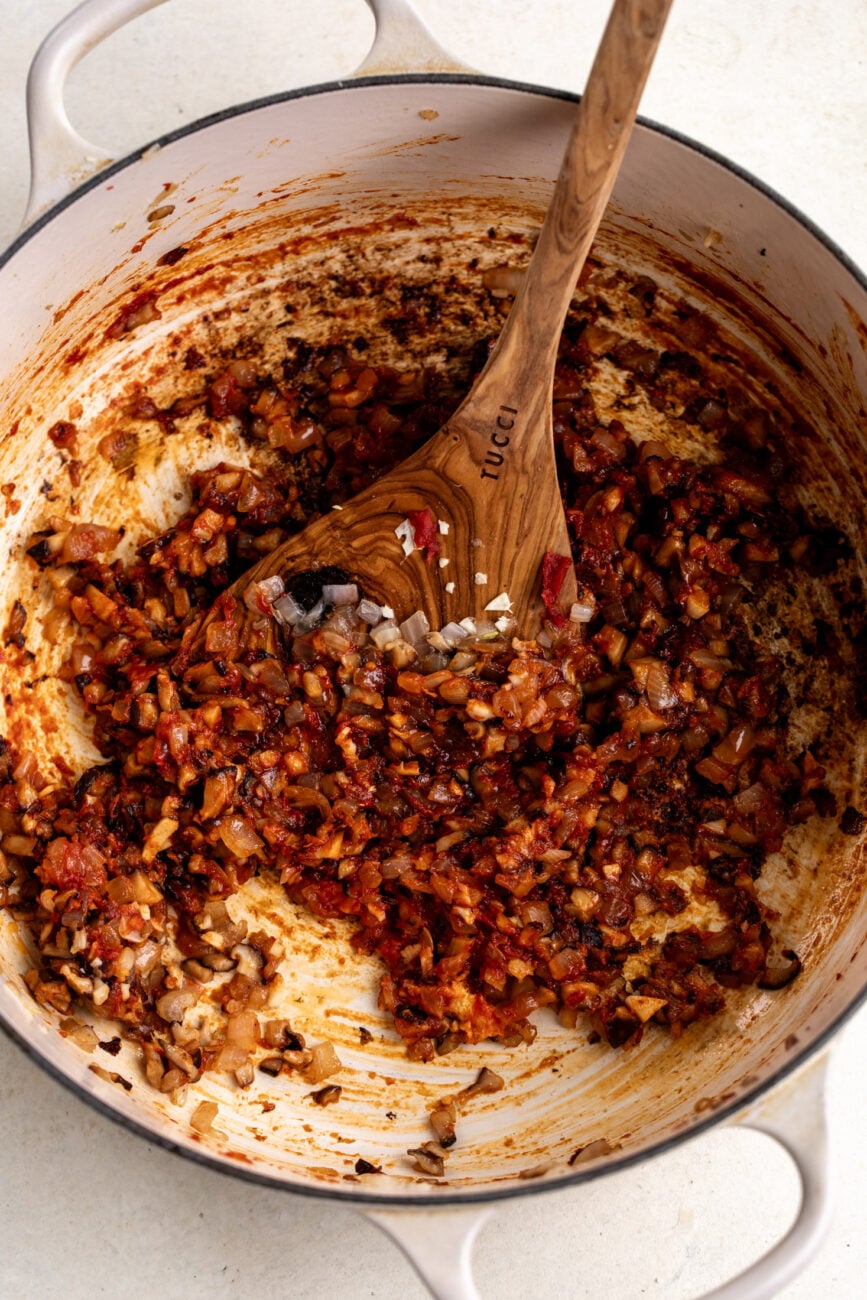
Next, add the garlic and ginger and cook until fragrant, about an additional minute. Stir in the tomato paste, gochujang, soy sauce and brown sugar.
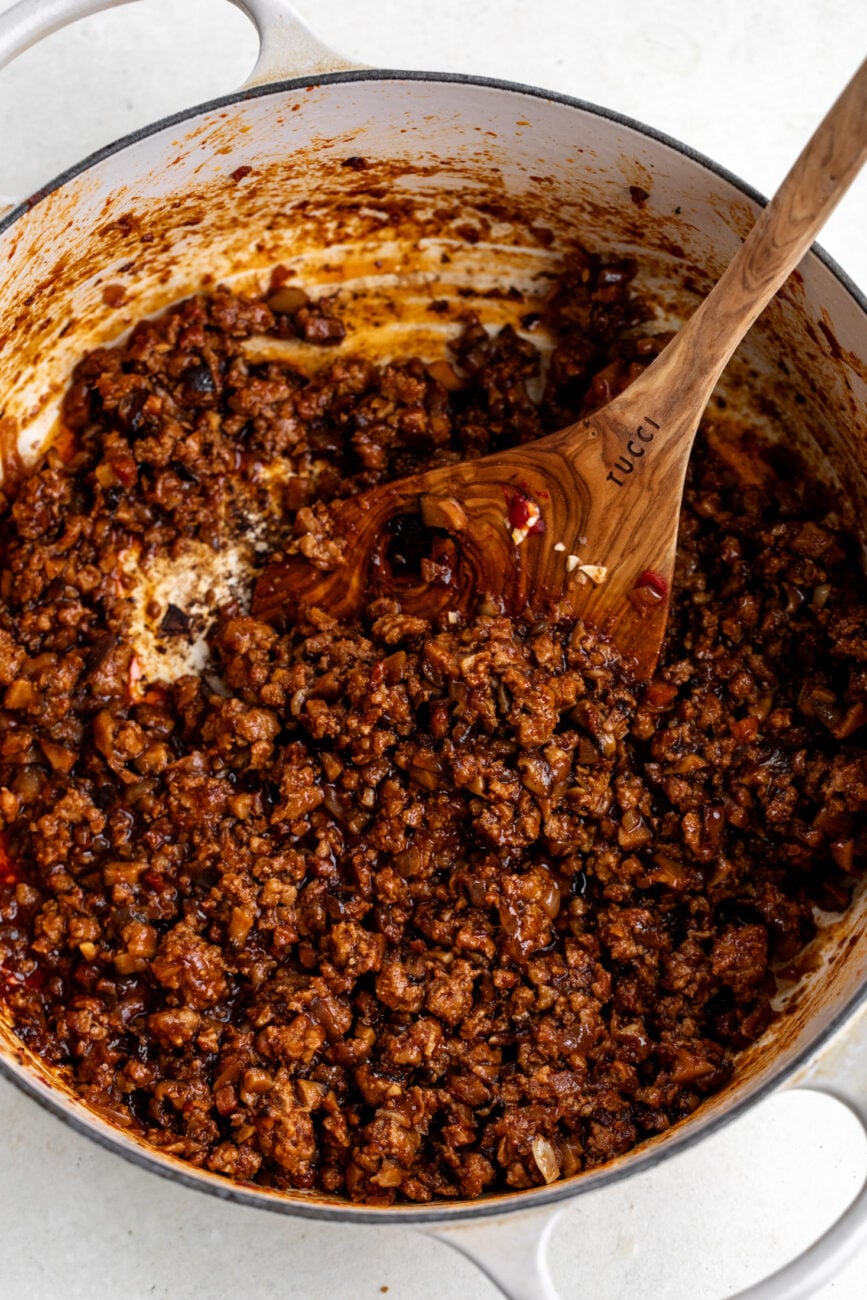
Return the meat to the pot. Add the chicken stock and simmer until a sauce forms, about 10 minutes. Stir in the cheese..
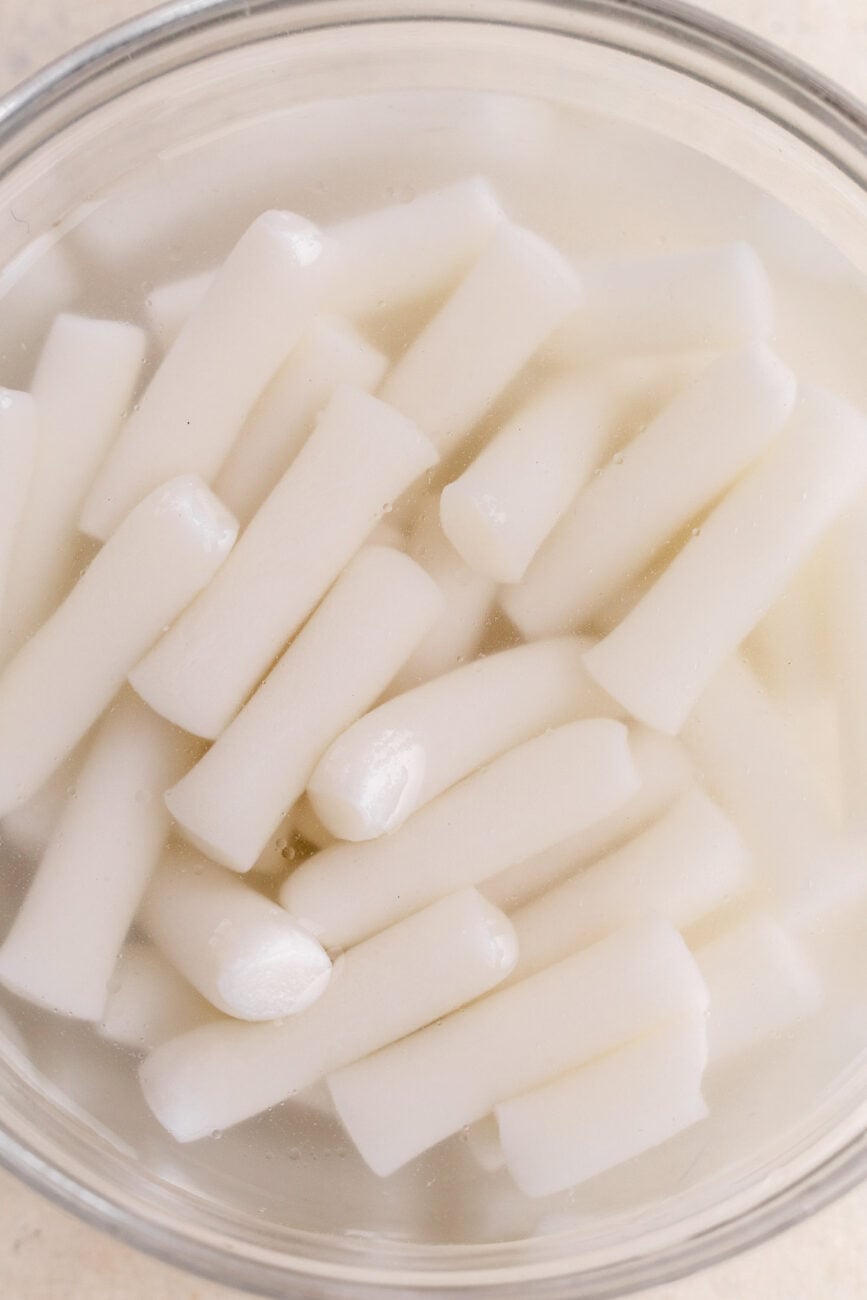
Bring a large pot of water to a boil, add the rice cakes and cook until they float and become soft and chewy, about 3 to 5 minutes. Drain and rinse under cool water then separate the rice cakes. Toss with the ragu.
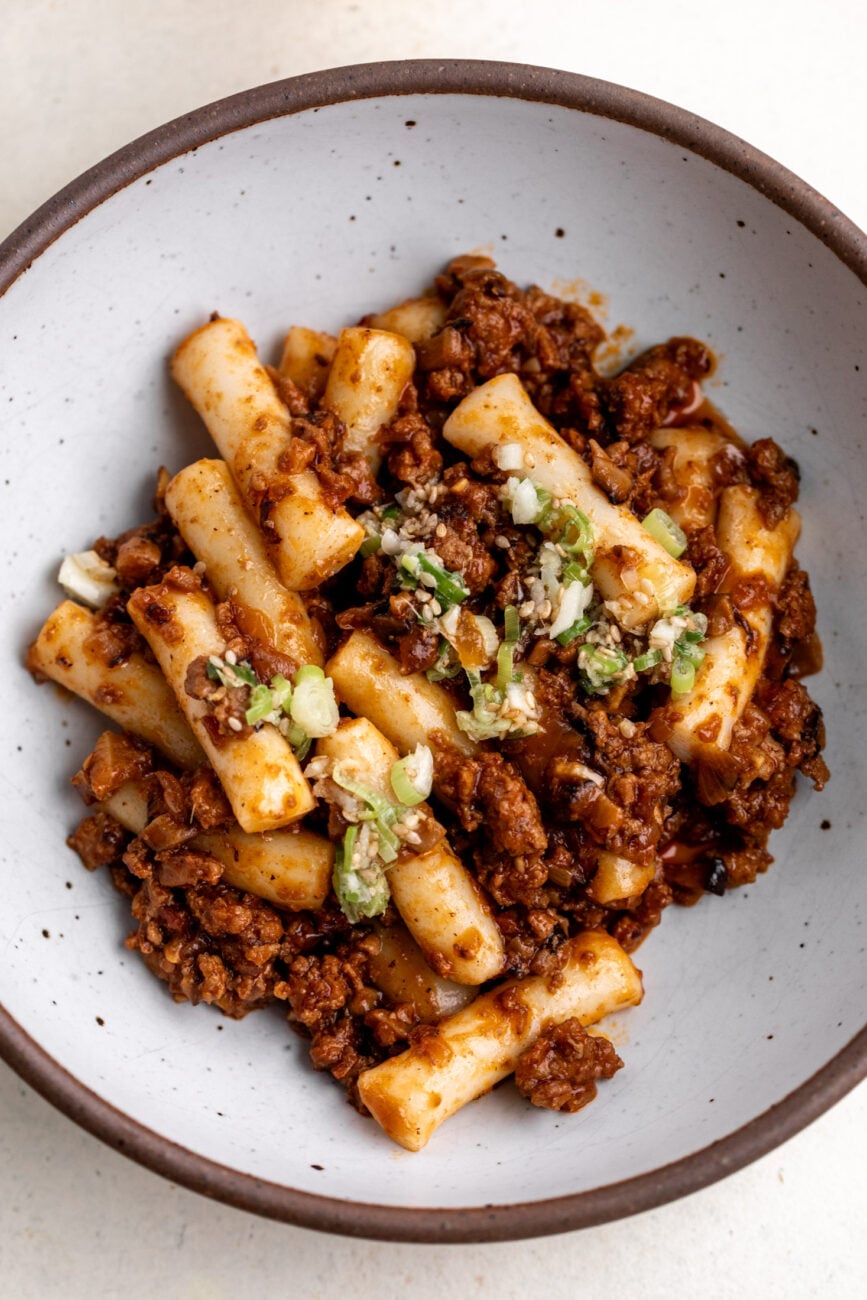
Divide among serving bowls and top with the scallion oil. Serve hot.
How to Store and Reheat Leftovers
The pork ragu can be made up to 3 days in advance and stored in the refrigerator. Reheat on the stove or in the microwave with a splash of water or broth to loosen the sauce. I recommend waiting to add the rice cakes until just before serving for the best texture and flavor.
FAQ – Frequently Asked Questions
Gochujang has a mild-to-moderate heat level. You can easily adjust the spice by using less paste or adding a splash of cream or extra stock to mellow it out.
Yes! Wide rice noodles, pasta, or steamed white rice all pair well with the ragu.
Yes! The pork ragu can be made up to 3 days in advance and stored in the refrigerator. I recommend waiting to add the rice cakes until just before serving for the best texture and flavor.
Store the gochujang pork ragu and rice cakes separately in airtight containers in the refrigerator for up to 3 days. Reheat on the stove or in the microwave with a splash of water or broth to loosen the sauce.
No, it’s optional, but I highly recommend it! It adds freshness and contrast that really elevates the dish. You can simplify it with a handful of sliced green onions just before serving if needed.
Other Recipes to Try
If you enjoy this Korean-inspired pork ragu, give these recipes a try:
Gochujang Pork Ragu with Ginger Scallion Oil over Rice Cakes
Rate this Recipe
Ingredients:
For the ginger scallion oil:
- ½ cup vegetable oil (or another neutral oil)
- 4 green onions, thinly sliced
- 3 cloves garlic, chopped
- 1 teaspoon minced ginger
- 1 tablespoon white sesame seeds
- Kosher salt, as needed
For the pork ragu:
- 6 ounces diced pancetta
- 1 pound ground pork
- Kosher salt, as needed
- 2 tablespoons vegetable oil (or another neutral oil)
- 1 medium yellow onion, diced
- 8 ounces shiitake mushrooms, diced
- 4 cloves garlic, chopped
- 1 tablespoon minced ginger
- 2 tablespoons tomato paste
- 2 tablespoons gochujang
- 2 tablespoons soy sauce
- 1 tablespoon packed dark brown sugar
- 2 cups chicken stock
- ½ cup freshly grated Parmesan cheese
- 2 pounds frozen rice cakes (or rice noodles, pasta, steamed rice)
Instructions:
For the ginger scallion oil:
- Add the oil to a small saucepan and heat over high heat until the oil sizzles when a piece of scallion is added. Add the green onion, garlic and sesame seeds to a small bowl.
- Carefully pour the hot oil over the green onion so it sizzles and is fragrant, stirring to combine. Let cool and season with salt.
- The scallion topping can be made up to a week in advance and stored, refrigerated, in an airtight container until ready to use.
For the pork ragu:
- Add the pancetta to a Dutch oven or large heavy-bottomed pot and cook over medium-low heat until the fat has mostly rendered. Add the pork and use a wooden spoon to break up the meat. Season with salt and cook the pork until browned, about 6 minutes.
- Use a slotted spoon to remove the browned meat to a bowl, reserving as much of the rendered fat in the pan as possible and set aside. Return the pot to medium heat, add the oil and heat through, then add the onion and sauté until soft and translucent, about 6 minutes.
- Add the mushrooms to the pan and cook until they have reduced in size, seasoning with salt.
- Next, add the garlic and ginger and cook until fragrant, about an additional minute. Stir in the tomato paste, gochujang, soy sauce and brown sugar.
- Return the meat to the pot. Add the chicken stock and simmer until a sauce forms, about 10 minutes. Stir in the cheese..
- Bring a large pot of water to a boil, add the rice cakes and cook until they float and become soft and chewy, about 3 to 5 minutes. Drain and rinse under cool water then separate the rice cakes. Toss with the ragu.
- Divide among serving bowls and top with the scallion oil. Serve hot.
Notes:
Nutrition:
TAG ME ON INSTAGRAM TO BE FEATURED ON MY STORIES! @cookingwithcocktailrings
I have a giant tub of gochujang in my fridge so I was so glad to find this recipe!! So yummy and I know this is going to be a staple in our house!
This sounds like it has some serious flavor. I can’t wait to try!
The ginger scallion oil, game changer! This dish was amazing; I can’t wait to make it again!
This was excellent, but the star was the ginger oil. I can think of a million other ways I’d use it. Delish!