
Apple Cider and Sage Glazed Bone-In Pork Chops
jump toRECIPE
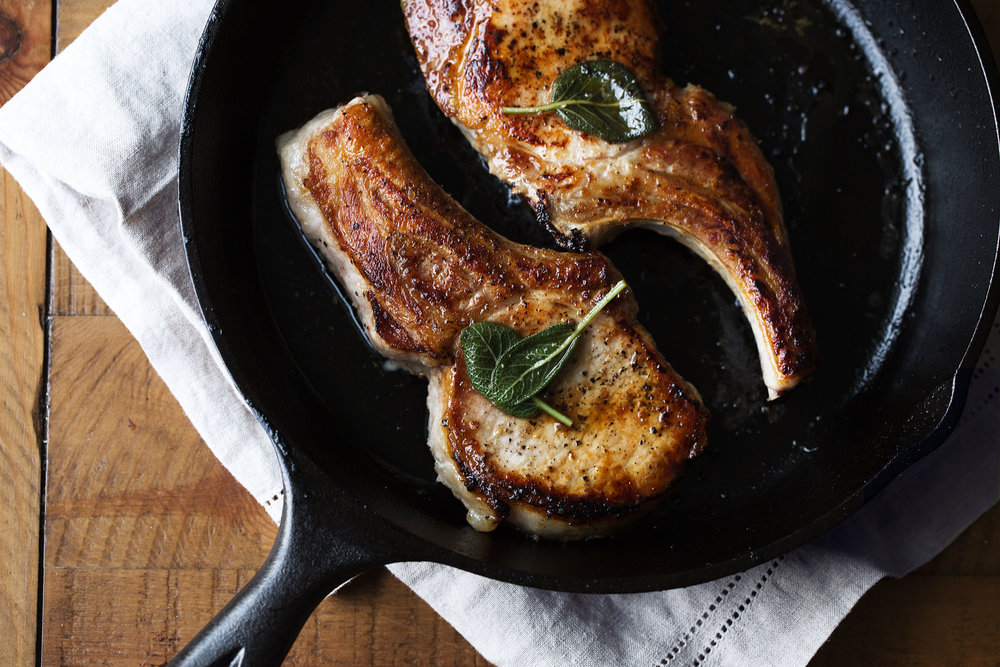
These five-step apple cider and sage glazed bone-in pork chops are a simple fall dinner that turns a familiar cut of pork into something distinctly seasonal. The pork develops a deeply browned crust in a hot skillet before being finished in a reduced apple cider glaze, creating a balance of savory richness, sweetness, and acidity in every bite. Fresh sage adds an earthy note that makes the dish feel especially at home on a crisp autumn evening. It’s an impressive dinner without complicated techniques, and the entire meal comes together in about 45 minutes. For crowd-pleasing dinner ideas, try my pan-seared miso butter pork chops with sautéed broccoli and apples and these honey soy pork chops with miso roasted kabocha squash and shishito peppers next.
Why You’ll Love This Recipe
- Restaurant-worthy flavor – A deeply seared bone-in pork chop and concentrated apple cider glaze create an impressive dinner with straightforward ingredients.
- Perfect for fall – Apple cider and fresh sage bring classic autumn flavors to a hearty pork dinner.
- Simple technique – Everything comes together in a skillet, with the pork seared first and the cider reduced into a flavorful glaze in the same pan.
Key Ingredients in This Recipe
- Pork chops – Pork chops come from the loin of the pig but there are several different types out there. For this recipe look for the rib chop – this will give you a large piece of lean loin meat with the bone attached and a layer of fat by the bone coming from the rib section of the pig’s loin. The fat helps to keep the meat moist and tender while the bone provides added flavor.
- Apple cider – Apple cider is a raw, unfiltered apple juice that has not gone through a filtration process (like apple juice). This makes the seasonal fall beverage slightly darker than apple juice and cloudy. Combined with a bit of brown sugar and apple cider vinegar to offset the sweetness, the cider becomes the glaze for the pork chops.
A full ingredient list with exact amounts can be found in the recipe card below.
Pro Tip
Use a wide skillet so the apple cider has plenty of surface area to reduce quickly. The finished glaze should be concentrated enough to lightly coat the back of a spoon and have a balanced sweet-tart flavor rather than tasting like straight apple cider.
Swaps and Substitutions
- Bone-in pork chops: Boneless pork chops can be used, but they will cook more quickly, so watch the internal temperature closely.
- Apple cider: Use unfiltered apple cider for the fullest flavor. In a pinch, apple juice can be substituted, though the glaze will have a lighter flavor.
- Fresh sage: Substitute dried sage if needed, using less since dried herbs are more concentrated.
- Light brown sugar: Dark brown sugar can be used for a deeper caramel flavor.
- Apple cider vinegar: Substitute sherry vinegar or another mild vinegar to provide the acidity needed to balance the sweet glaze.
- Extra-virgin olive oil: Use another neutral cooking oil if preferred, such as avocado or canola oil.
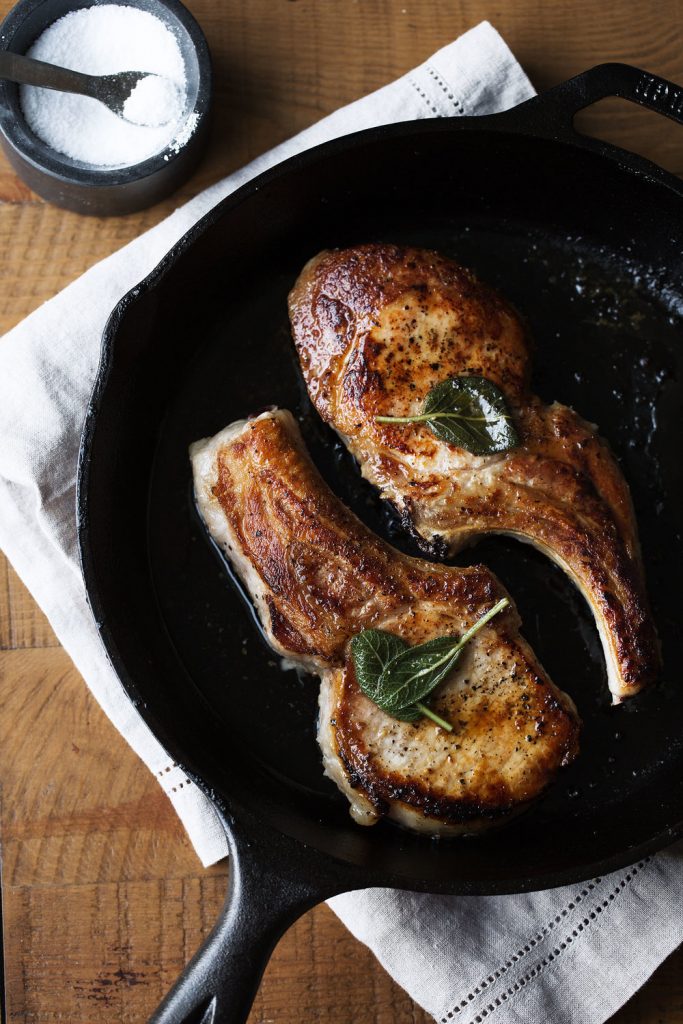
How to Make Apple Cider Glazed Pork Chops (Step-by-Step)
- Season the pork chops. Let the pork chops sit at 30 minutes before cooking. Season the pork chops on both sides with salt and pepper. Heat a large (12-inch) cast iron pan over medium heat, add olive oil and heat through.
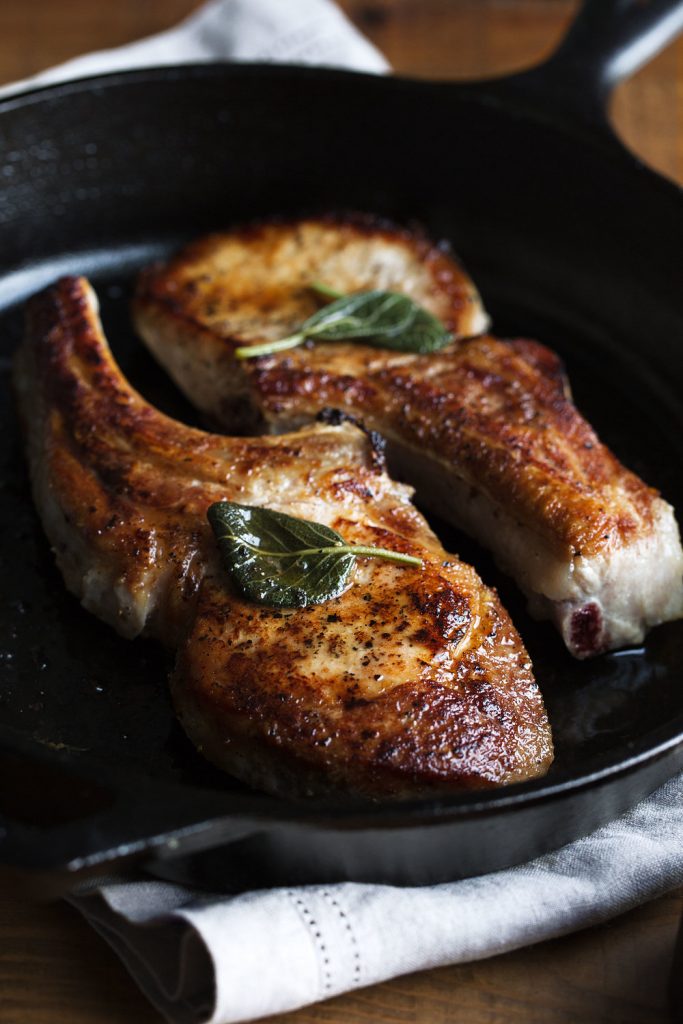
- Sear the pork. Sear the pork chops until golden brown on both sides, about 10 minutes total.
- Whisk the sauce and add. In a small bowl whisk together the apple cider and brown sugar. Add to the pan with the sage leaves and simmer, turning the pork chops once, until cooked through, about 3 minutes (the internal temperature should read 140ºF or 60ºC).
- Reduce the sauce. Transfer the pork chops to a plate to rest and return the pot to the heat. Add the vinegar and simmer the glaze over medium-low heat until reduced to about 1/3 cup.
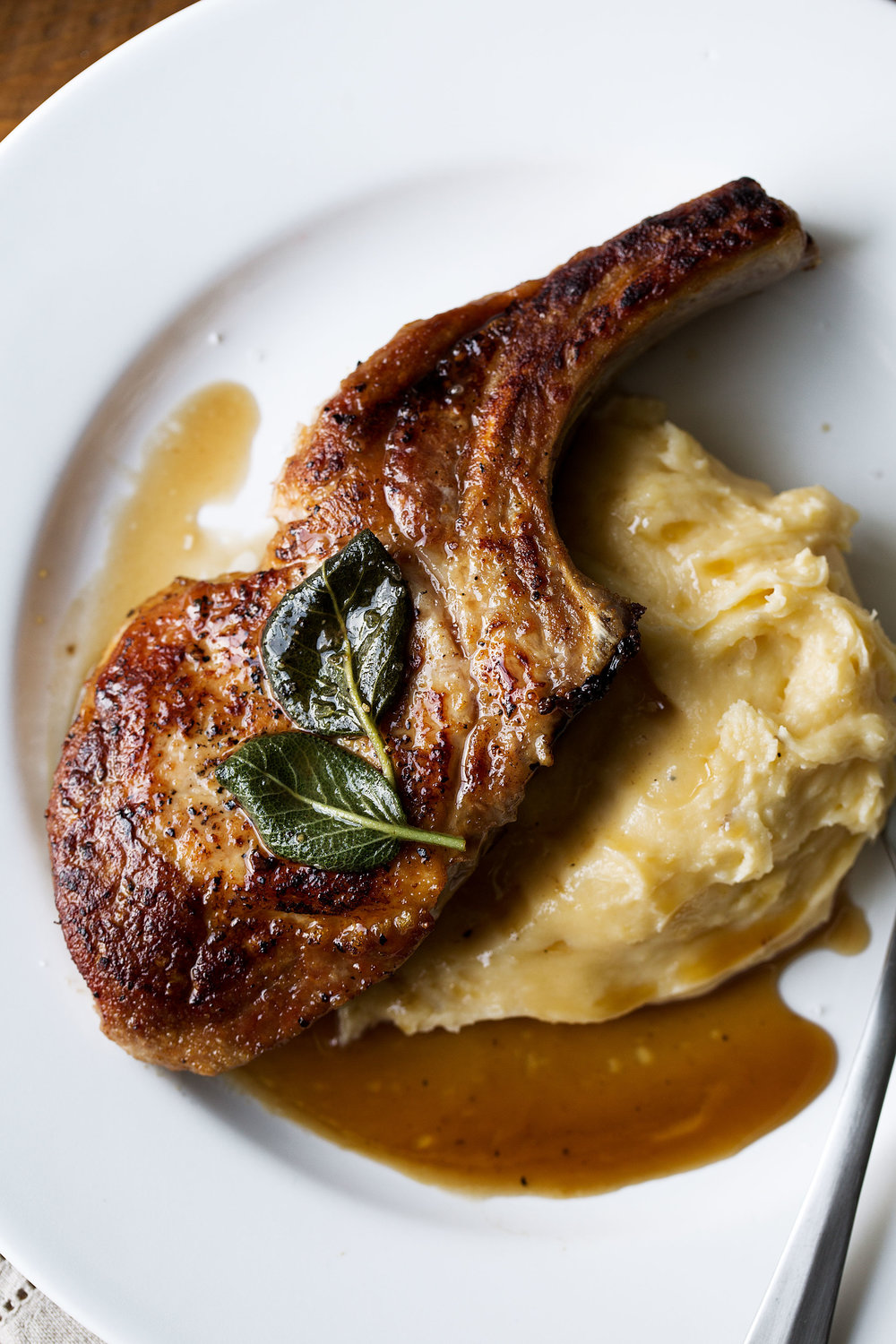
- Serve. Serve the pork chops topped with the apple cider glaze.
How to Serve This Recipe
- With whipped Cheddar potatoes: Serve the pork chops over creamy whipped Cheddar potatoes, which provide a savory contrast to the sweet apple cider glaze.
- With roasted vegetables: Pair with roasted Brussels sprouts, squash, carrots, or green beans for a seasonal fall dinner.
- With mashed potatoes: Spoon the cider glaze over mashed potatoes to make the most of the extra sauce.
- With a simple salad: Add a crisp green salad with an acidic vinaigrette to balance the richness of the pork.
- Family-style: Slice the pork chops and arrange them on a platter with the cider glaze spooned over the top for an easy dinner-party presentation.
How to Store This Recipe
- Pork chops: Store leftover pork chops in an airtight container in the refrigerator for up to 3 days.
- Apple cider glaze: Store leftover glaze in an airtight container in the refrigerator for up to 4 days.
- Storage: Keep the pork and glaze separate when possible to preserve the texture of the seared crust.
- Reheating: Gently reheat the pork in a covered skillet over low heat, adding a splash of water or broth if needed to prevent it from drying out.
- Make-ahead: Prepare the cider glaze ahead of time and refrigerate it until ready to serve. Reheat it gently before spooning it over the pork.
FAQ – Frequently Asked Questions
Unfiltered apple cider is the best choice for apple cider and sage glazed bone-in pork chops because it has a concentrated, naturally sweet apple flavor that works well in the glaze. Avoid using a heavily spiced cider, since the recipe gets its savory herbal flavor from the fresh sage.
To get a good crust on bone-in pork chops, use a large skillet that is fully heated before adding the pork. Pat the chops dry, season them well, and avoid moving them around while they sear so they have enough contact with the hot pan to develop a golden-brown crust.
To thicken apple cider glaze for pork chops, simmer the cider mixture after removing the cooked pork from the skillet. Continue reducing it over medium-low heat until it becomes concentrated and slightly thicker, about 4 to 5 minutes.
Yes, boneless pork chops can be used for apple cider and sage glazed pork chops, but they typically cook more quickly than bone-in chops. Keep a close eye on the internal temperature to prevent the lean meat from becoming dry.
Apple cider brings natural sweetness and acidity that complements the savory richness of pork, while sage adds an earthy, aromatic flavor. Together, they create a balanced combination that works particularly well for a fall pork dinner.
Other Recipes to Try
Loved this seasonal spin on a versatile protein? Check out some of my other favorite fall recipes below:
- Apple Cider Brined Turkey Breast for Two
- Squash, Quinoa and Kale Salad with Cider Vinaigrette
- Baked Apple Cider Donuts
Thanks for cooking with me! If you made this recipe, leave a 🌟 rating and share your thoughts or tips below. I’d love to hear from you!
Apple Cider and Sage Glazed Bone-In Pork Chops
Rate this Recipe
Ingredients:
- 4 (1-inch) thick bone-in pork chops
- Kosher salt, as needed
- Freshly ground black pepper, as needed
- 2 tablespoons extra-virgin olive oil
- 2 cups apple cider
- ¼ packed cup light brown sugar
- 6 sage leaves
- 1 tablespoon apple cider vinegar
Instructions:
- Let the pork chops sit at 30 minutes before cooking. Season the pork chops on both sides with salt and pepper. Heat a large (12-inch) cast iron pan over medium heat, add olive oil and heat through.
- Sear the pork chops until golden brown on both sides, about 10 minutes total.
- In a small bowl whisk together the apple cider and brown sugar. Add to the pan with the sage leaves and simmer, turning the pork chops once, until cooked through, about 3 minutes (the internal temperature should read 140ºF/ 60ºC).
- Transfer the pork chops to a plate to rest and return the pot to the heat. Add the vinegar and simmer the glaze over medium-low heat until reduced to about 1/3 cup.
- Serve the pork chops topped with the apple cider glaze.
Notes:
Nutrition:
TAG ME ON INSTAGRAM TO BE FEATURED ON MY STORIES! @cookingwithcocktailrings

I love cooking with this cut, and your recipe looks delish! Can’t wait to try it!
Me too – plus the bone-in is more aesthetically pleasing 🙂 Hope you enjoy the recipe!
How long does it typically take for the glaze to set? The two times I’ve made this recipe it turns out more like a broth. Is that correct or should it thicken?
It should only take a few minutes (I’d say 4-5) – it should be just a little thicker than a broth so it sounds like you may want to simmer it a bit longer! But without adding additional sugar or flour it won’t thicken too much.