
Spring Rice Pilaf with Pistachio Pesto
jump toRECIPE
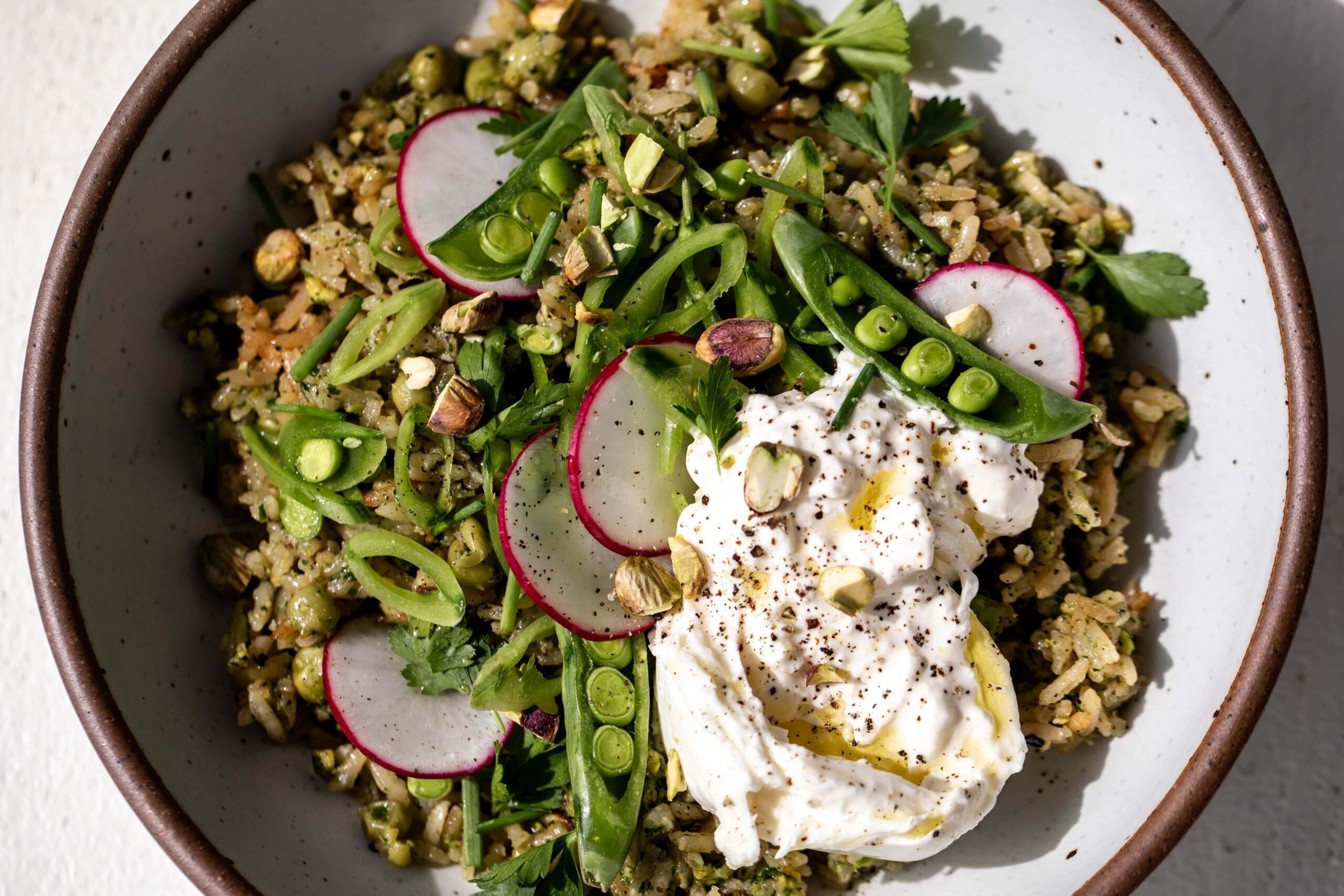
This spring rice pilaf with pistachio pesto is a bright, herb-packed side dish made with fluffy rice, sweet peas, and a vibrant green pesto. The combination of fresh herbs, spinach, and pistachios creates a flavorful, seasonal dish that’s perfect for spring entertaining or easy weeknight meals—serve it alongside roasted chicken or grilled fish, or pair it with a shaved asparagus salad or burrata and prosciutto plate for a fresh, balanced spread.
Why You’ll Love This Recipe
- Fresh and seasonal – Packed with spring vegetables, herbs, and bright flavors.
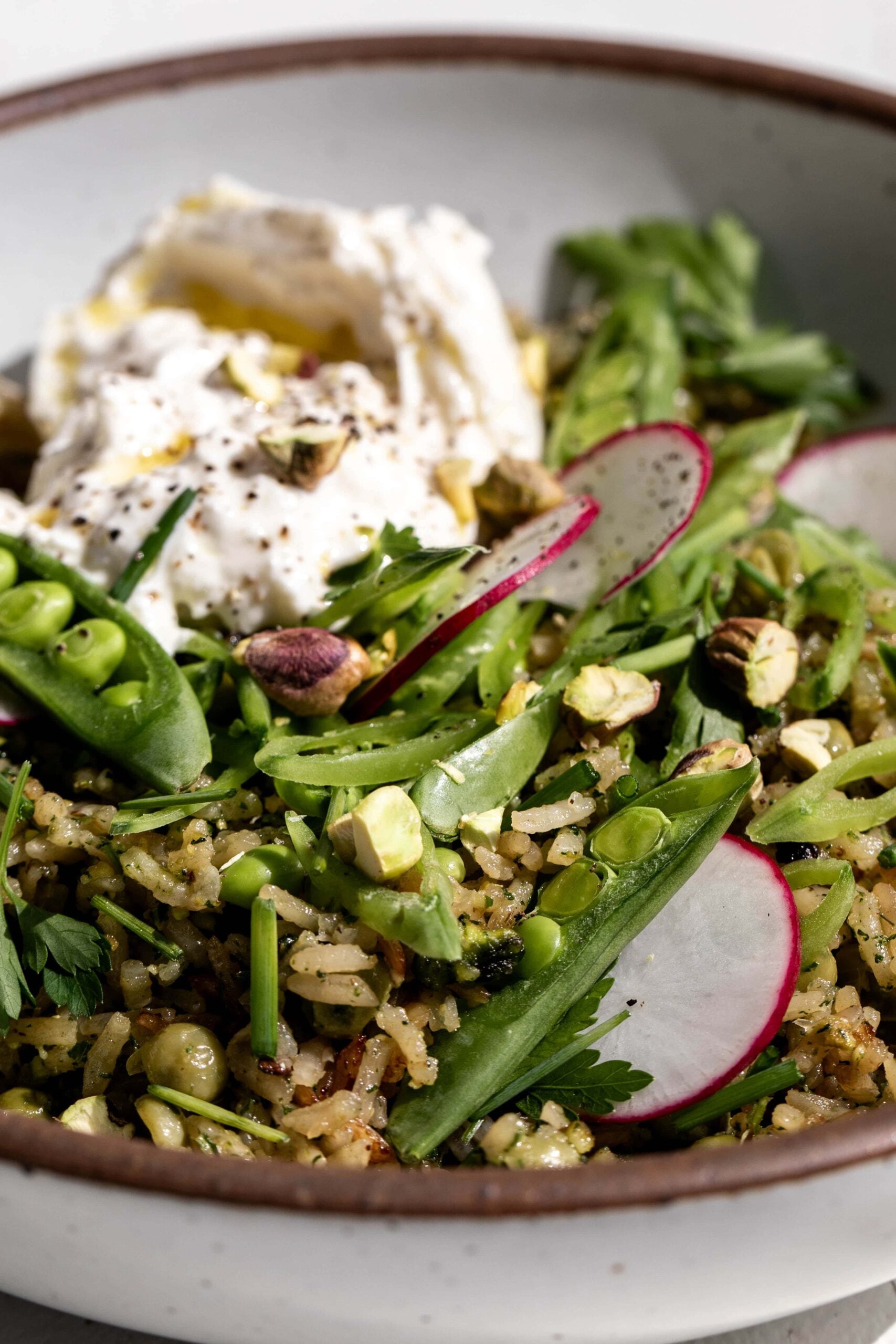
- Texture contrast – Fluffy rice, creamy pesto, and crisp snap peas create balance.
- Flexible serving – Works as a side dish or a light vegetarian main.
Key Ingredients in This Recipe
- Rice – Toasting the grains of white rice in the butter enhances its flavor and gives it more of a nutty taste. This can also keep it from reducing as much starch in the cooking process.
- Chicken stock – Cooking the rice in chicken stock instead of water adds a richer flavor to the rice. You can easily use vegetable stock in its place.
- Peas – I cook shelled English peas or frozen sweet peas in the pot with the rice, then slice sugar snap peas on top for a fresh crunch.
- Herbs – A combination of basil and parsley adds a bright green color and herby flavor to the pistachio pesto.
- Spinach – I like to try to sneak greens in wherever I can. I blanch spinach leaves with the herbs and blend them into the pesto sauce.
- Pistachios – Pistachios are actually the seed of a plant belonging to the cashew family rather than a nut. They come in shells which are easily peeled away to reveal mild, slightly soft and sweet meat. I recommend buying them already shelled to save time in this recipe.
A full ingredient list with exact amounts can be found in the recipe card below.
Pro Tip
Finely chop any larger mix-ins like snap peas or herbs to a similar size as the rice grains if you have picky eaters—this ensures every bite is balanced and evenly coated with the pistachio pesto instead of clumping in certain areas.
Swaps and Substitutions
- Rice: Substitute with a mix of rice and orzo or use brown rice (adjust cook time as needed).
- Chicken stock: Use vegetable stock to keep the dish vegetarian.
- Pistachios: Swap with almonds, walnuts, or pine nuts for a different pesto variation.
- Burrata: Use fresh mozzarella or goat cheese if burrata isn’t available.
- Shallots: Replace with diced yellow onion for a similar base flavor.
How to Make Spring Rice Pilaf with Pistachio Pesto (Step-by-Step)
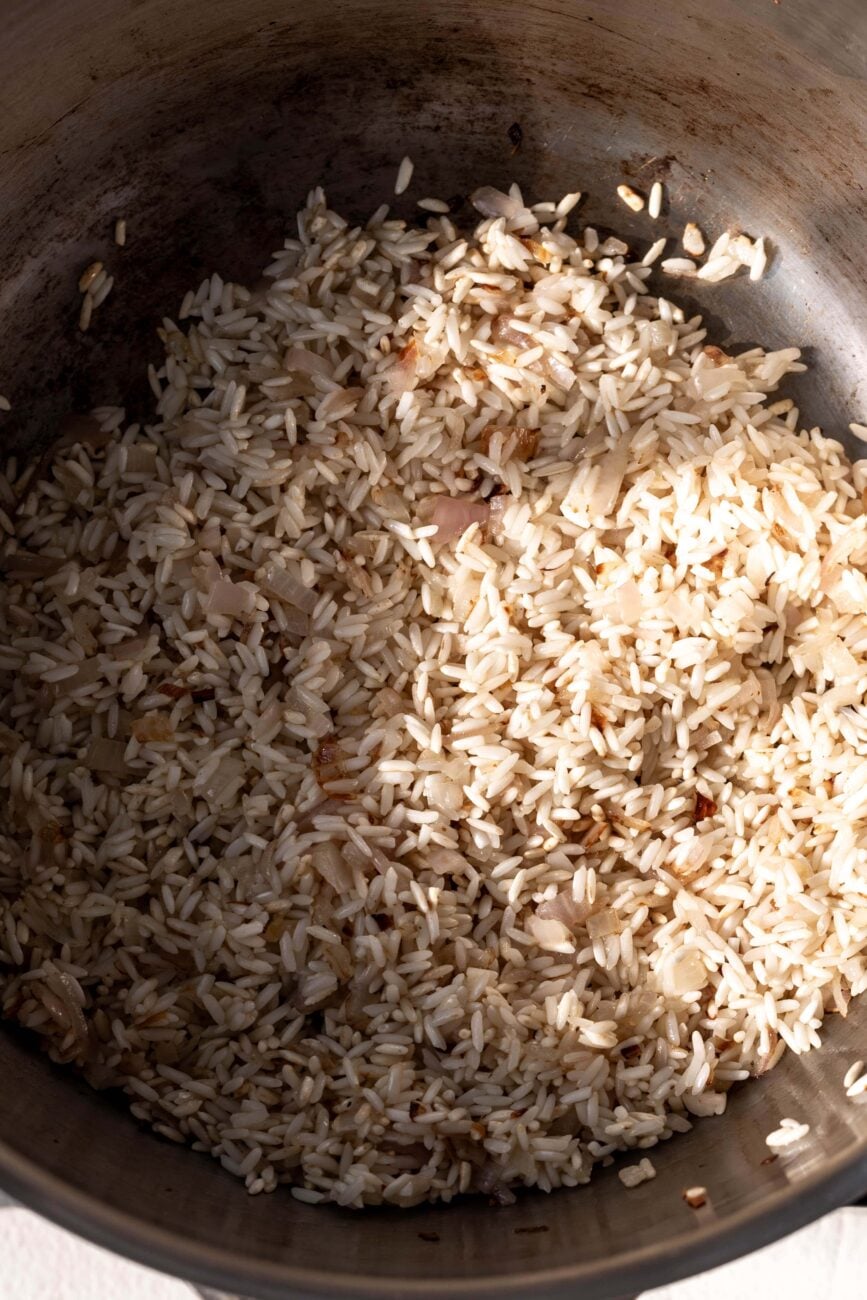
Heat a medium heavy-bottomed pot over medium-low heat, add the butter and allow to melt. Add shallots and sauté until tender, about 4 minutes. Add rice and stir briefly until grains are coated with the butter, cooking until the rice is a pale golden color, about 2 minutes.
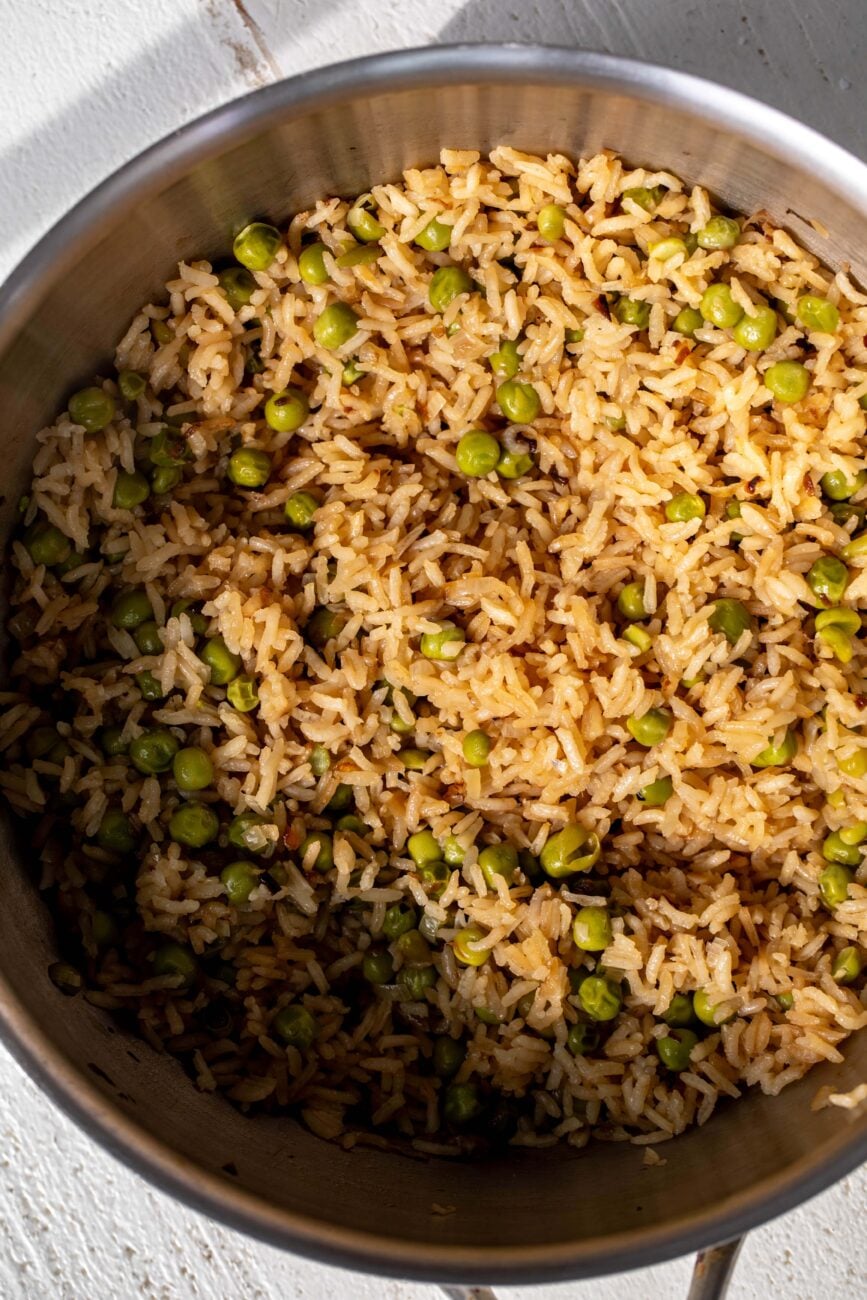
Stir in the chicken broth and shelled peas then bring the mixture to a boil over medium heat. Cover, lower the heat to medium low, then cook the rice until all the liquid has been absorbed, about 15 minutes. Fluff the rice pilaf with a fork and season with salt.
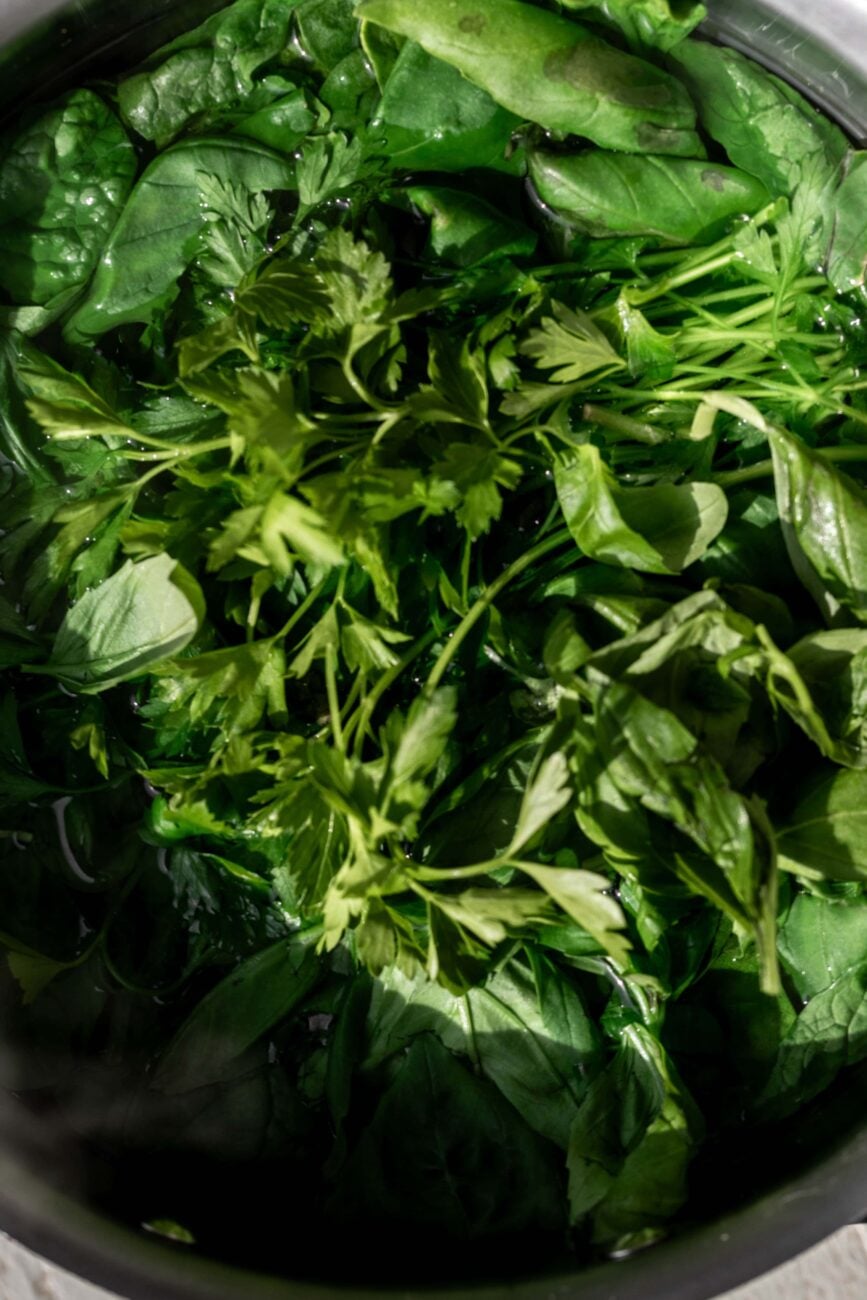
Bring a medium pot of water to a boil over medium-high heat. Add the spinach, basil and parsley. Cook until wilted but the leaves are still bright green, about 1 minute. Remove the greens with tongs and place in a bowl filled with ice water.
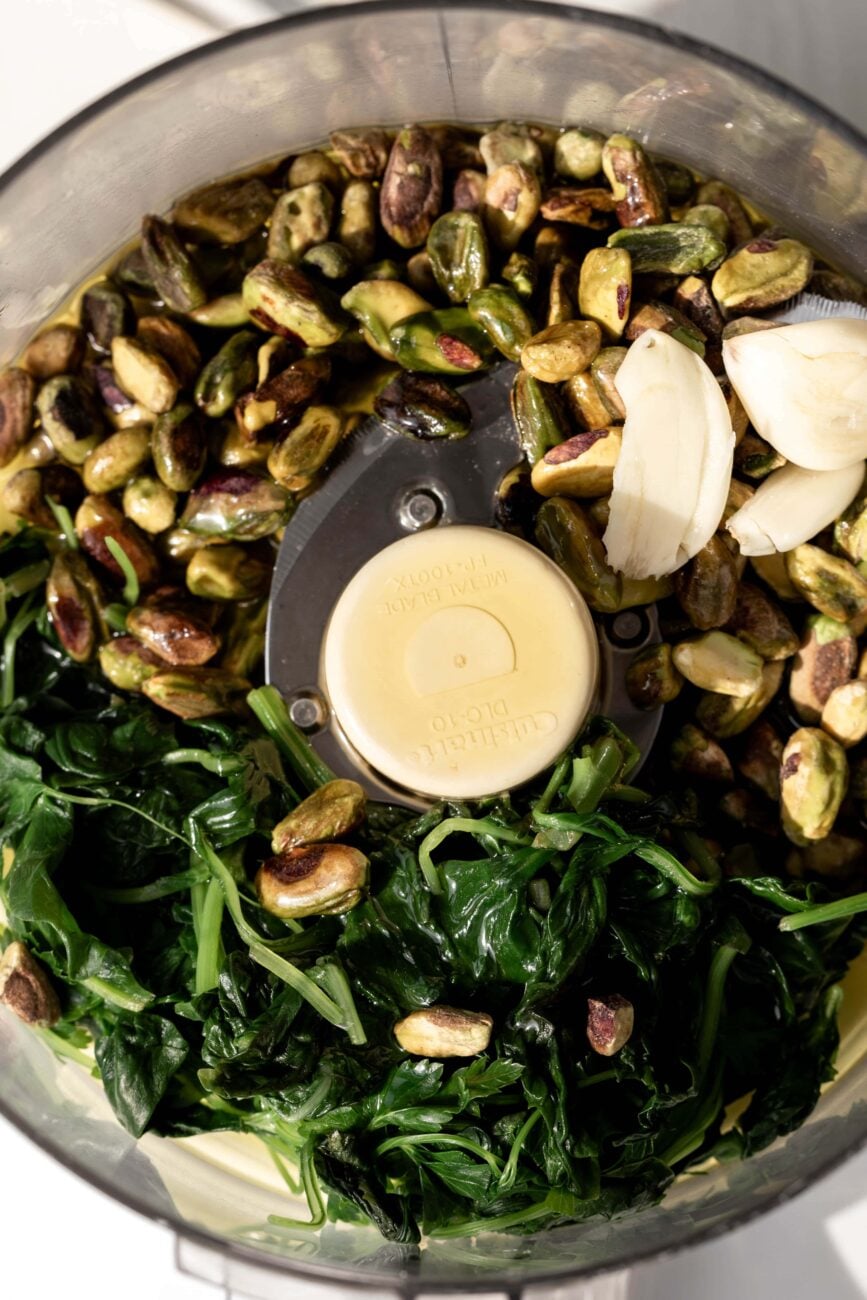
Remove and squeeze to drain excess water. Add to a blender or food processor fitted with the blade attachment. Then add the pistachios, garlic, lemon juice and oil.
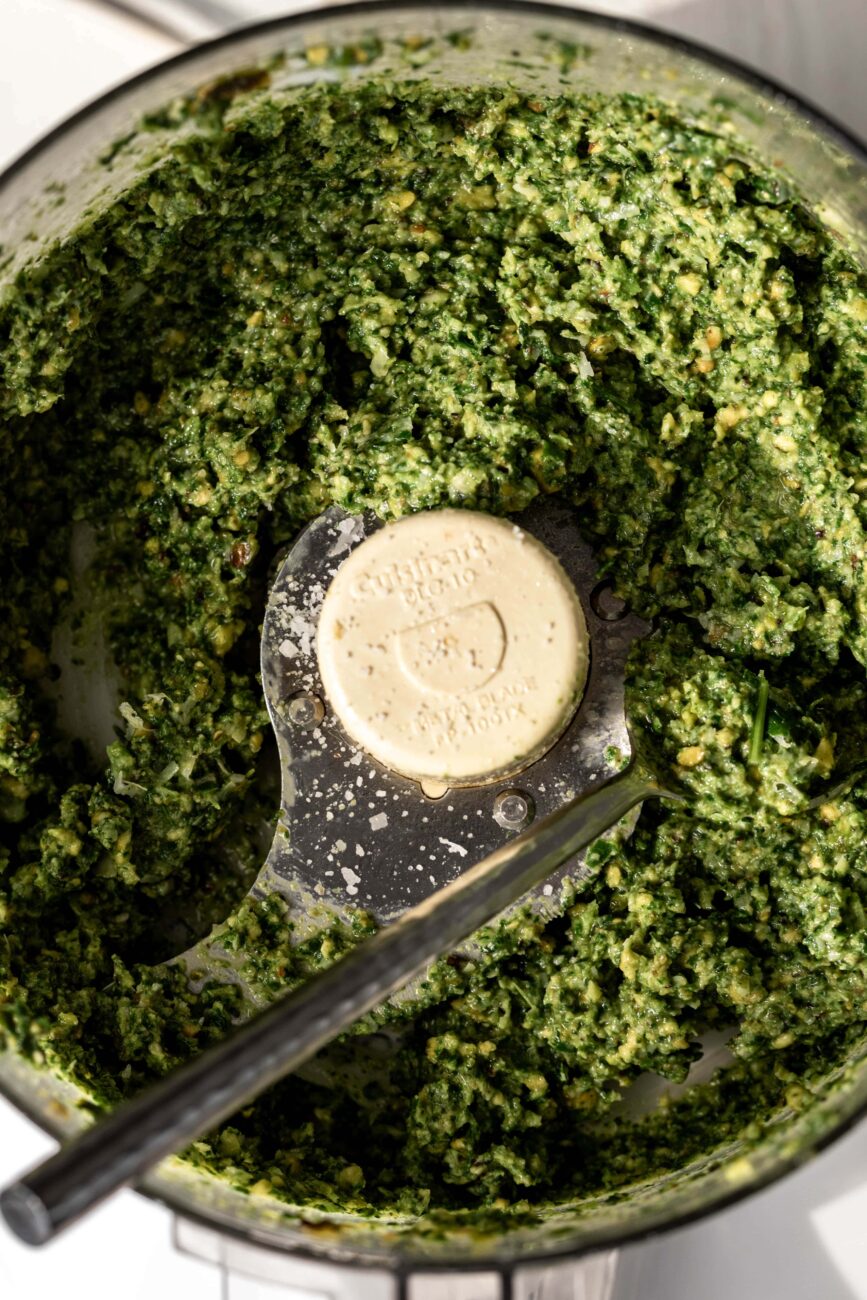
Puree until smooth then season with salt. Add in the Pecorino Romano, pulsing to combine.
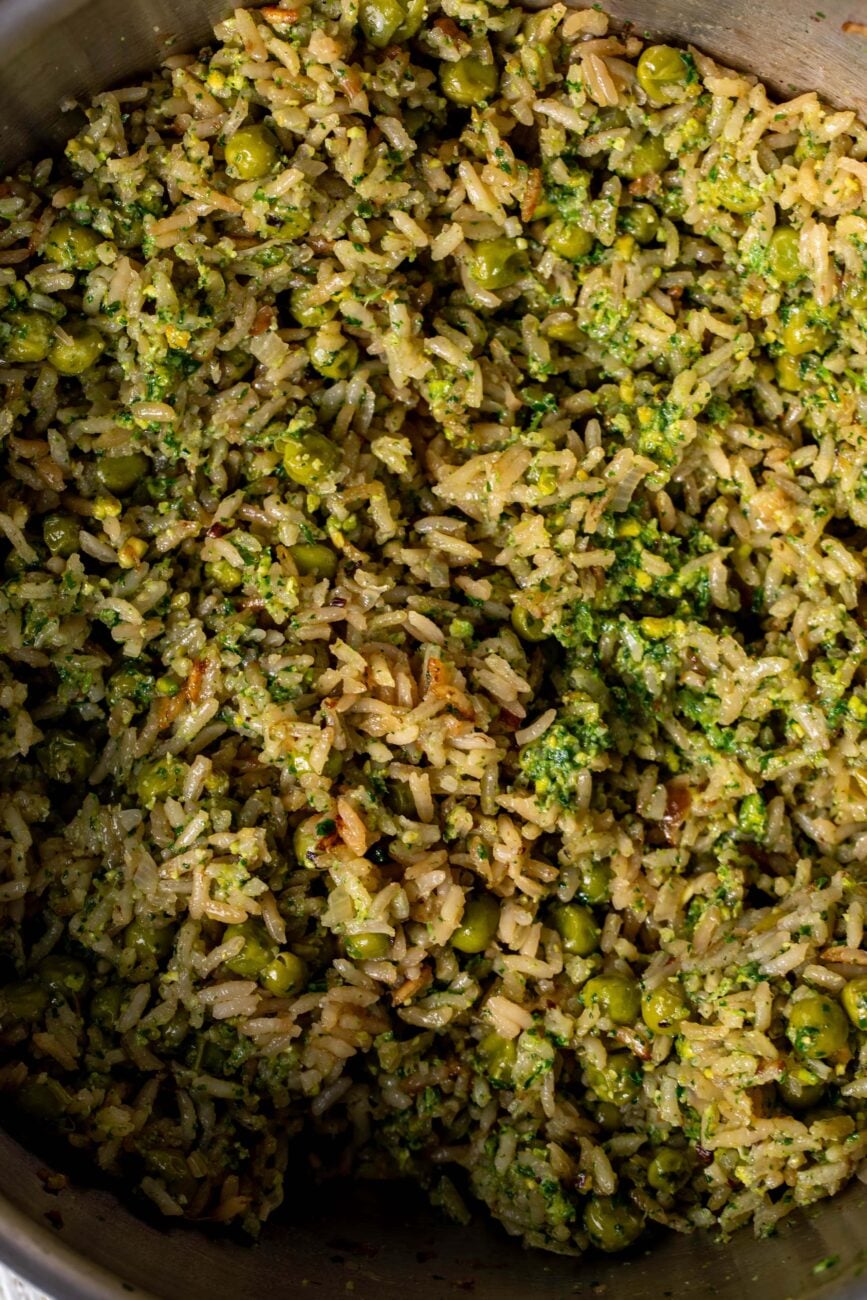
Add ½ cup (133g) of the pistachio pesto to the rice and continue to fluff until evenly combined.
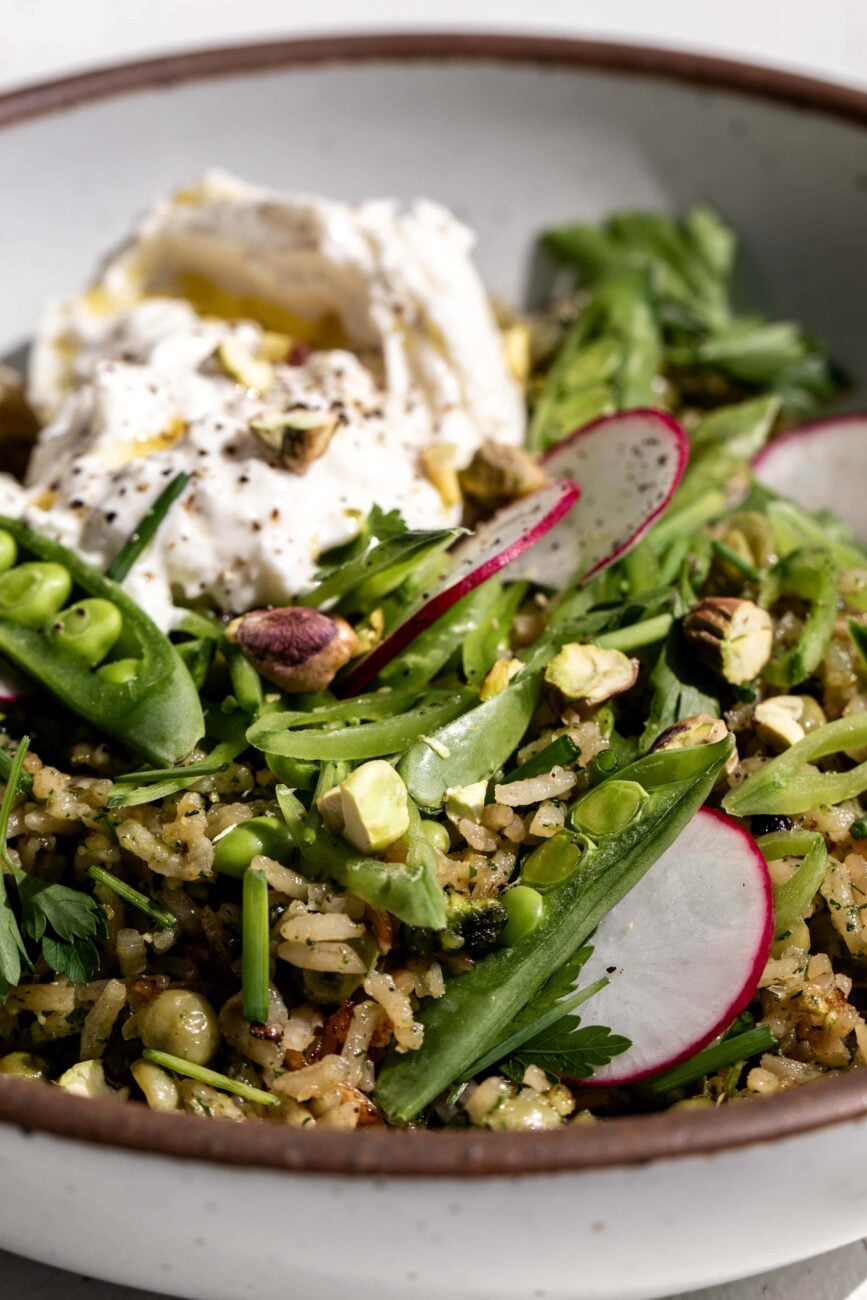
Divide the rice among serving plates. Top with the sliced snap peas, radish and burrata. Serve immediately.
How to Serve Spring Rice Pilaf with Pistachio Pesto
- Protein pairing: Pair with grilled chicken, steak, or roasted fish.
- Entertaining: Add to a spring spread with salads and seasonal vegetables.
- Grain bowl: Use as a base and top with additional roasted vegetables or protein.
How to Store Spring Rice Pilaf with Pistachio Pesto
- Refrigerator: Store in an airtight container for up to 3–4 days.
- Reheat: Warm gently on the stovetop or microwave with a splash of stock or water.
- Pesto storage: Store extra pesto separately to maintain freshness and color.
FAQ – Frequently Asked Questions
Yes, simply use vegetable stock instead of chicken stock and ensure the cheese used is vegetarian-friendly.
Long-grain white rice is best because it stays fluffy and separate when cooked in broth.
Yes, pistachio pesto can be made in advance and stored in the refrigerator for up to 3 days or frozen for longer storage.
Rice pilaf can become sticky if it’s overcooked, not toasted before adding liquid, or not rested after cooking.
Rice pilaf is best served warm, but it can also be enjoyed at room temperature as part of a grain bowl or salad.
Other Recipes to Try
If you this spring rice pilaf was the perfect herby addition your meal, give these recipes a try and follow me on Instagram for more updates:
Thanks for cooking with me! If you made this recipe, leave a 🌟 rating and share your thoughts or tips below. I’d love to hear from you!
Spring Rice Pilaf with Pistachio Pesto
Rate this Recipe
Ingredients:
- 2 tablespoons unsalted butter
- 2 medium shallots, diced
- 1 cup long-grain white rice
- 2 cups chicken stock
- 1 cup shelled english peas, frozen or fresh
- Kosher salt as needed
- 1 cup baby spinach
- 1 cup fresh basil leaves
- ½ cup flat leaf parsley
- ½ cup raw shelled Pistachios
- 1 clove garlic, smashed
- 2 tablespoons freshly squeezed lemon juice
- ⅓ cup extra-virgin olive oil
- ¼ cup freshly grated Pecorino Romano cheese
- 1 cup sugar snap peas, sliced on the bias
- 2 medium radish, shaved
- 8 ounces burrata, torn into pieces
Instructions:
- Heat a medium heavy-bottomed pot over medium-low heat, add the butter and allow to melt. Add shallots and sauté until tender, about 4 minutes. Add rice and stir briefly until grains are coated with the butter, cooking until the rice is a pale golden color, about 2 minutes.
- Stir in the chicken broth and shelled peas then bring the mixture to a boil over medium heat. Cover, lower the heat to medium low, then cook the rice until all the liquid has been absorbed, about 15 minutes. Remove from heat and fluff the rice pilaf with a fork and season with salt.
- Bring a medium pot of water to a boil over medium-high heat. Add the spinach, basil and parsley. Cook until wilted but the leaves are still bright green, about 1 minute. Remove the greens with tongs and place in a bowl filled with ice water.
- Remove and squeeze to drain excess water. Add to a blender or food processor fitted with the blade attachment. Then add the pistachios, garlic, lemon juice and oil.
- Puree until smooth then season with salt. Add in the Pecorino Romano, pulsing to combine.
- Add ½ cup (133g) of the pistachio pesto to the rice and continue to fluff until evenly combined.
- Divide the rice among serving plates. Top with the sliced snap peas, radish and burrata. Serve immediately.
Watch this Recipe
Notes:
Nutrition:
TAG ME ON INSTAGRAM TO BE FEATURED ON MY STORIES! @cookingwithcocktailrings
I had this recipe without chicken or fish, and, although I am not a vegetarian, I found it delicious as a main meal on its own. Highly recommend!
What a great main dish this turned out to be! I thoroughly enjoyed it!
So glad it was a hit! Thank you for sharing!