

Crispy Persian Jeweled Rice Tahdig
jump toRECIPE
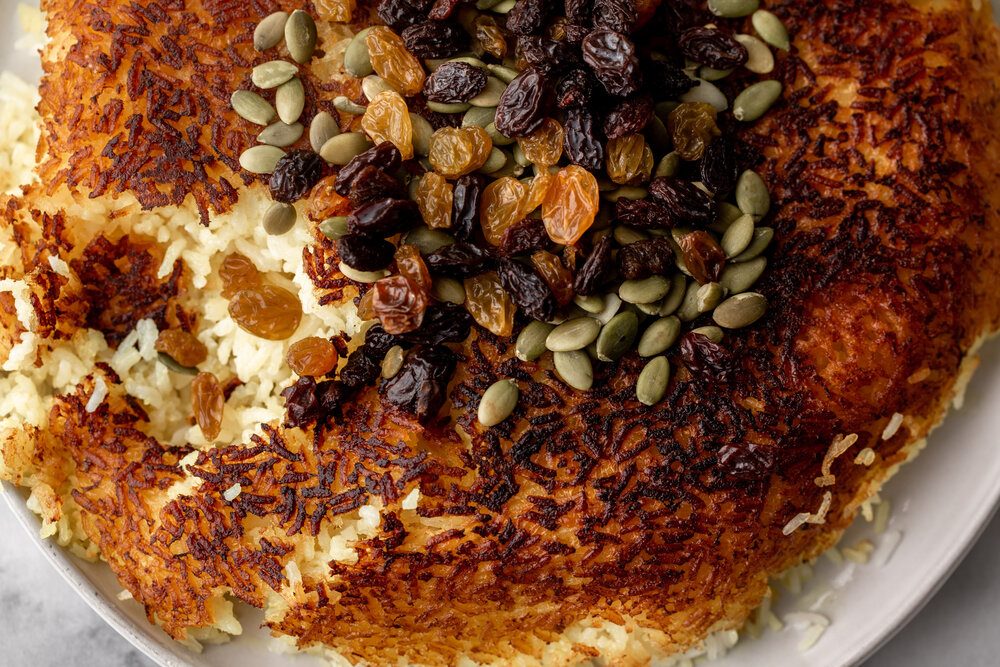
Tahdig, the prized crisped rice at the bottom of the pot, is often inverted and served golden brown, garnished with currants or nuts. This crispy Persian jeweled rice tahdig pairs beautifully with grilled meats, vegetables, stews, or kabobs, essentially anytime plain rice would be on the table. Traditionally, saffron lends both fragrance and a sunny yellow hue, but for a more budget-friendly option, a pinch of turmeric provides a similar color.
Though the ingredient list is short, tahdig is all about technique. The key is par-cooking the rice until just al dente, so it finishes cooking in the buttery crust without turning mushy. Using a light, nonstick pot or pan helps the rice release easily, making that dramatic flip much less intimidating. If you’re planning a little dinner party or get-together, serve it with crispy halloumi kale salad or crispy and juicy arayes to round things out.

Why You’ll Love This Recipe
- Stunning presentation – Jeweled rice filled with colorful toppings and crispy tahdig creates an impressive centerpiece dish.
- Incredible texture – Fluffy steamed rice contrasts perfectly with the crunchy golden tahdig crust.
- Sweet and savory balance – Nuts, dried fruit, saffron, and herbs create layers of flavor in every bite.
What is Tahdig?
Tahdig is the crispy, golden-brown layer of rice that forms at the bottom of the pot when parboiled rice cooks in butter or oil. A staple in Persian cuisine, it’s prized for its crunchy texture and rich flavor — and is often considered the best part of the dish.
While classic tahdig is made with rice, there are several variations made with sliced potatoes, bread (like pita or lavash), or even noodles layered at the bottom of the pan before cooking. This version keeps it simple and traditional with crispy rice tahdig.
Key Ingredients in This Recipe
- Saffron – Threads of the red spice are beautiful but they are also quite expensive. It’s so expensive (it made the list of most expensive foods) because each flower only produces a few threads and blooms for only a few weeks every year — not to mention they are harvested by hand. The threads of saffron add a subtle, sweet flavor as well as that striking color.
- Basmati rice – This recipe calls for basmati rice, which has light grains and a fragrant aroma. Though tahdig is typically made with basmati rice, any medium to long grain rice variety can easily be substituted. I generally use whatever type of rice I happen to have leftover.
A full ingredient list with exact amounts can be found in the recipe card below.
Pro Tip
Trying to flip your rice and the tahdig cracks or doesn’t all come out in one piece? Not to fret! Go for a more rustic approach and spread the rice on a plate or in a bowl and top with pieces of tahdig. Scrape it out of the pan with a plastic spatula if need be.
Swaps and Substitutions
- Basmati rice: Jasmine rice can be used, though basmati gives the fluffiest texture and most traditional result.
- Saffron: Turmeric can be substituted for color, though the flavor will be less floral and nuanced.
- Yogurt: Greek yogurt works well for the tahdig base and adds extra richness.
- Butter: Ghee or olive oil can be used for a slightly different flavor and texture.
How to Make Crispy Persian Jeweled Rice Tahdig
- Soak the rice. Add the rice to a medium mixing bowl and rinse the rice with cold water. Swirl with your fingers to release the starch. Drain and continue this process a few times, until the water runs clear. Once the water runs clear, let the rice soak for 30 minutes to 1 hour. Drain and set aside.
- Bloom the saffron. Fill a large pot with water and bring to a boil over high heat. Spoon two tablespoons of the boiling water into a small bowl. Stir the saffron into the small bowl of water and let sit.
- Par-cook the rice. Add salt to the large pot of boiling water, then add the rice and boil until the rice is just tender. Cook until the rice is soft on the outside but still al dente, about 5 to 7 minutes. Drain the rice in a fine mesh sieve and rinse with cold water to stop the rice from cooking. Drain and add to a large mixing bowl.
- Stir together the yogurt and saffron. In a medium mixing bowl stir together the yogurt, saffron water and 4 tablespoons of the melted butter. Stir in 1 heaping cup of the boiled rice.
- Add the rice mixture to a pan. Heat a 12-inch nonstick skillet over medium heat, add the canola oil and heat through. Add the remaining melted butter. Add the yogurt-rice mixture and spread out in an even layer using a wooden spoon.
- Make holes in the rice for steam. Pile the remaining rice into the pan, mounding it in a pyramid towards the center. Use the handle of the wooden spoon to make 6 holes in the rice down to the bottom of the pot to allow steam to escape from the bottom. This way the bottom will become crispy. The oil and butter mixture should be bubbling up the sides of the pan, add additional oil if needed.
- Cook the rice. Cook the rice over medium-high heat until the mixture is evenly browned along the edges, about 8 minutes. Cover the mixture with a lid wrapped in a kitchen towel and lower the heat to medium-low. Steam the rice until it’s tender and cooked through. Turn the pan every 10 minutes to ensure even browning, about 20 minutes total.
- Flip the pan and serve. Remove from heat and let cool for 5 minutes then place a plate on top of the pan and invert the rice onto it so the tahdig is on top. Top with the pumpkin seeds and raisins.
How to Serve This Recipe
- As a centerpiece dish: Serve on a large platter to showcase the crispy tahdig and colorful jeweled toppings.
- With proteins: Pair with roasted chicken, grilled lamb, or kebabs for a traditional-style meal.
- Holiday-style: Serve during celebrations, dinner parties, or festive gatherings for an impressive presentation.
- With sauces: Pair with yogurt sauce, mast-o-khiar, or fresh herbs for brightness and contrast.
How to Store This Recipe
- Refrigerator: Store leftover rice in an airtight container for up to 4 days.
- Reheating: Reheat in a skillet or oven to help revive the crispy tahdig texture.
- Freezer: Freeze portions for up to 1 month, though the tahdig may soften slightly after thawing.
- Tahdig texture: Store the crispy tahdig separately if possible to maintain crunch.
- Make ahead: Prep the nuts, dried fruit, and saffron ahead of time for easier assembly.
FAQ – Frequently Asked Questions
Tahdig refers to the crispy, golden brown layer of rice that forms when par-boiled rice is fried in a pan of butter. It’s prized in Iranian culture (similar versions of the dish also appear in other cuisines) and is also known as crispy rice or scorched rice. There are other types of tahdig – it can be made with a layer or potatoes, bread (typically pita) or noodles at the bottom of the pan but my favorite is made simply using rice.
If you’re trying to flip your rice and the tahdig cracks or doesn’t all come out in one piece then go for a more rustic approach and spread the rice on a plate or in a bowl and top with pieces of tahdig. Scrape it out of the pan with a spatula if need be (plastic if using a non-stick pan so it doesn’t scratch).
This dish is all about technique, and it takes a bit of time. The majority of the recipe is properly cooking the rice so it is al dente. That way it finishes cooking when it’s pan-fried in the butter and does not become mushy. I’d recommend using a light, nonstick pan or pot for tahdig. It will allow the rice to release easily from the bottom of the pan and makes turning it over easier.
Mixing a small portion of rice with yogurt and saffron water and placing it at the bottom of the pot enhances both flavor and crust formation. Generously coat the bottom with oil or butter and use a nonstick pot or well-seasoned cast iron pan for easy release and prevent sticking.
Loosen the sides gently with a spatula, then use a large flat plate or platter to invert the pot. If needed, run cold water around the bottom of the pot (without letting water touch the rice) to help release it cleanly.
Tahdig is best enjoyed fresh, but you can refrigerate leftovers in an airtight container (crust side up) for up to 4 days. To reheat, gently warm in a nonstick skillet with a splash of oil to regain its crisp texture.
Other Recipes to Try
If this hands-on and deeply satisfying dish has officivally been added to your dinner rotation, check out some of my other Middle Eastern-inspired favorites below:
- Turkish Savory Yogurt with Poached Eggs
- Mediterranean-Inspired Falafel Bowl
- Lamb Burger with Harissa Aioli
Thanks for cooking with me! If you made this recipe, leave a 🌟 rating and share your thoughts or tips below. I’d love to hear from you!
Crispy Persian Jeweled Rice Tahdig
Rate this Recipe
Ingredients:
- 2 cups basmati rice
- ¼ cup kosher salt
- ¼ teaspoon saffron threads
- ½ cup whole milk plain yogurt
- 8 tablespoons unsalted butter, melted
- 3 tablespoons vegetable oil
- 2 tablespoons pumpkin seeds
- 2 tablespoons raisins
- 2 tablespoons golden raisins
Instructions:
- Add the rice to a medium mixing bowl and rinse the rice with cold water, swirling with your fingers to release the starch. Drain and continue this process a few times, until the water runs clear when it’s drained. Once the water runs clear, let the rice soak for 30 minutes to 1 hour. Drain and set aside.
- Fill a large pot with water and bring to a boil over high heat. Spoon two tablespoons of the boiling water into a small bowl. Stir the saffron into the small bowl of water and let sit for at least 10 minutes.
- Add salt to the large pot of boiling water, then add the rice and boil until the rice is just tender. Cook until the rice is soft on the outside but still al dente, about 5 to 7 minutes. Drain the rice in a fine mesh sieve and rinse with cold water to stop the rice from cooking. Drain and add to a large mixing bowl.
- In a medium mixing bowl stir together the yogurt, saffron water and 4 tablespoons of the melted butter. Stir in 1 heaping cup of the boiled rice.
- Heat a 12-inch nonstick skillet over medium heat, add the canola oil and heat through then add the remaining melted butter. Add the yogurt-rice mixture and spread out in an even layer using a wooden spoon.
- Pile the remaining rice into the pan, mounding it in a pyramid towards the center. Use the handle of the wooden spoon to make 6 holes in the rice down to the bottom of the pot to allow steam to escape from the bottom and crisp the bottom. The oil and butter mixture should be bubbling up the sides of the pan, add additional oil if needed.
- Cook the rice over medium-high heat until the mixture is evenly browned along the edges, about 8 minutes. Cover the mixture with a lid wrapped in a kitchen towel and lower the heat to medium-low. Steam the rice until it’s tender and cooked through, turning the pan every 10 minutes to ensure even browning, about 20 minutes total.
- Remove from heat and let cool for 5 minutes then place a plate on top of the pan and invert the rice onto it so the tahdig is on top. Top with the pumpkin seeds and raisins.
Notes:
Nutrition:
TAG ME ON INSTAGRAM TO BE FEATURED ON MY STORIES! @cookingwithcocktailrings


I love how my rice came out with this recipe! I’ve tried other Tahdig recipes (with more complicated methods!) and this one is by far the easiest.
I’m so happy to hear that!!! Yes, I tried to simplify the recipe as much as possible – I’m obsessed with that crispy crust!! Thank you for sharing Jenn!
Oh my gosh this came out perfectly. So freaking tasty. I have really well seasoned cast iron and was able to use that. Slipped right out in one whole glorious cake. Thank you so much for always making these things so foolproof.
YAY!!! I am so happy to hear that! Thanks so much for sharing!