
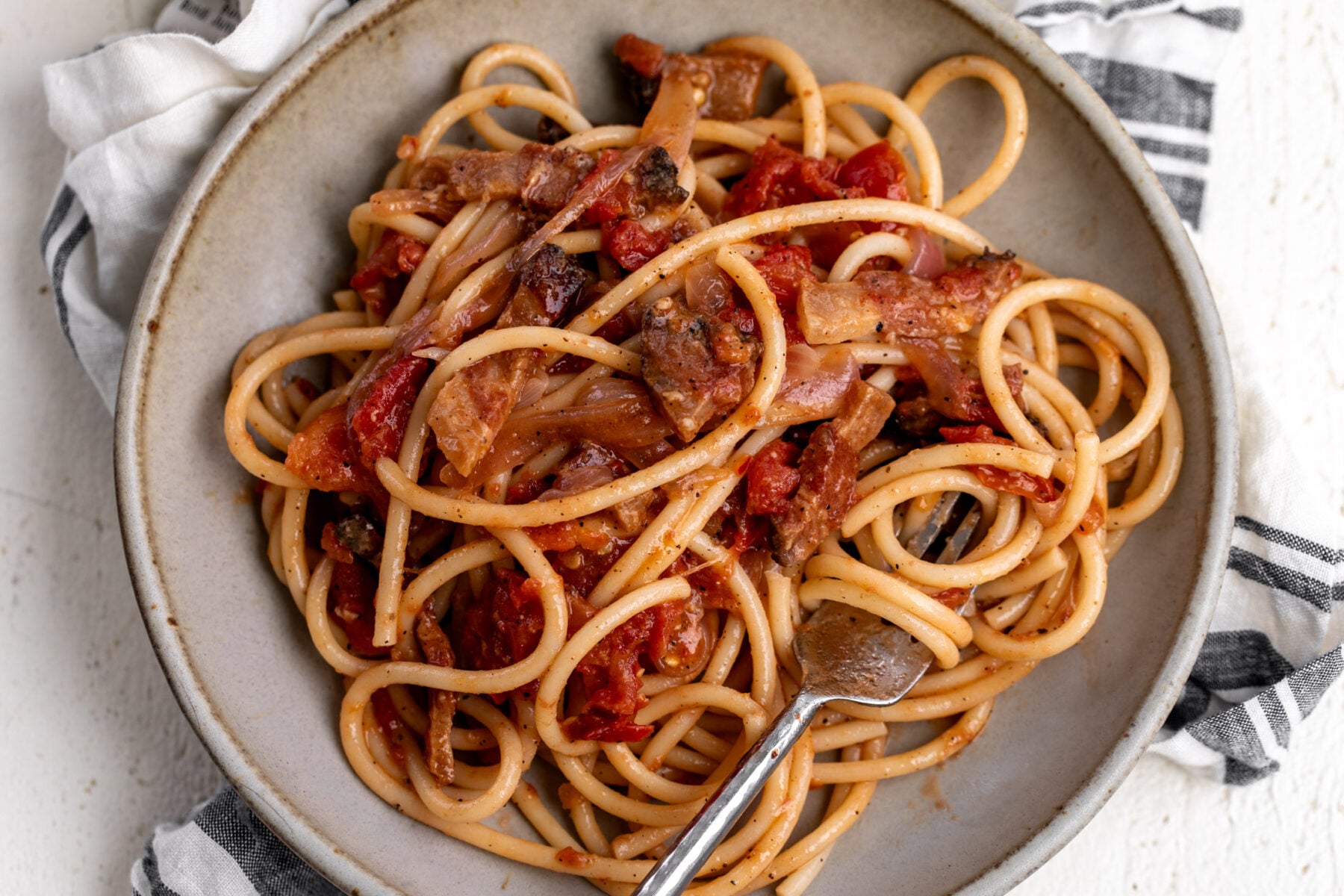
Quick Bucatini Carbonara with Bacon & Peas

jump toRECIPE
Bucatini carbonara is a rich, comforting pasta dish that transforms a handful of simple ingredients into a restaurant-worthy meal. This version puts a Southern-inspired spin on the classic Roman pasta with crispy bacon ends, sweet green peas, and sliced green onions. The silky sauce gets its texture from a combination of whole eggs, egg yolks, Pecorino Romano, and Parmesan, tossed with hot pasta and starchy pasta water until glossy and creamy. It’s an easy weeknight dinner that feels special enough for a cozy night in. If you love classic Italian pasta dishes, try my cacio e pepe or this comforting bucatini all’Amatriciana next.

Why You’ll Love This Recipe
- A twist on classic carbonara – Bacon ends, sweet peas, and green onions give this Roman-inspired pasta a little Southern flair.
- A rich, silky sauce without cream – Eggs, egg yolks, Pecorino Romano, Parmesan, and starchy pasta water create a naturally creamy sauce.
- Ready in 25 minutes – With just 5 minutes of prep and 20 minutes of cooking, this pasta is a great option for a satisfying weeknight dinner.
Key Ingredients in This Recipe
- Eggs – Eggs form the creamy, rich sauce which sets this recipe apart. The goal is to lightly cook the eggs when they are added to the hot pasta without scrambling them. I use 2 whole eggs and 4 egg yolks to create a rich and creamy sauce.
- Bacon ends – I use bacon ends in this recipe. You can substitute ¼ pound thick-cut bacon, 4 ounces guanciale (salt-cured pork jowl) or pancetta (Italian cured pork belly). Bacon ends are cut from a large pork belly slab and are typically more irregular in size than bacon. I like how thick this cut is. Since the bacon is quite salty, you do not need much additional salt. While you salt most recipes as you cook, in this dish resist adding any salt until the pasta is tossed together, and you can taste test it.
- Peas – While not always traditional, I like to serve my version of carbonara with the addition of peas. The vibrant spring vegetable is a fresh contrast to the fatty pork.
- Pecorino Romano – Pecorino Romano is a hard, salty Italian cheese made from sheep’s milk. While I like the flavor of the combination of both cheeses in this recipe, it can easily be made with one or another.
- Parmesan – Parmesan-Reggiano is definitely one of my favorite cheeses. It’s a hard cow’s milk cheese aged for different lengths of time. I’d recommend buying a roughly cut piece of wrapped cheese from the grocery store – it’s typically a higher quality cheese. In this recipe I’d recommend grating it just before adding to the pasta to get the smoothest sauce possible.
- Bucatini – I serve this recipe using bucatini, the tube-like noodle. Spaghetti (which works as a substitute) is traditionally served in carbonara recipes.
A full ingredient list with exact amounts can be found in the recipe card below.
Pro Tip
Remove the pot from the heat before adding the egg mixture, and continuously toss the pasta as you slowly pour it in. Whisking some reserved pasta water into the eggs first helps temper the mixture, while the remaining starchy water loosens the sauce and helps it cling to the noodles. Use room-temperature eggs and freshly grated cheese for the smoothest consistency.
Swaps and Substitutions
- Pasta: Bucatini gives the sauce plenty of nooks to cling to, but spaghetti is a traditional and easy substitute.
- Bacon: Use thick-cut bacon, guanciale, or pancetta in place of bacon ends. Guanciale is the more traditional choice for Roman carbonara.
- Cheese: Use Pecorino Romano and Parmesan together for a balance of salty, sharp, and nutty flavors, or use either cheese on its own.
- Peas: Omit the peas if preferred, or keep them in for a pop of sweetness and texture.
- Green onions: Substitute chopped flat-leaf parsley for a fresher, more traditional herb garnish.
- Shallots: Sauté finely chopped shallots with the bacon for another layer of savory flavor.
How to Make Bucatini Carbonara (Step-by-Step)
- Whisk together the sauce. In a medium mixing bowl whisk together the eggs, egg yolks until they fall like ribbons from the whisk. Then whisk in the pecorino, Parmesan cheese and pepper and set aside.
- Cook the bacon. Heat a large Dutch oven over medium heat, add the olive oil and heat through. Add the bacon and cook, stirring occasionally, until crisp and golden brown, about 7 minutes. Remove the bacon to a paper towel-lined plate to drain and return the pot to heat.
- Cook the peas. Add the peas and cook until bright green and tender, about 1 minute. Remove the peas to the bowl with the bacon and set aside.
- Cook the pasta. Bring a large pot of water to the boil; add the salt and bring back to the boil. Add the spaghetti and cook, stirring occasionally, until al dente, about 7 minutes. Set aside 1½ cups of the pasta water then drain.
- Combine the pasta with pasta water. Add the pasta and ½ cup of the reserved pasta water to the Dutch oven over low heat, tossing to coat the noodles until warmed. Remove from heat.
- Toss with the sauce. Whisk ½ cup of the remaining pasta water into the egg mixture then slowly pour into the pasta mixture, tossing the pasta constantly with tongs until the cheese has melted and the egg sauce thickens to the consistency of heavy cream. Add more pasta water if needed. Add the bacon and peas back to the pot and toss to combine.
- Serve. Divide the bucatini carbonara among warmed pasta bowls. Top with additional Parmesan cheese and green onion. Add an egg yolk to the middle of each bowl, if using.
How to Serve Bucatini Carbonara
- Finish with cheese: Top each bowl with freshly grated Parmesan for an extra savory finish.
- Add green onions: Scatter thinly sliced green onions over the pasta for a fresh, mild bite.
- Add an egg yolk: Place an optional egg yolk in the center of each serving and stir it into the hot pasta just before eating for an extra-rich sauce.
- Pair with a salad: Serve alongside a crisp green salad or simple arugula salad to balance the richness of the pasta.
- Add bread: Crusty bread is great for soaking up any extra sauce.
How to Store Bucatini Carbonara
- Refrigerate: Store leftover carbonara in an airtight container in the refrigerator for up to 3 days. The sauce will firm up as it chills.
- Reheat: Warm leftovers gently in a skillet over low heat with a splash of warm water, tossing frequently to loosen the sauce. Avoid high heat, which can cause the eggs to scramble.
- Make ahead: Carbonara is best prepared just before serving. The sauce can congeal as it sits, so I don’t recommend making the finished dish ahead of time.

FAQ – Frequently Asked Questions
Carbonara sauce can scramble if the egg mixture is added while the pasta or pan is too hot. Remove the pot from the heat before adding the eggs, and continuously toss the pasta as you slowly pour in the mixture. Tempering the eggs with some reserved pasta water first also helps prevent them from cooking too quickly.
No. Traditional Italian carbonara gets its creamy texture from eggs, hard cheese, rendered pork fat, and starchy pasta water rather than heavy cream. This recipe follows that technique, using whole eggs, egg yolks, Pecorino Romano, and Parmesan to create a rich, silky sauce.
Guanciale is made from cured pork jowl and is the traditional choice for Roman carbonara. Pancetta is cured pork belly, while bacon is typically smoked pork belly. All three add savory pork flavor and rendered fat to the sauce. This recipe uses bacon ends, which are especially nice because of their thick cut.
Why do you add pasta water to carbonara sauce?
Reserved pasta water contains starch released by the noodles as they cook. When combined with the eggs, cheese, and rendered bacon fat, it helps emulsify the ingredients into a smooth, glossy sauce that coats the bucatini. Add it gradually so you can control the consistency without making the sauce watery.
Carbonara is best made and served immediately because the egg-and-cheese sauce thickens and congeals as it cools. You can prep the ingredients ahead by grating the cheese, chopping the bacon, and whisking the egg mixture. Cook and toss everything together just before serving for the best texture.
Other Recipes to Try
Looking for more comforting pasta recipes? Check out some of these classic Italian pasta dishes below:
- Cacio e pepe
- Bucatini all’Amatriciana
- Tortellini en Brodo
- Beef, Pork & Prosciutto Italian Meatballs
- Bolognese Sauce over Pappardelle
- Spaghetti alla Vongole
Thanks for cooking with me! If you made this recipe, leave a 🌟 rating and share your thoughts or tips below. I’d love to hear from you!
Bucatini Carbonara with Bacon & Peas
Rate this Recipe
Ingredients:
For the carbonara:
- 2 large eggs
- 4 large egg yolks
- ½ cup freshly grated Pecorino Romano cheese
- ½ cup freshly grated Parmesan cheese
- ½ teaspoon freshly ground black pepper
- 2 tablespoons extra-virgin olive oil
- ½ pound bacon ends, chopped into ¼” cubes, (or thick-cut bacon, guanciale, pancetta)
- 1 cup shelled English peas
- ¾ pound bucatini, or spaghetti
- Kosher salt, as needed
For serving:
- Freshly grated Parmesan, as needed
- 2 green onions, thinly sliced
- 4 egg yolks (optional)
Instructions:
For the carbonara:
- In a medium mixing bowl whisk together the eggs, egg yolks until they fall like ribbons from the whisk. Then whisk in the pecorino, Parmesan cheese and pepper and set aside.
- Heat a large Dutch oven over medium heat, add the olive oil and heat through. Add the bacon and cook, stirring occasionally, until crisp and golden brown, about 7 minutes. Remove the bacon to a paper towel-lined plate to drain and return the pot to heat.
- Add the peas and cook until bright green and tender, about 1 minute. Remove the peas to the bowl with the bacon and set aside.
- Bring a large pot of water to the boil; add the salt and bring back to the boil. Add the spaghetti and cook, stirring occasionally, until al dente, about 7 minutes. Set aside 1½ cups of the pasta water then drain.
- Add the pasta and ½ cup of the reserved pasta water to the Dutch oven or pot over low heat, tossing to coat the noodles until warmed. Remove from heat.
- Whisk ½ cup of the remaining pasta water into the egg mixture then slowly pour into the pasta mixture, tossing the pasta constantly with tongs until the cheese has melted and the egg sauce thickens to the consistency of heavy cream. Add more pasta water if needed. Add the bacon and peas back to the pot and toss to combine.
For serving:
- Divide the bucatini carbonara among warmed pasta bowls. Top with additional Parmesan cheese and green onion. Add an egg yolk to the middle of each bowl, if using.
Notes:
Nutrition:
TAG ME ON INSTAGRAM TO BE FEATURED ON MY STORIES! @cookingwithcocktailrings
This page may contain affiliate links. If you choose to purchase after clicking a link, I may receive a commission at no extra cost to you. Thank you for your support so I can continue to share recipes with you!
Great savory dish!