

Eel Sauce (Unagi Sauce)
Eel sauce, also called unagi sauce, is easy to make at home and can be brushed on eel, used as a marinade or drizzled over sushi rolls.

jump toRECIPE
This post may contain affiliate links, which means that I make a small commission off items you purchase at no additional cost to you. Please read my policy page.
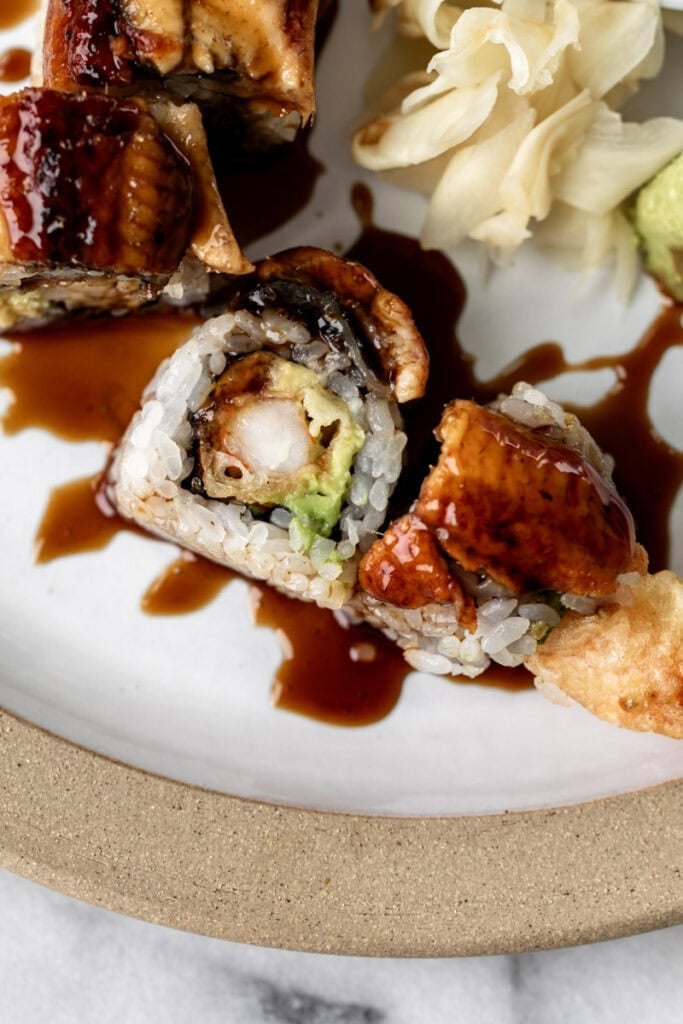
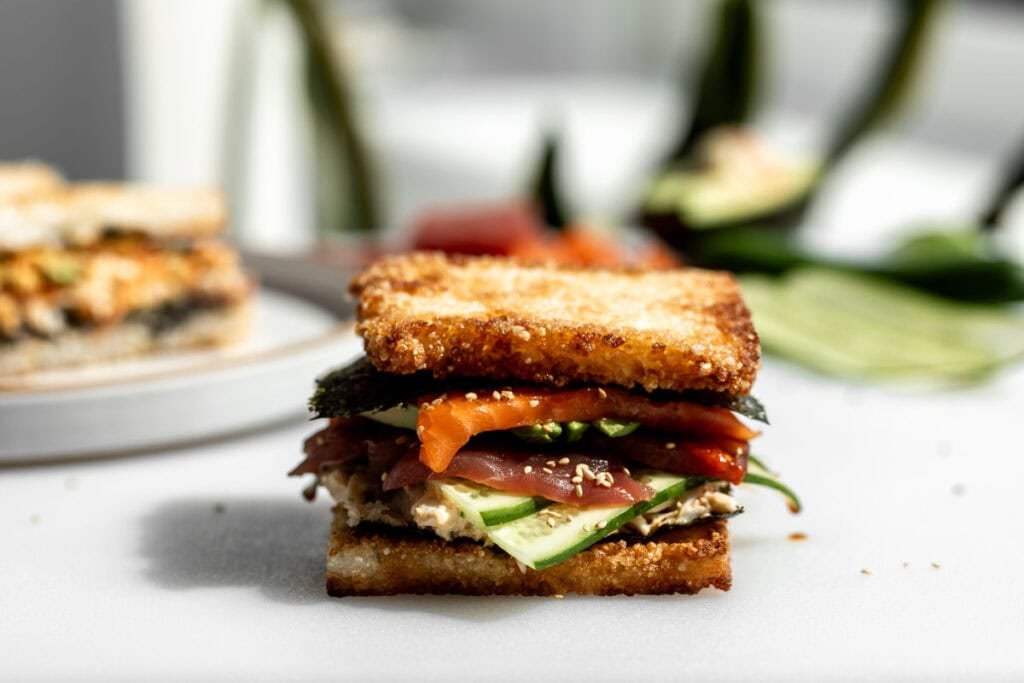
Eel sauce, also called unagi sauce or unagi no tare in Japanese, is based on a Japanese condiment nitsume which contains eel broth, but mine one does not. A question I hear a lot is, “Does eel sauce have eel in it?” The answer is no, it doesn’t. Eel sauce is a misnomer – it’s named for what it’s used for, not what it contains. It’s a thickened and sweetened soy sauce used as a glaze over broiled slices of eel (unagi), on BBQ dishes or drizzled over the top of sushi rolls served at many American sushi restaurants. I serve it over crispy rice with spicy shrimp salad, spicy tuna crispy rice or on this crispy rice sushi sandwich.
While you can find eel sauce in many grocery stores, Asian grocery stores and Japanese markets, it’s easy to make at home! A benefit to making your own is you can balance the sweet and sally flavors depending on your preference. Plus if you live in a place where it’s unavailable in stores, you can still enjoy the glossy caramelized brown sauce with a sweet and savory flavor.
Key Ingredients in this recipe
- Soy sauce – Soy sauce adds a savory depth of umami-packed flavor. I prefer to use low-sodium soy sauce so the salt can be easier controlled.
- Sugar – Not only does the sugar provide a sweet balance to the savory soy sauce, it also helps the sauce to thicken into a sticky sauce.
- Mirin – Mirin is a seasoned rice wine used in Japanese cooking. It’s made by fermenting cooked mochi rice, koji (fermented rice) and sochu which give it a sweet and tangy flavor. To substitute, I recommend using a combination of 3 parts sake and 1 part sugar.
A full ingredient list with exact amounts can be found in the recipe card below.
Swaps and substitutions
- If you’re impatient, you can thicken the mixture with a cornstarch slurry though I prefer to take the time to let the sauce simmer and thicken.
- The mirin can be substituted for sake.
- Some versions use ½ cup (115g) of dashi broth as a base for a deeper flavor.
Is eel sauce different than teriyaki sauce
While similar to teriyaki sauce, it’s thicker and while it is similar, eel sauce doesn’t contain any additional aromatics like ginger or garlic. If you are looking for a great teriyaki sauce recipe, try these teriyaki salmon bowls with sriracha cream sauce.
How to Make Eel Sauce (Step-by-step)

Add the sugar, mirin and soy sauce to a small saucepan. Whisk to combine.
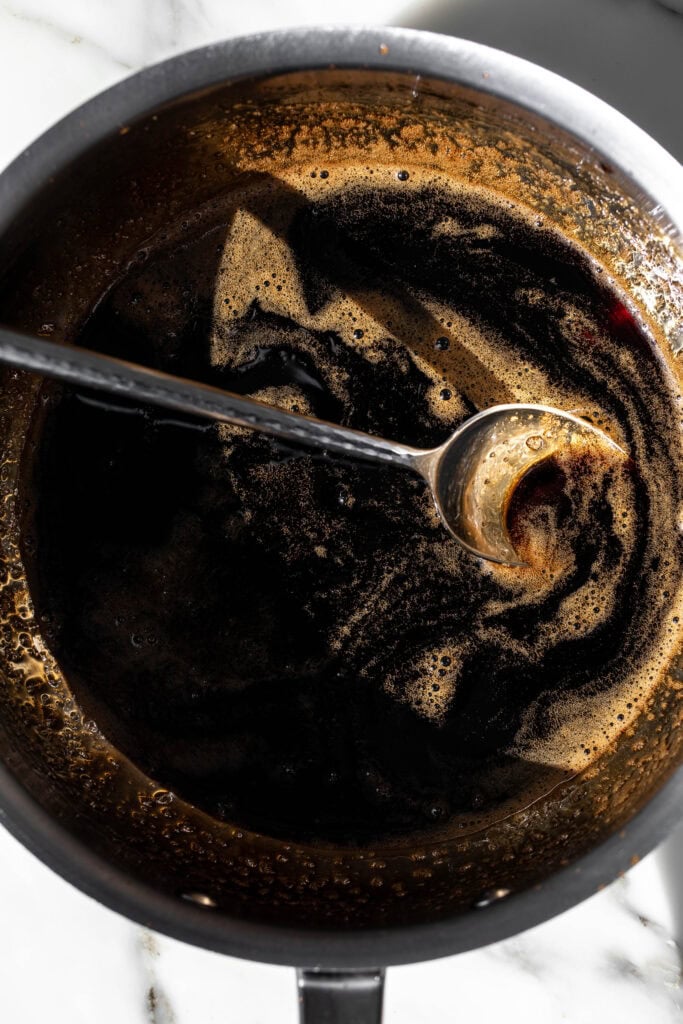
Cook, stirring occasionally over medium heat until the mixture thickens and has reduced to about ¾ cup (253g), about 15 minutes.
Note that it will thicken more as it cools. It should be the consistency of honey.
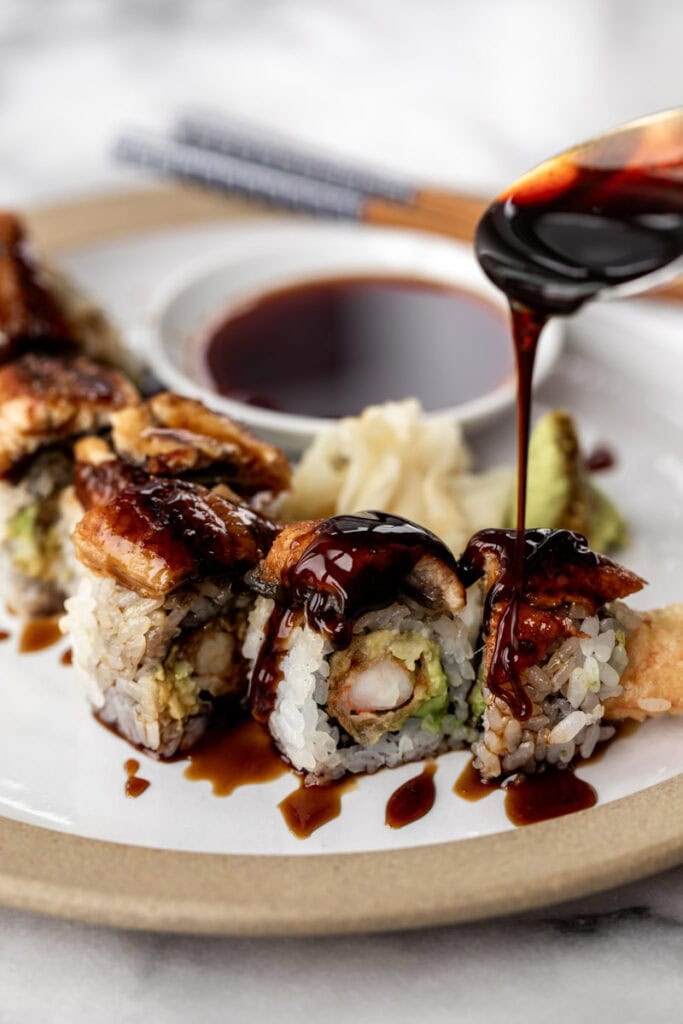
Let cool completely and use or store refrigerated in a resealable container for up to 2 weeks.
Troubleshooting eel sauce
- If the sauce is too thin. Return the sauce to heat and continue to reduce it until it thickens to the desired consistency.
- If the sauce is too thick. If you lost track of what you were doing and accidentally thickened the sauce too much, whisk in a bit of water at a time until the desired consistency is reached.
What to serve with eel sauce
In addition to traditional broiled eel, give this a try on these sushi-inspired recipes and follow me on Instagram for more updates:
FAQ – Frequently Asked Questions
Does eel sauce contain eel?
No! Eel sauce is a misnomer – it’s named for what it’s used for, not what it contains. It’s often used as a glaze over broiled slices of eel (unagi),
What does eel sauce taste like?
Eel sauce has a sweet, salty, umami-rich flavor. It’s similar to teriyaki sauce but it’s thicker and more concentrated.
What is the difference between eel sauce and teriyaki sauce?
Eel sauce is sweeter and more intense, while teriyaki often includes garlic and ginger and is thinner. Teriyaki is typically used as a marinade or cooking sauce; eel sauce is more of a glaze or finishing sauce.
How do I use eel sauce?
It’s great as a glaze for grilled proteins (like eel or salmon), drizzled over sushi rolls, or used as a dipping sauce for tempura and grilled vegetables.
How long does homemade eel sauce last?
Store it in an airtight container in the fridge for up to 2 weeks. Let it cool completely before storing.
Can I make eel sauce without mirin?
Yes. Substitute mirin with a mix of rice vinegar and a bit of sugar or honey to mimic the sweetness and acidity.
If you enjoy this homemade sauce recipe, give these a try:



Eel Sauce (Unagi Sauce)
Rate this Recipe
Ingredients:
- ½ cup granulated sugar
- ½ cup soy sauce
- ½ cup Mirin
Instructions:
- Add the sugar, soy sauce and mirin to a small saucepan. Whisk to combine.
- Cook, stirring occasionally over medium heat until the mixture thickens and has reduced to about ¾ cup (253g). Note that it will thicken more as it cools. It should be the consistency of honey.
- Let cool completely and use or store refrigerated in a resealable container for up to 2 weeks.
Watch this Recipe
Nutrition:
Serving: 1tbsp | Calories: 52kcal | Carbohydrates: 13g | Protein: 1g | Fat: 0.04g | Saturated Fat: 0.001g | Polyunsaturated Fat: 0.004g | Monounsaturated Fat: 0.002g | Sodium: 615mg | Potassium: 21mg | Fiber: 0.1g | Sugar: 11g | Calcium: 2mg | Iron: 0.2mg
DID YOU MAKE THIS?
TAG ME ON INSTAGRAM TO BE FEATURED ON MY STORIES! @cookingwithcocktailrings


Who knew Eel sauce was so easy to make! I have been trying to cut down on added ingredients that we don’t need from our diet and this is so flavorful and perfect!
So easy to make!
I have made this recipe multiple times. If I go out to an Asian restaurant, I get an extra container of rice to use to make the recipe. It is delicious! It is a new staple meal.
So happy to hear that!! Thank you for sharing! Glad you enjoy.
At first I thought..hmm, there’s eel in the sauce and where am I going to get the eel!?, but then realized, I had all the ingredients on hand. Made this to go along with your Crispy Rice with Spicy Shrimp Salad recipe and it turned out fabulous. This sauce would go great with so many dishes. We all loved it. Thank you, for sharing.
I’m so so happy to hear that! I’m so glad you found it easy to make!