

Pork Pozole Verde

jump toRECIPE
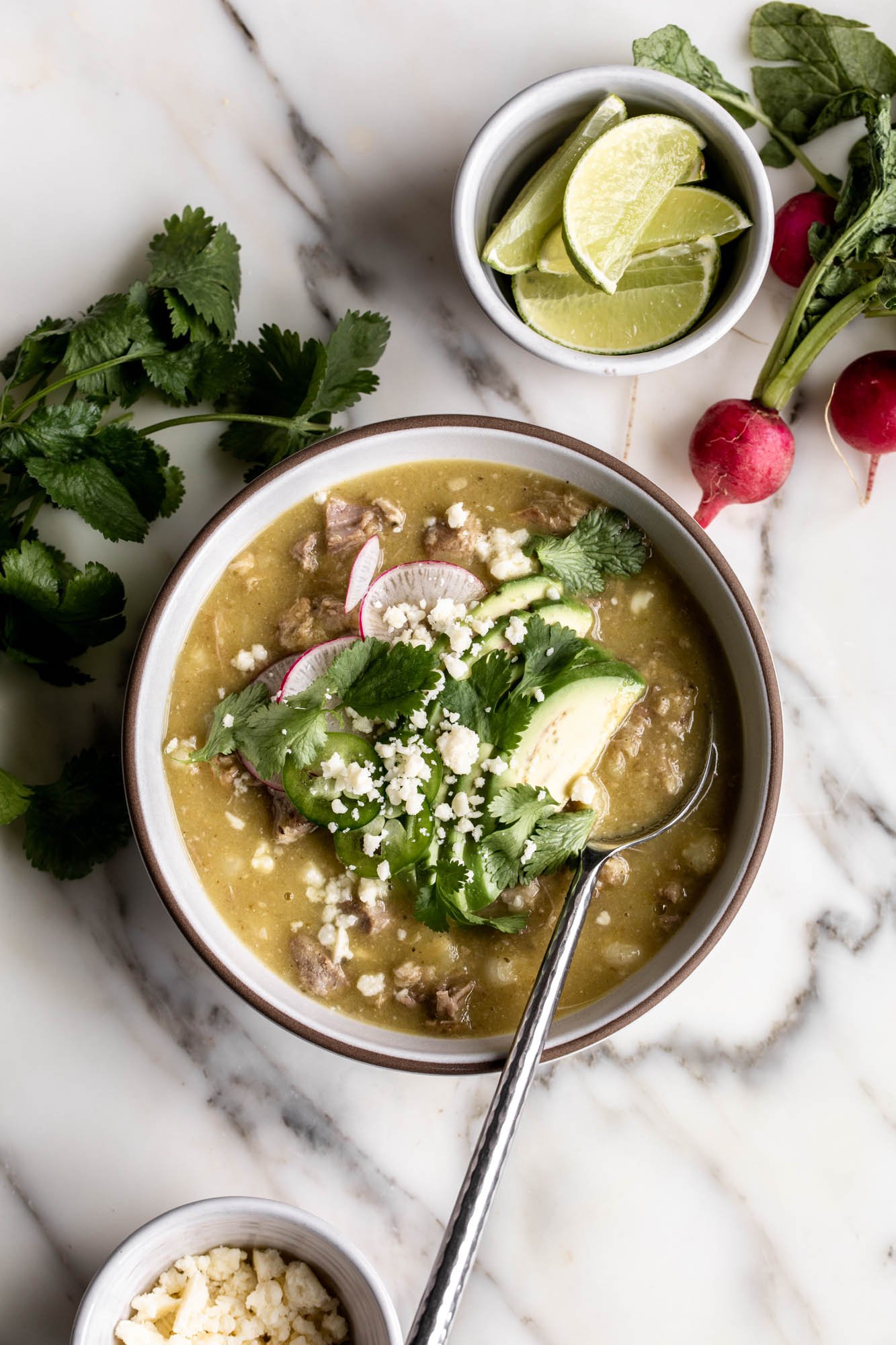
Pork pozole verde is a traditional Mexican stew layered with bold, earthy flavors. Its base is made from tomatillos, jalapeños, and poblano peppers, giving the broth its signature green color and gentle heat. Hearty hominy and tender, slow-cooked pork shoulder make it filling and comforting, while the dish’s roots trace back to Aztec cuisine. One of the best parts of pozole is the customization – each bowl is served with a spread of toppings like fresh cilantro, cotija cheese, radish, avocado, shredded cabbage, sliced jalapeños, and crispy tostadas or tortilla chips. You can mix and match the garnishes to suit your taste, making every bowl uniquely your own. If you’re into dishes like this, you’ll want to check out this chicken tortilla soup or creamy black bean soup.
Why You’ll Love This Recipe
- Flavor-packed broth – The tomatillos, jalapeños, and poblanos create a tangy, slightly spicy base that’s rich and comforting.
- Tender pork – Slow-cooked pork shoulder becomes melt-in-your-mouth tender, soaking up all the flavors of the stew.
- Customizable toppings – From crunchy radishes to creamy avocado, you can build your perfect bowl.
More About Pozole
There are three different types of pozole, green, red or white.
- Green – Green or verde, like this recipe features a tomatillo-based sauce.
- Red – Rojo or red pozole is made with a combination of Guajillo and ancho chilies which give it a bright red flavor.
- White – White pozole is made without a chili sauce for a more delicate stew.
Key Ingredients in This Recipe
- Hominy – Hominy is a chewy, puffy version of corn and is made from dry corn kernels that are then treated with a lye or lime solution to soften the outer shell. They add texture and a nutty corn flavor to the soup.
- Pork shoulder – This cut can be referred to as the pork shoulder, picnic shoulder or picnic ham. Because this cut gets a lot of work, it is a very muscle-heavy cut, making it ideal for simmering or braising. Slowly cooking the meat at a low temperature helps to break down the tough meat, resulting in tender, succulent pork.
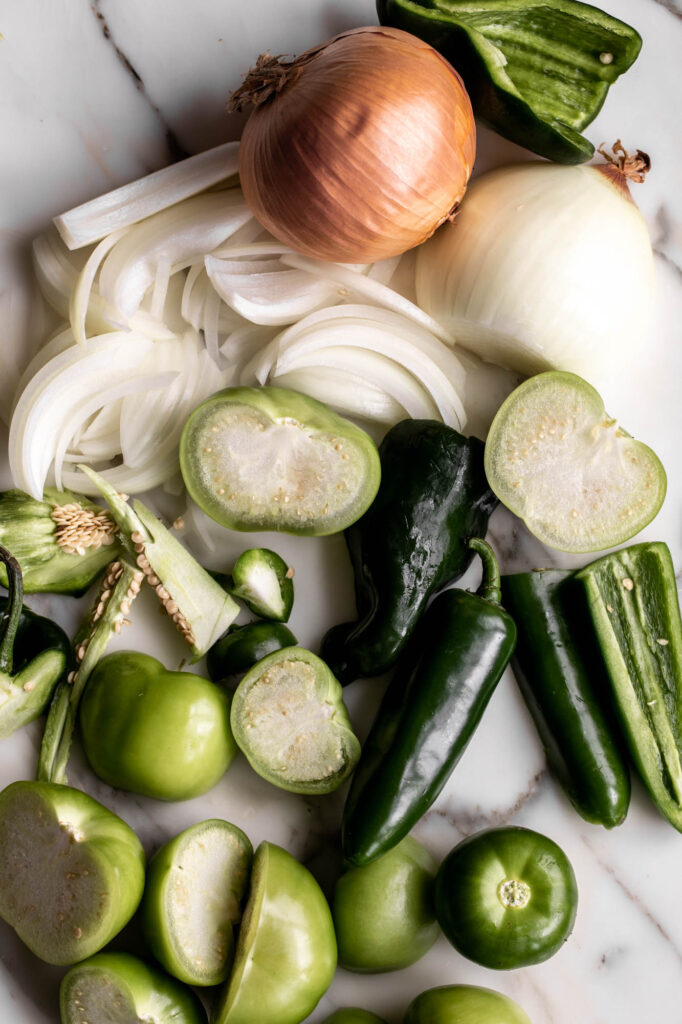
- Tomatillo – Tomatillos grow with a thin, papery husk on the outside which can be easily removed. They look similar to smaller green tomatoes (their name translates in Spanish to little tomato) though they have a more acidic flavor and denser texture than green tomatoes.
- Chicken stock – I use chicken stock in this recipe because it has a richer, more robust flavor than chicken broth, though either can be used in this soup.
- Cotija – Cotija cheese is a type of hard, crumbly and salty Mexican cheese made from cows milk that has a consistency between feta and Parmesan. Locate it in the cheese sections at large markets such as Whole Foods or Hispanic markets.
A full ingredient list with exact amounts can be found in the recipe card below.
Swaps and substitutions
- Toppings: Another popular topping for pozole is shredded cabbage or iceberg lettuce. You can also add sour cream for extra creaminess.
- Chicken: The pork can be swapped with chicken. I recommend using chicken breasts and lowering the cooking time. They will not need as much time to become tender.
- Hominy: Traditional pozole uses canned white hominy, but if you can’t find it, swap with canned white corn kernels (though the flavor and texture will be slightly different).
- Peppers: Poblano peppers add a mild, smoky flavor, while jalapeños bring heat. If you prefer less spice, use just poblanos or replace jalapeños with Anaheim peppers.
- Broth: Chicken broth is commonly used, but vegetable broth works if you want to keep it lighter or more plant-based.
Pro tip
Cook the pork until tender. Pork shoulder should be simmered low and slow until it’s fall-apart tender. If it still feels tough, give it more time.
How to Make Pork Pozole Verde (Step-by-step)
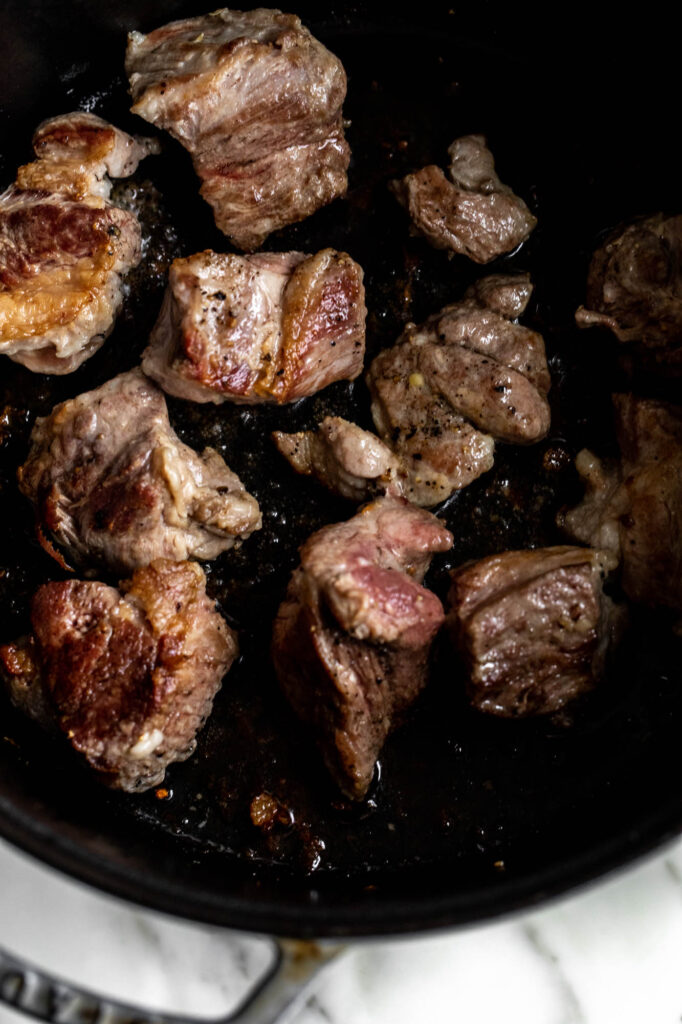
Heat a large heavy bottomed Dutch oven or pot over medium heat, add 2 tablespoons of the olive oil and heat through. Season the pork with salt and pepper. Working in batches, sear the pork on all sides, about 8 minutes. Return the pork to the pot and add 4 cups of water.

Lower the heat to medium-low, cover and simmer until the meat is tender, about 1 hour.
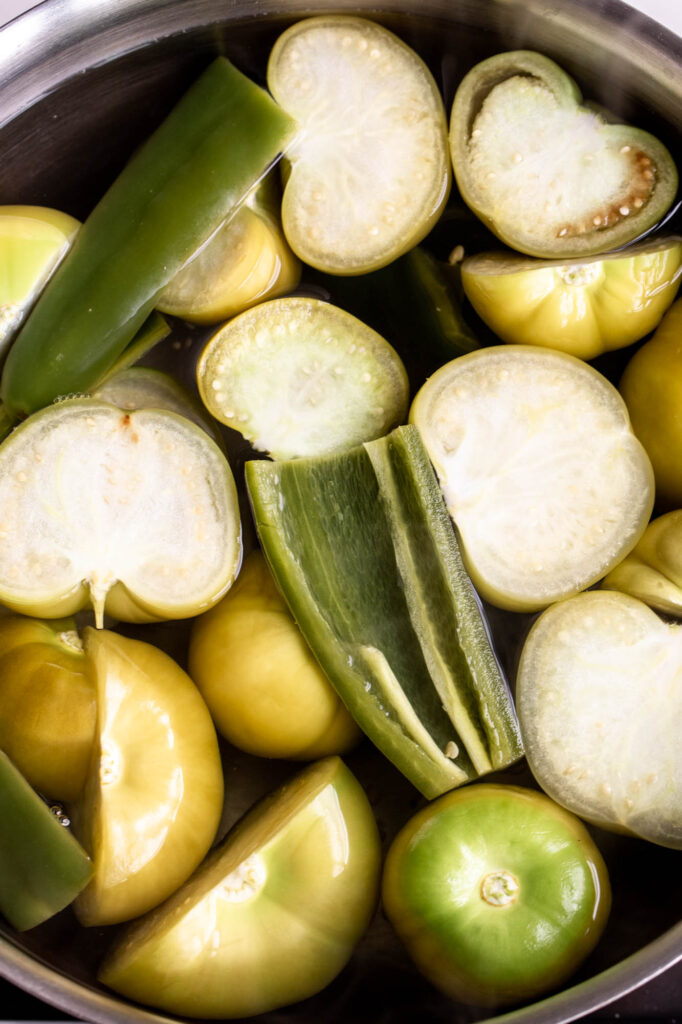
Bring a large pot of water to a boil over medium-high heat, add the tomatillos, jalapeños and poblano pepper and simmer for 15 minutes. Remove from heat, drain and set aside.
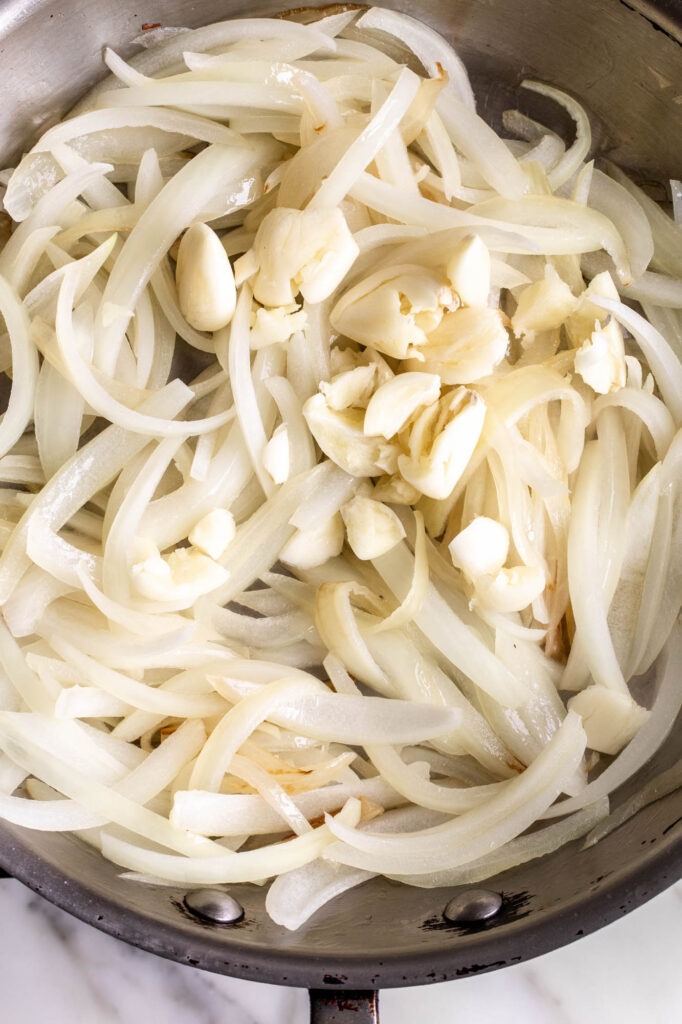
Heat a large sauté pan over medium heat, add the remaining olive oil and heat through. Add the onions and garlic and sauté, stirring occasionally, until the onion is soft and translucent, about 8 minutes.

Remove from heat and add to a blender with the tomatillo mixture cumin and oregano. Blend the mixture until pureed and smooth. Set aside.
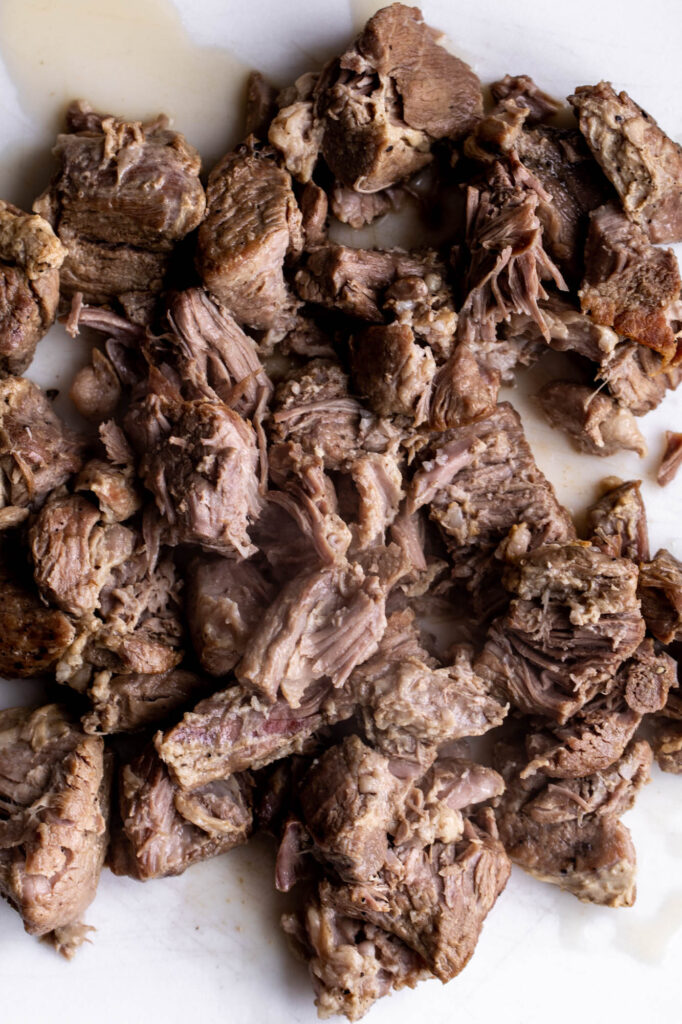
Remove the pork from the pot and set aside. Skim the fat from the pot and reserve the cooking liquid. When the pork is cooled, shred it and discard any excess fat. (It’s ok if the pork is still slightly tough, it will continue to become tender as the soup cooks).
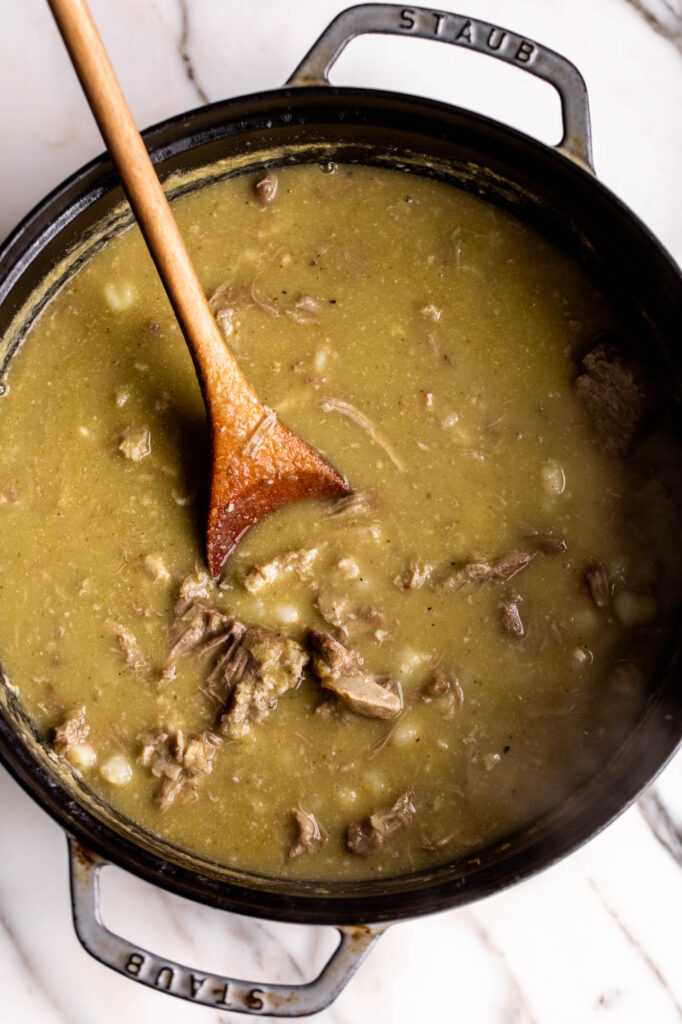
Return the shredded pork to the pot with the cooking liquid with the tomatillo puree, chicken stock and hominy. Continue to simmer until pork is falling apart and hominy increases in size, about an additional 30 minutes.
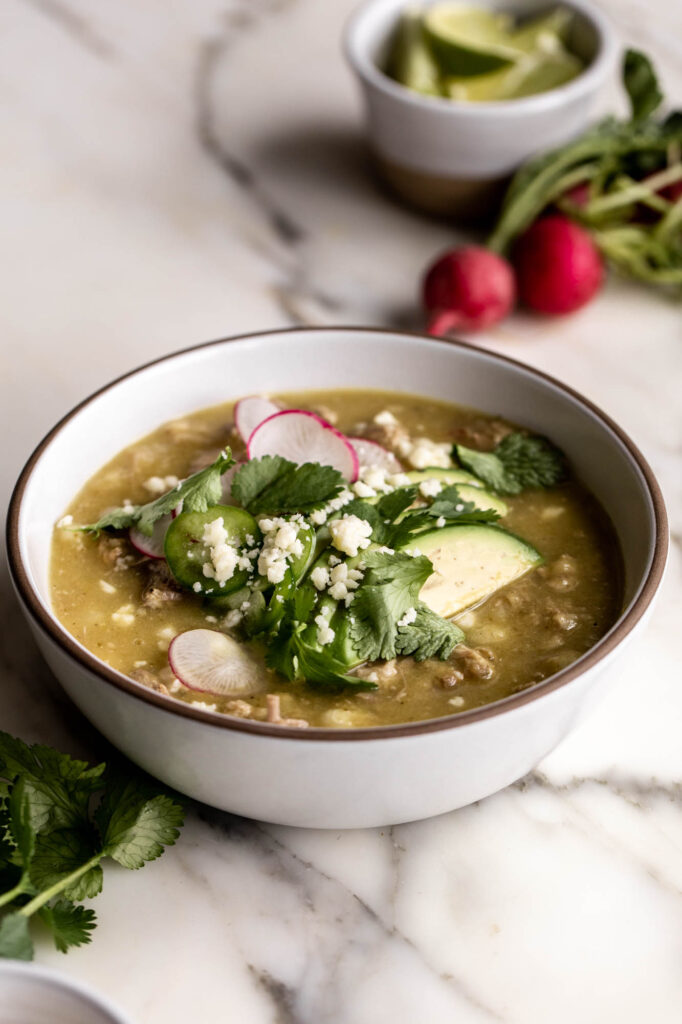
Ladle the pozole into soup bowls and top with cilantro, cotija cheese, jalapeño, radish and avocado as desired. Serve immediately with lime wedges.
How to Store and Reheat Pozole Verde
Pozole verde actually tastes even better the next day as the flavors continue to develop. Store it in the fridge for up to 3 days and reheat on the stove over medium-low heat. Freeze the stew without toppings for up to 3 months. Thaw overnight in the fridge and reheat before serving.
FAQ – Frequently Asked Questions
Yes! Pozole verde actually tastes even better the next day as the flavors continue to develop. Store it in the fridge for up to 3 days and reheat gently on the stove.
Yes! Freeze the stew without toppings for up to 3 months. Thaw overnight in the fridge and reheat before serving.
The heat level is mild to moderate, but you can adjust by using fewer jalapeños or removing the seeds for a milder flavor.
Yes, chicken thighs or shredded rotisserie chicken can be swapped in for the pork shoulder if you prefer poultry.
Set out bowls of garnishes like cabbage, radish, cilantro, cotija cheese, avocado, and lime wedges so everyone can customize their own serving.
Other Recipes to Try
If you enjoy this pork pozole verde recipe, I recommend checking out some of these:
Tried it? Loved it? Tweaked it? Leave a review below and tell me how it went – I’m all ears (and always hungry).
Pork Pozole Verde
Rate this Recipe
Ingredients:
- 4 tablespoons extra-virgin olive oil, divided
- 3 pounds boneless pork shoulder, cut into 1” cubes
- Kosher salt, to taste
- Freshly ground black pepper, to taste
- 1 pound tomatillos, husks removed and halved
- 2 medium jalapeños, cored, seeded and halved
- 1 large poblano pepper, cored, seeded and halved
- 1 medium yellow onion, thinly sliced
- 8 garlic cloves, smashed
- 1 teaspoon cumin
- 1 teaspoon oregano
- 4 cups chicken stock
- 1 (29-ounce) can hominy, drained and rinsed
For serving:
- ½ cup roughly chopped cilantro
- ½ cup crumbled cotija cheese
- 2 medium jalapeños, thinly sliced
- 2 radish, thinly sliced
- 2 avocados, thinly sliced
- Lime wedges
Instructions:
For the pork pozole:
- Heat a large heavy bottomed Dutch oven or pot over medium heat, add 2 tablespoons of the olive oil and heat through. Season the pork with salt and pepper. Working in batches, sear the pork on all sides, about 8 minutes. Return the pork to the pot and add 4 cups of water.
- Lower the heat to medium-low, cover and simmer until the meat is tender, about 1 hour.
- Bring a large pot of water to a boil over medium-high heat, add the tomatillos, jalapeños and poblano pepper and simmer for 15 minutes. Remove from heat, drain and set aside.
- Heat a large sauté pan over medium heat, add the remaining olive oil and heat through. Add the onions and garlic and sauté, stirring occasionally, until the onion is soft and translucent, about 8 minutes.
- Remove from heat and add to a blender with the tomatillo mixture cumin and oregano. Blend the mixture until pureed and smooth. Set aside.
- Remove the pork from the pot and set aside. Skim the fat from the pot and reserve the cooking liquid. When the pork is cooled, shred it and discard any excess fat. (It's ok if the pork is still slightly tough, it will continue to become tender as the soup cooks).
- Return the shredded pork to the pot with the cooking liquid with the tomatillo puree, chicken stock and hominy. Continue to simmer until pork is falling apart and hominy increases in size, about an additional 30 minutes.
To serve:
- Ladle the pozole into soup bowls and top with cilantro, cotija cheese, jalapeño, radish and avocado as desired. Serve immediately with lime wedges.
Watch this Recipe
Notes:
Nutrition:
TAG ME ON INSTAGRAM TO BE FEATURED ON MY STORIES! @cookingwithcocktailrings


WOW, I have made traditional posole for years. whilte chicken chili, same. I found my self tweaking your recipe by starting the pork chunks with chicken stock and cilantro stems in my insta pot. then using more stock to simmer hominy with the oregano and cumin. then when adding pork from insta pot added a pint of my tomitillo salsa. simmered 20 min. WOW. this dish hit all those chile cravings. had seconds. our topping included, shred cabbage, scallions, minced jalapeno, radish, minced cilantro, and cotija cheese. divine providence for a couple who spent 22 years in san diego.. Hmmmmmm. thanks so much.
J
Wow, your version sounds incredible! I love the addition of the tomatillo salsa and all those fresh toppings – you really made it your own. So glad it worked out in the insta pot and satisfied those chile cravings, and thank you for sharing your spin on the recipe!