

Butternut Squash Ravioli Recipe in Brown Butter
jump toRECIPE
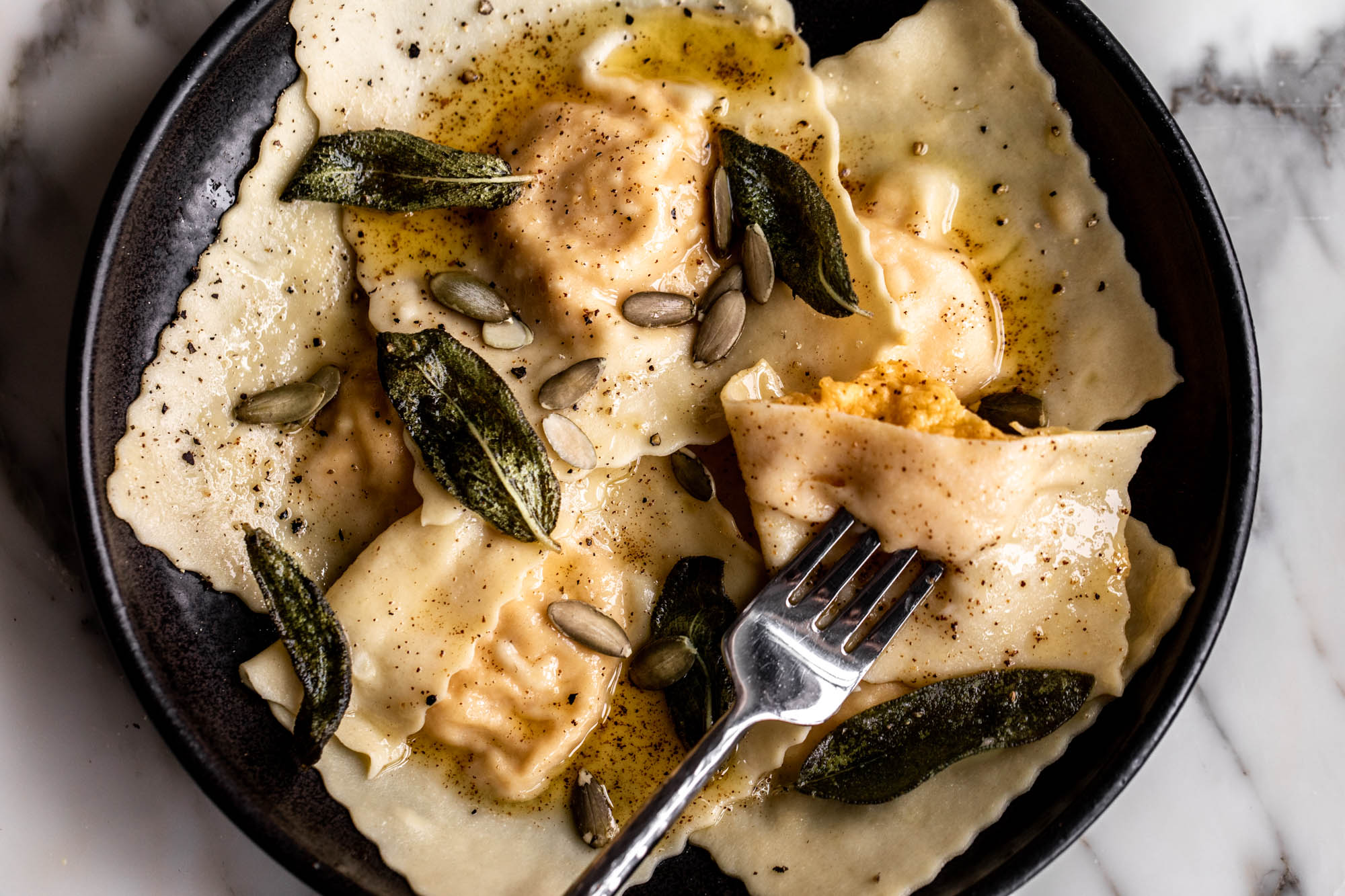
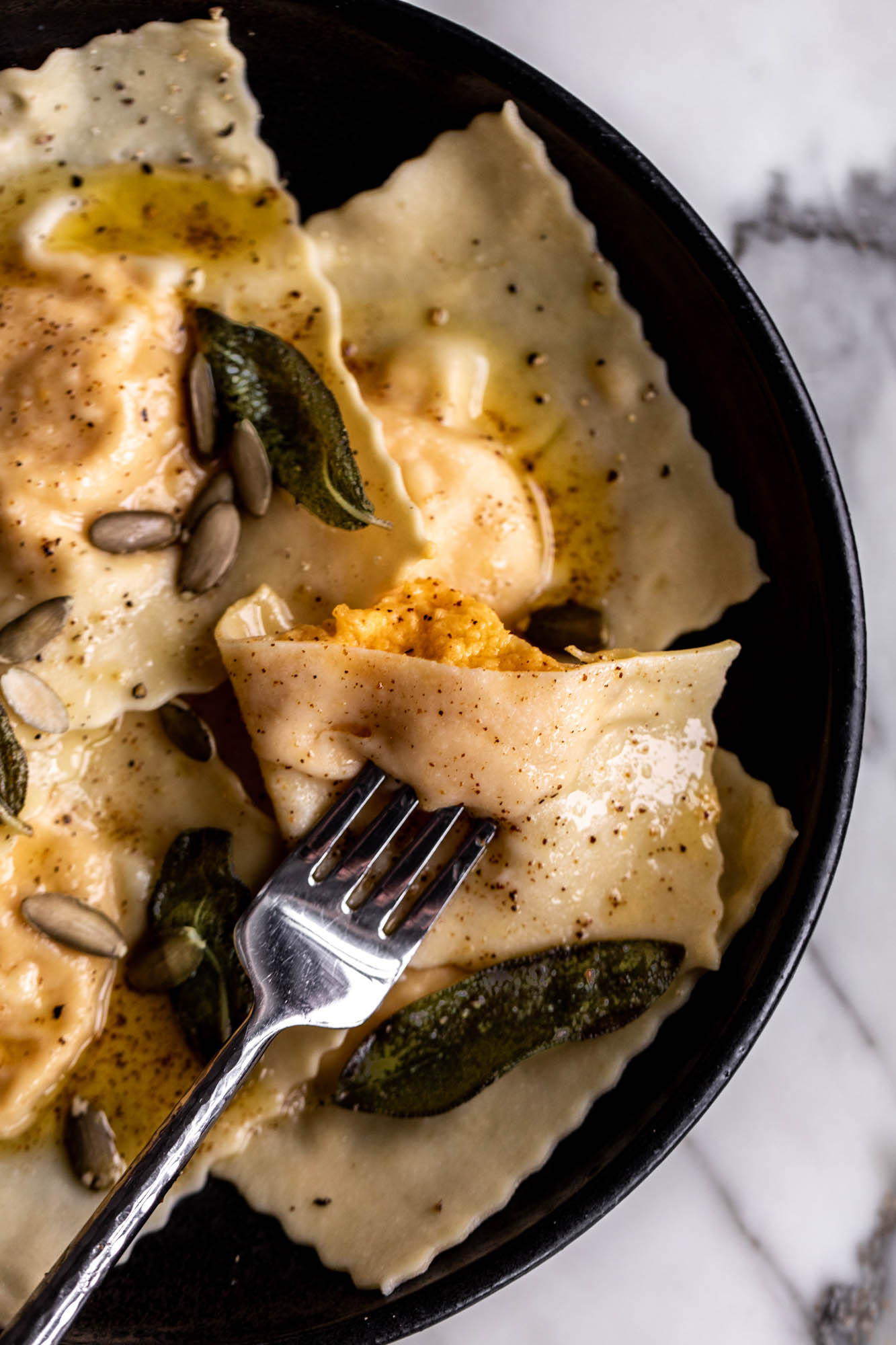
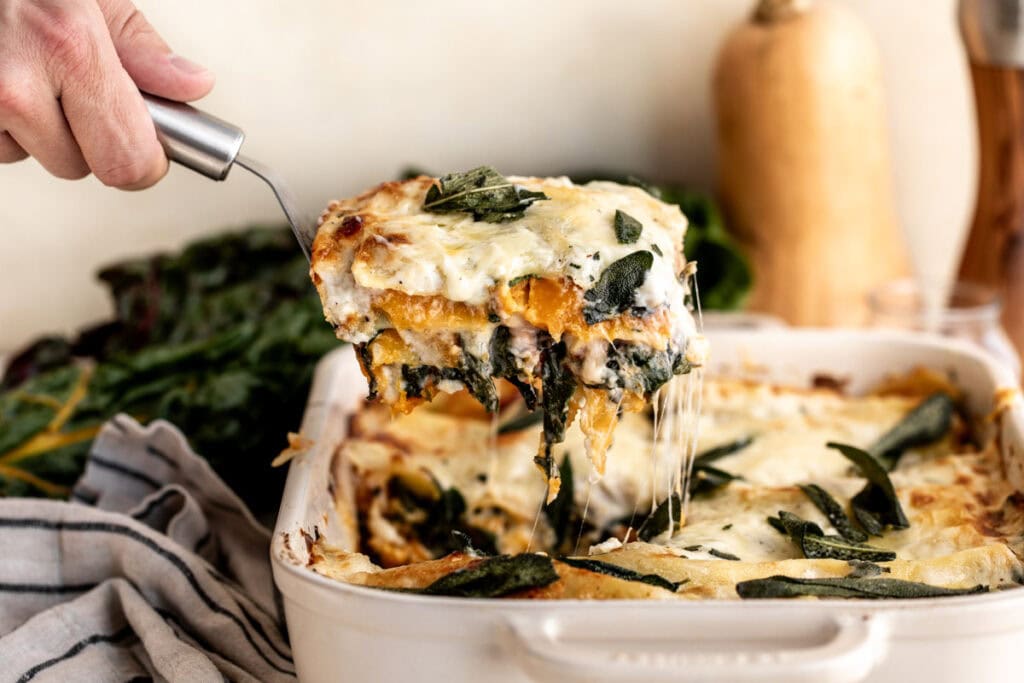
This butternut squash ravioli recipe pairs pillowy homemade pasta with a rich, nutty brown butter sauce and crispy sage for the ultimate cozy fall dish. Each bite combines creamy roasted squash, ricotta, and Parmesan, finished with toasted pepitas for crunch. You may see it on Italian restaurant menus as “zucca”, the Italian word for “squash.” I love making fresh pasta for ravioli, as there’s really nothing like the texture and taste! They’re cut into a simple square shape with ruffled edges (thanks to a handy pasta cutter). For more comforting seasonal pasta ideas, try elote-style sweet corn ravioli or butternut squash lasagna next.
Why You’ll Love This Recipe
- Perfect Fall Flavors. Butternut squash, brown butter, and sage come together in a warm, nutty combination that feels like autumn in every bite.
- Restaurant-Worthy at Home. Homemade pasta makes this dish feel special, yet it’s simple enough for an impressive weekend meal.
- Rich but Balanced. The creamy filling is beautifully offset by crisp fried sage and toasted pepitas for texture and contrast.
Key Ingredients in This Recipe
- Pasta dough – I use a basic pasta dough as the base of this butternut squash ravioli recipe made with a combination of 00 and semolina flours, egg, olive oil and salt to make the ravioli.
- Butternut squash – Butternut squash is a dense squash with a sweet nutty taste similar to pumpkin. Available year round but technically in season from fall to winter, it’s great roasted as a side dish or pureed as a filling. In this recipe it’s roasted, then combined with ricotta cheese to create the filling for the ravioli.
- Ricotta – Ricotta is a mild, soft and creamy Italian cheese made from the leftover whey created when making mozzarella and other similar cheeses. The texture and look is similar to cottage cheese. I always choose whole milk ricotta over part-skim because the latter can be watery. I also recommend draining the ricotta before use.
- Pepitas – While the pumpkin seeds you remove from the pumpkin are white and thin, pepitas are green and small. Both are pumpkin seeds, but pepitas don’t require shelling and only come from certain pumpkins. Rather than trying to make your own I recommend grabbing a bag from the nut section of the grocery store.
- Unsalted butter – Because it is a one ingredient sauce, I prefer to use high-quality butter. I recommend using unsalted European butter (it has a higher fat content) so the salt content can be controlled easily.
- Sage – Frying the fresh sage leaves in the butter helps to flavor the sauce while giving the sage a crisp texture.
A full ingredient list with exact amounts can be found in the recipe card below.
More About Brown Butter
Brown butter is not only a flavorful, nutty and slightly sweet sauce for pasta, it’s extremely easy to make and comes together quickly. Better yet? The sauce is only made with one ingredient. To create the brown butter or “beurre noisette” the water cooks out and the milk solids toast and turn golden brown. When making brown butter use a light-bottomed pan if possible. That way you can see the shade of brown the mixture is turning. As the butter cooks it will foam, crackle and pop. When it’s ready, remove it from the pan immediately to prevent burning.
Tips for Making Ravioli
- If making your own pasta dough, make sure it rests at room temperature for 30 minutes to allow the gluten to relax before rolling it.
- Make sure the ravioli are sealed without trapped air, this keeps them from breaking apart as they are cooked.
- Slightly over-season the filling. This will bring out the best flavor as the pasta cooks.
- Ensure the dough is thin enough. This allows the ravioli to cook evenly with the best texture.
Pro Tip
Use a light-colored pan to make brown butter—this lets you clearly see when the milk solids have toasted to the perfect golden brown without burning.
Swaps and Substitutions
- Use store-bought pasta dough or wonton wrappers if you don’t have a pasta maker.
- Swap butternut squash for pumpkin or sweet potato for a similar texture and sweetness.
- All-purpose flour can replace 00 and semolina flour if needed.
- If you don’t have a food processor, blend the filling in a stand mixer or blender instead.
Special Equipment
Looking to channel your inner Italian grandma? Consider snagging this pasta roller attachment or hand crank, which makes it that much easier to DIY. Or consider this handy pasta cutter makes shaping ravioli quick and effortless, giving you clean, professional edges every time.
How to Make Butternut Squash Ravioli (Step-by-Step)

Preheat the oven to 400ºF (200ºC). Toss the butternut squash in the olive oil and spread on a baking sheet. Season with salt and pepper and roast until the squash is very tender, about 20 minutes.
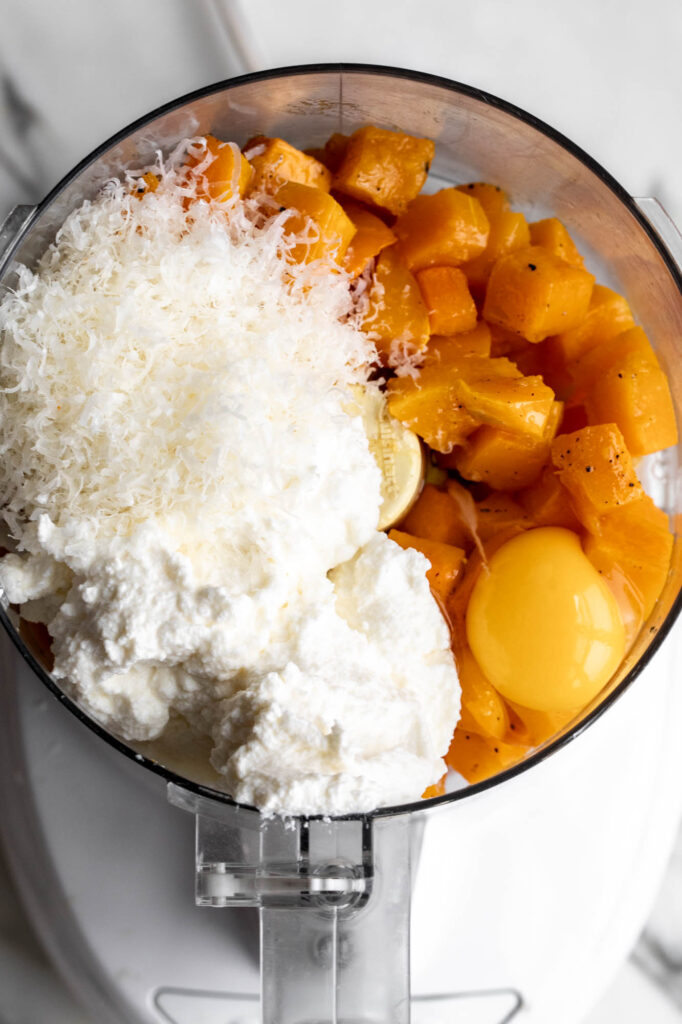
Let the squash cool completely then add the squash, ricotta and Parmesan, egg and nutmeg to the bowl of a food processor. Puree until smooth.

Add the filling to a pastry bag fitted with a ¼” (6mm) round tip (or use a large resealable plastic bag and cut a small opening in one corner).

Cut the pasta dough into 4 equal pieces and cover with plastic wrap. Dust a clean surface with semolina flour (or cornmeal) and work one piece at a time. Flatten the dough into a 5” (12cm) by 4” (10cm) oval.

Roll the dough through a pasta roller at the widest setting. Fold the dough in thirds (like a letter) and run it through the machine again. Continue to roll the dough through the machine, reducing the setting to narrower settings each time until it is 1/16” (1.5mm) thick. You should be able to see your hand through the dough.

Cut the sheet in half crosswise. Starting 1” (2.5cm) from the short edge, spoon about 1 tablespoon (15g) of the butternut squash filling down the length of the dough, spacing them about 1” (1.5cm) apart. In a small bowl whisk together the egg with 1 tablespoon of water (15g).

Brush the filling with the egg wash and cover with the second piece of the dough, pressing around each round so no extra air remains. Use a serrated pasta wheel, sharp knife, or ravioli mold to cut the ravioli into 2” inch (5cm) squares. Cover with plastic wrap until ready to use. Repeat with the remaining dough and filling.

To make the brown butter sauce, heat a large sauté pan over medium-low heat, add the butter and allow to melt.
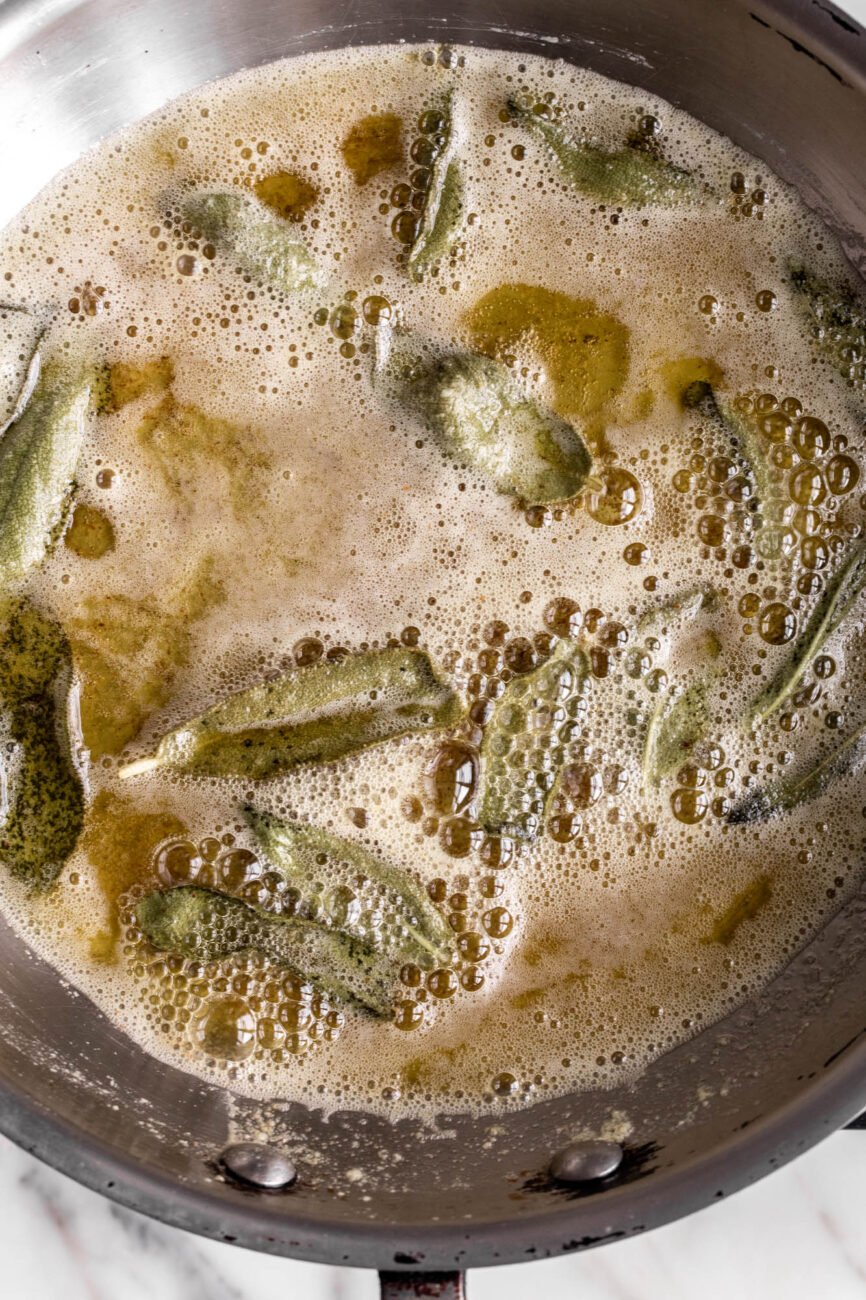
Add the sage then continue to cook the butter, swirling it around the pan occasionally, until the butter is a toasty-brown color and has a nutty aroma, about 5 minutes. Once this happens, immediately remove the brown butter to a small bowl. Set the sage aside on a plate.

Bring a large pot of salted water to a boil. Add the ravioli and cook until the ravioli rise to the top and are al dente, about 3 minutes.
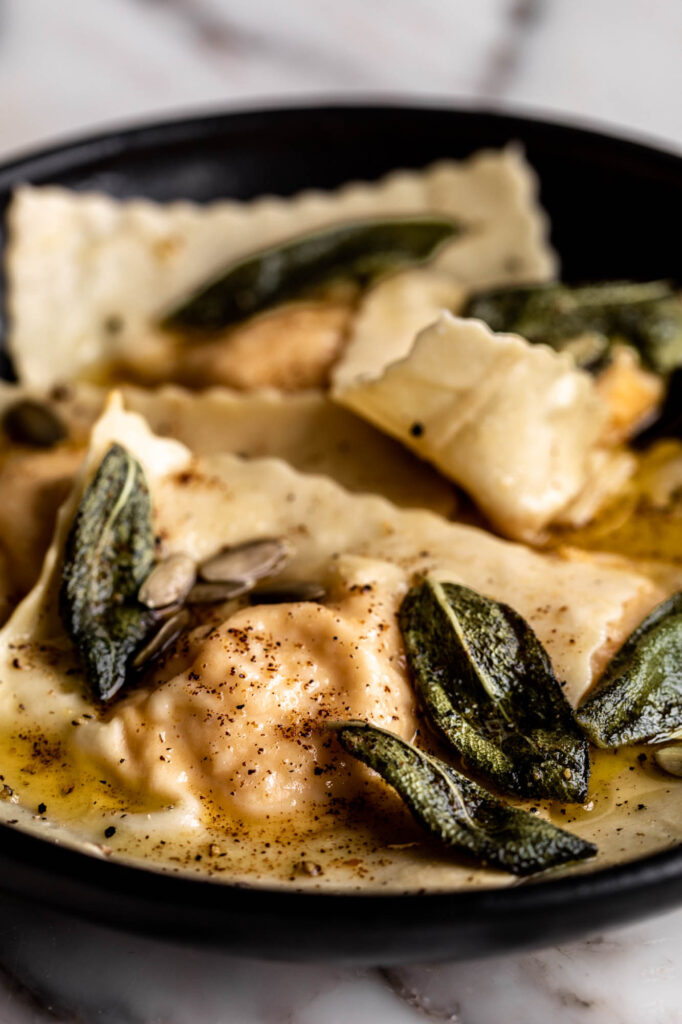
Use a slotted spoon to remove the ravioli to serving bowls. Drizzle with the brown butter then top with the sage, pepitas and additional shaved Parmesan cheese. Serve immediately.
How to Serve Butternut Squash Ravioli
- Drizzle ravioli with warm brown butter and top with crispy sage and toasted pepitas.
- Finish with shaved Parmesan and a sprinkle of black pepper for extra depth.
- Pair with a simple arugula salad or garlic bread to complete the meal.
How to Store Butternut Squash Ravioli
- Uncooked ravioli: Arrange in a single layer on a baking sheet and freeze for 1 hour, then transfer to a resealable bag for up to 2 months.
- Cooked ravioli: Store in an airtight container in the refrigerator for up to 2 days; reheat gently in butter or olive oil.
- Brown butter sauce: Can be made ahead and stored in the fridge for up to 1 week; rewarm over low heat before serving.
FAQ – Frequently Asked Questions
Make sure to press out all the air pockets and seal the edges firmly with egg wash before cooking.
It should turn a deep golden color and smell nutty. Once it does, remove it from the heat immediately to prevent burning.
For best texture, stick with boiling—baking can dry out the delicate pasta.
Try toasted walnuts, hazelnuts, or even crushed amaretti cookies for a sweet-savory crunch.
Yes! The butternut squash filling can be made up to 2 days ahead and refrigerated, or frozen for up to a month.
Other Recipes to Try
If you enjoy this butternut squash ravioli recipe, I recommend giving these a try:
Made this dish? Be sure to rate the recipe and drop a comment below! Your feedback means everything (and helps others find it too)!
Butternut Squash Ravioli Recipe in Brown Butter
Rate this Recipe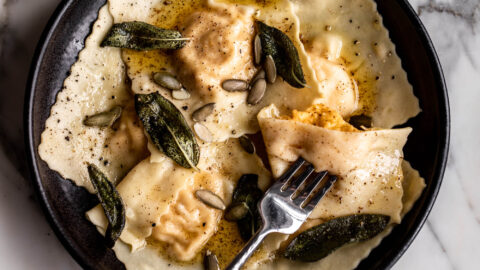
Equipment:
- Pasta roller (I use the KitchenAid attachment)
- Pasta cutter (optional)
Ingredients:
For the filling:
- 4 cups cubed butternut squash (cut into ½” cubes)
- 2 tablespoons extra-virgin olive oil
- Kosher salt, as needed
- Freshly ground black pepper, as needed
- 1 cup whole milk ricotta cheese, drained
- ½ cup grated Parmesan cheese
- 1 large egg
- ¼ teaspoon ground nutmeg
For assembly and the sage brown butter:
- 1 pound pasta dough, either homemade or store bought
- 1 large egg
- 8 tablespoons unsalted butter
- 10 medium fresh sage leaves
- Freshly ground black pepper, as needed
- ¼ cup pepitas
Instructions:
For the filling:
- Preheat the oven to 400ºF (200ºC). Toss the butternut squash in the olive oil and spread on a baking sheet. Season with salt and pepper and roast until the squash is very tender, about 20 minutes.
- Let the squash cool completely then add the squash, ricotta and Parmesan, egg and nutmeg to the bowl of a food processor. Puree until smooth.
- Add the filling to a pastry bag fitted with a ¼” (6mm) round tip (or use a large resealable plastic bag and cut a small opening in one corner).
For the assembly and the sage brown butter:
- Cut the pasta dough into 4 equal pieces and cover with plastic wrap. Dust a clean surface with semolina flour (or cornmeal) and work one piece at a time. Flatten the dough into a 5” (12cm) by 4” (10cm) oval.
- Roll the dough through a pasta roller at the widest setting. Fold the dough in thirds (like a letter) and run it through the machine again. Continue to roll the dough through the machine, reducing the setting to narrower settings each time until it is 1/16” (1.5mm) thick. You should be able to see your hand through the dough.
- Cut the sheet in half crosswise. Starting 1” (2.5cm) from the short edge, spoon about 1 tablespoon (15g) of the butternut squash filling down the length of the dough, spacing them about 1” (1.5cm) apart. In a small bowl whisk together the egg with 1 tablespoon of water (15g).
- Brush the filling with the egg wash and cover with the second piece of the dough, pressing around each round so no extra air remains. Use a serrated pasta wheel, sharp knife, or ravioli mold to cut the ravioli into 2” inch (5cm) squares.
- Cover with plastic wrap until ready to use. Repeat with the remaining dough and filling.
- To make the brown butter sauce, heat a large sauté pan over medium-low heat, add the butter and allow to melt.
- Add the sage then continue to cook the butter, swirling it around the pan occasionally, until the butter is a toasty-brown color and has a nutty aroma, about 5 minutes. Once this happens, immediately remove the brown butter to a small bowl. Set the sage aside on a plate.
- Bring a large pot of salted water to a boil. Add the ravioli and cook until the ravioli rise to the top and are al dente, about 3 minutes.
- Use a slotted spoon to remove the ravioli to serving bowls.
- Drizzle with the brown butter then top with the sage and pepitas. Serve immediately.
Watch this Recipe
Notes:
Nutrition:
TAG ME ON INSTAGRAM TO BE FEATURED ON MY STORIES! @cookingwithcocktailrings
This page contains affiliate links. If you choose to purchase after clicking a link, I may receive a commission at no extra cost to you. I only endorse products or brands I have used or come highly recommended by trusted peers. Thank you for your support so I can continue to share recipes!

Rate + Review
WHAT DID YOU THINK OF THIS RECIPE?