
Slow Scrambled Eggs
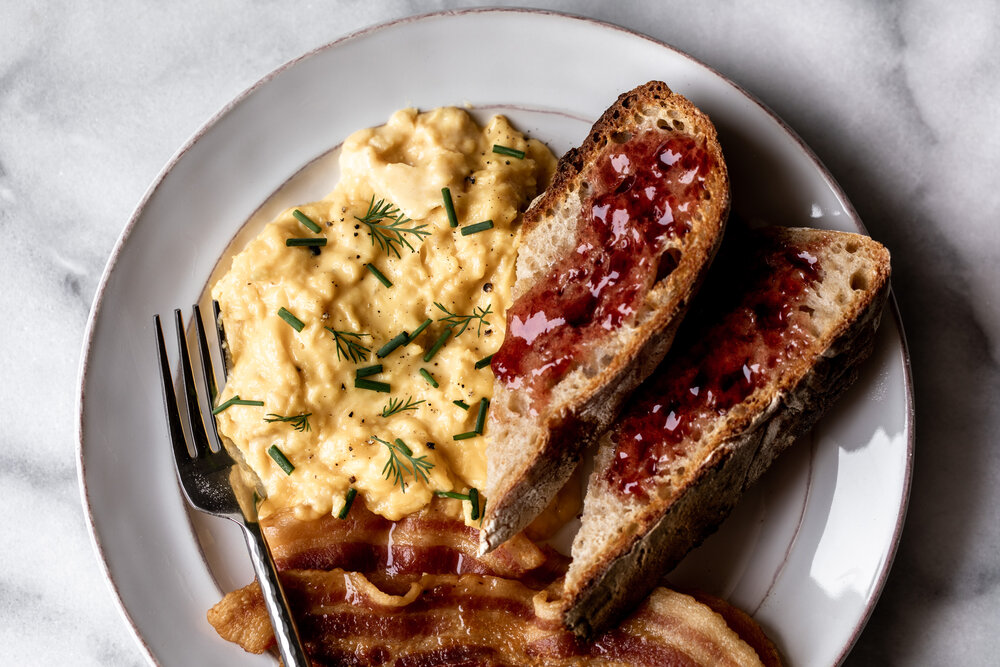
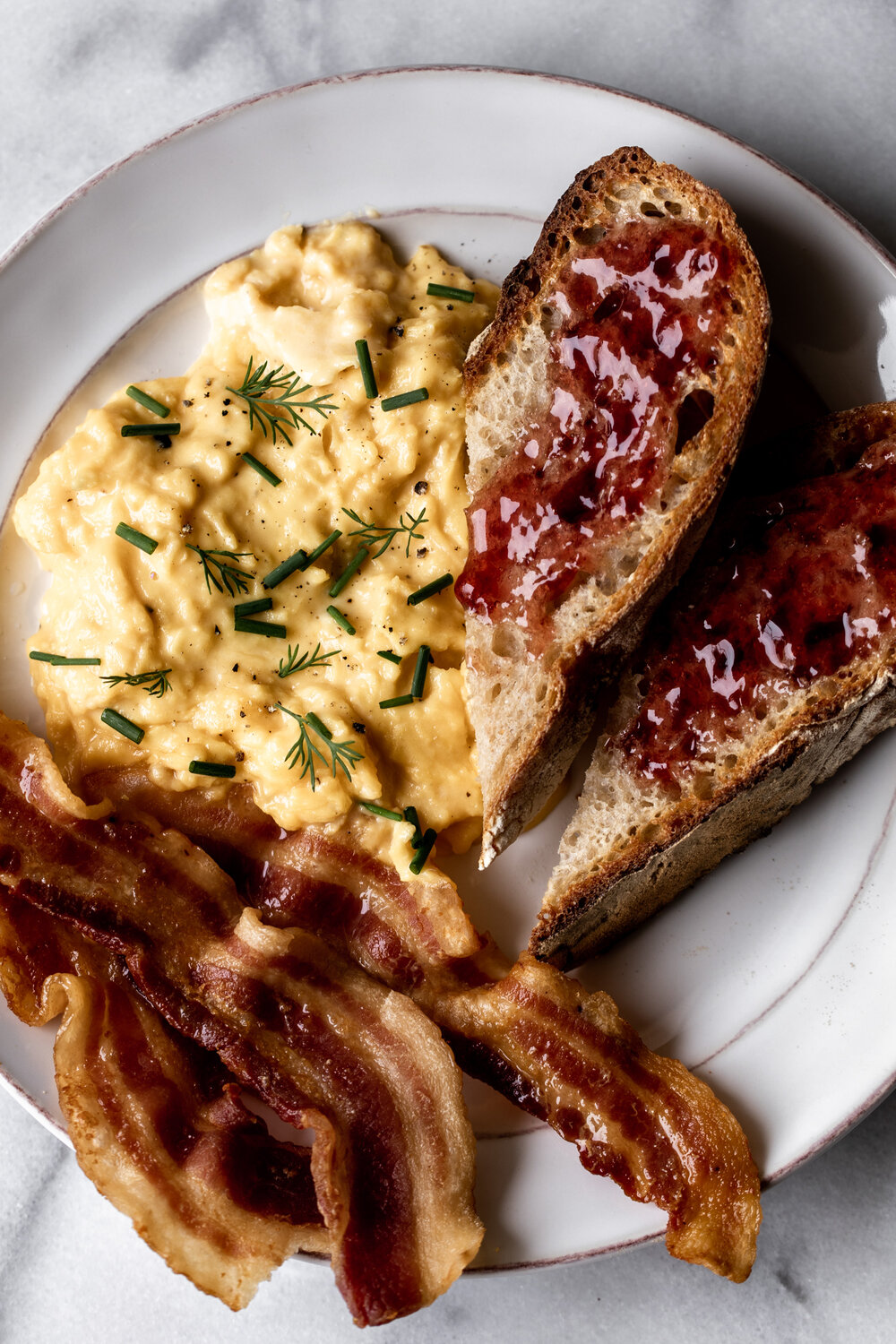
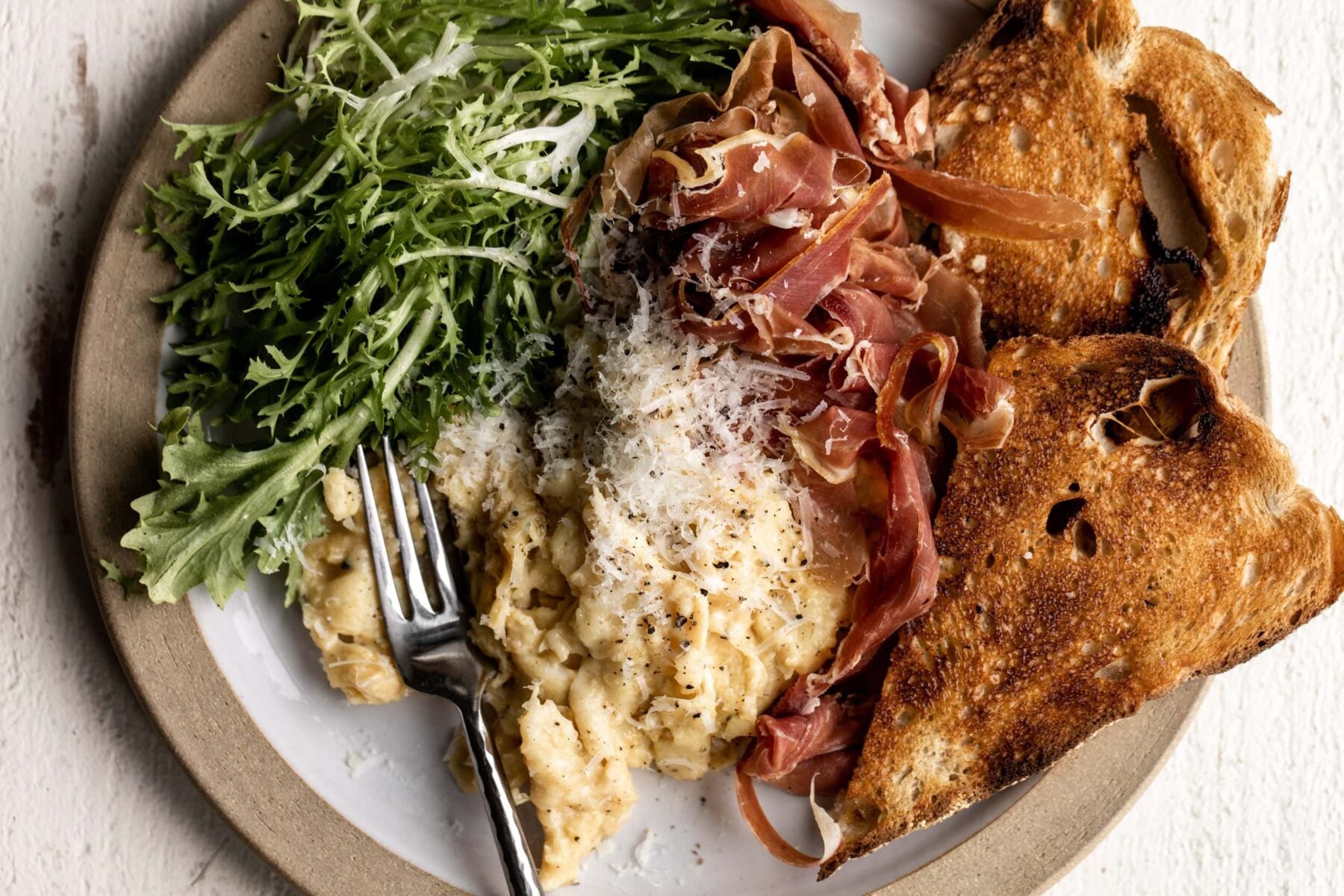
Good scrambled eggs should be velvety in texture and deep golden almost orange. You should be able to see ribbons of the curdled eggs so they are creamy without the addition of any cheese. While they take a little bit of patience, they are well worth the wait.
jump toRECIPE
This post may contain affiliate links, which means that I make a small commission off items you purchase at no additional cost to you. Please read my policy page.
Slow-scrambled eggs (sometimes called soft scrambled eggs), aren’t the rubbery looking pale-yellow eggs most Americans are used to seeing. Scrambled eggs should take much longer than 2 minutes to make – something I learned the hard way. I was working for Chef Anne Willan a few years ago, and she wanted me to make scrambled eggs to get rid of some of her leftover ingredients before she left for vacation in France. She eyed me and told me I’d better get to work since it would take at least 15 minutes. I naively stared back thinking to myself “psh I can do that in under 5 minutes – I got this” and proceeded to make and serve the fluffy eggs I was familiar with – and then I saw her unamused look at the eggs in front of her. I was mortified. Once you’ve tried the incredible texture of these eggs, the next recipe you need to make is cacio e pepe slow scrambled eggs!
What Makes Slow Scrambled Eggs Different
Until then I didn’t know what slow scrambled eggs should taste and look like. I prefer this method of cooking the eggs slowly over a low heat to any other. This egg recipe results in a velvety texture and deep golden almost orange eggs. Cooking them slow ensures the eggs cook evenly.
You should be able to see ribbons of the curdled eggs so they are creamy without the addition of any cheese (I still add crème fraîche to mine to add extra rich flavor and texture). While they take a little bit of patience (I try to go into a meditative state as I drink my coffee and stir), they are well worth the wait.
Key Ingredients in This Recipe
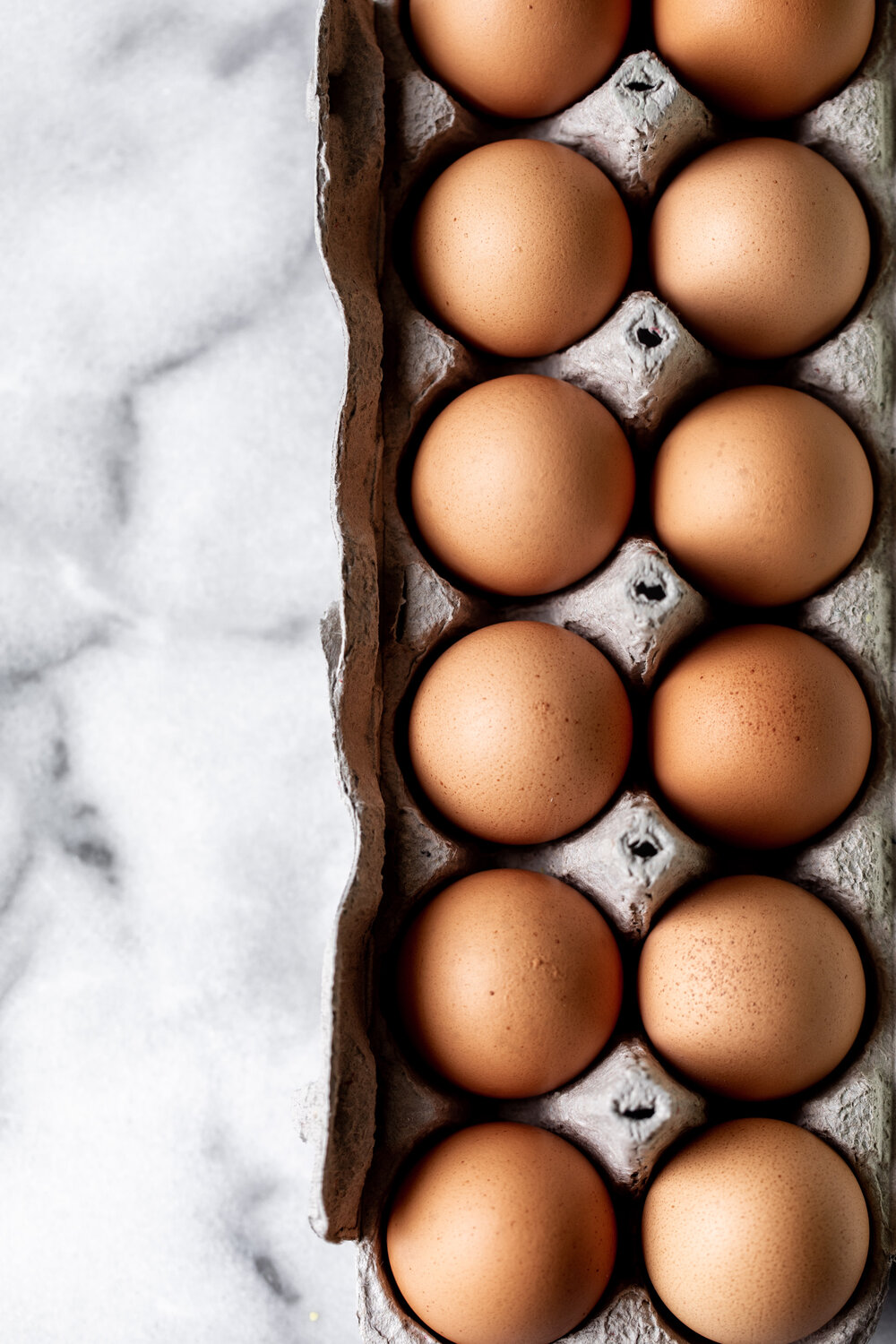
- Eggs – Eggs are a great protein. It can be overwhelming to choose eggs at the store. Should you buy cage free, pasture raised, free range, organic, brown, white, large, extra large eggs? While any eggs will do, I prefer organic, free range eggs and look for companies with an ethical history. No matter what type you use just make sure to check the package before buying them to ensure there aren’t any cracks.
- Butter – The addition of butter makes the eggs rich and keeps them from sticking.
- Crème fraîche – Crème fraîche adds a rich flavor and creamy texture to finish these scrambled eggs.
A full ingredient list with exact amounts can be found in the recipe card below.
Why You Should Use a Nonstick Pan to Cook Scrambled Eggs
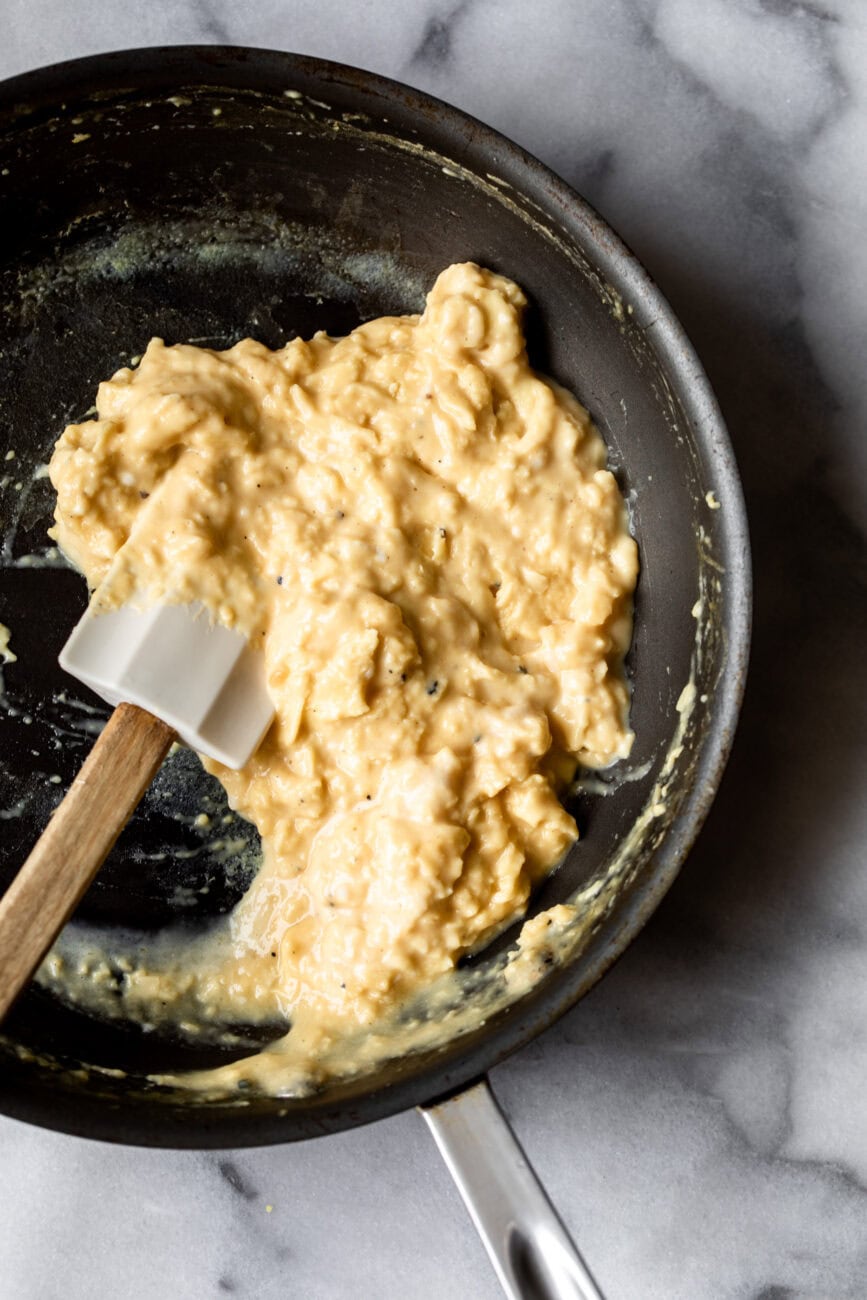
Using a non-stick pan is important when making scrambled eggs because even as you consistently stir some egg gets stuck to the bottom of the pan so save yourself the hassle of scrubbing and tough cleanup later. Plus, you don’t want half of the eggs to end up stuck to the bottom of the pan. A silicone spatula is ideal for softly sweeping the eggs into creamy curds.
How to Make Slow Scrambled Eggs
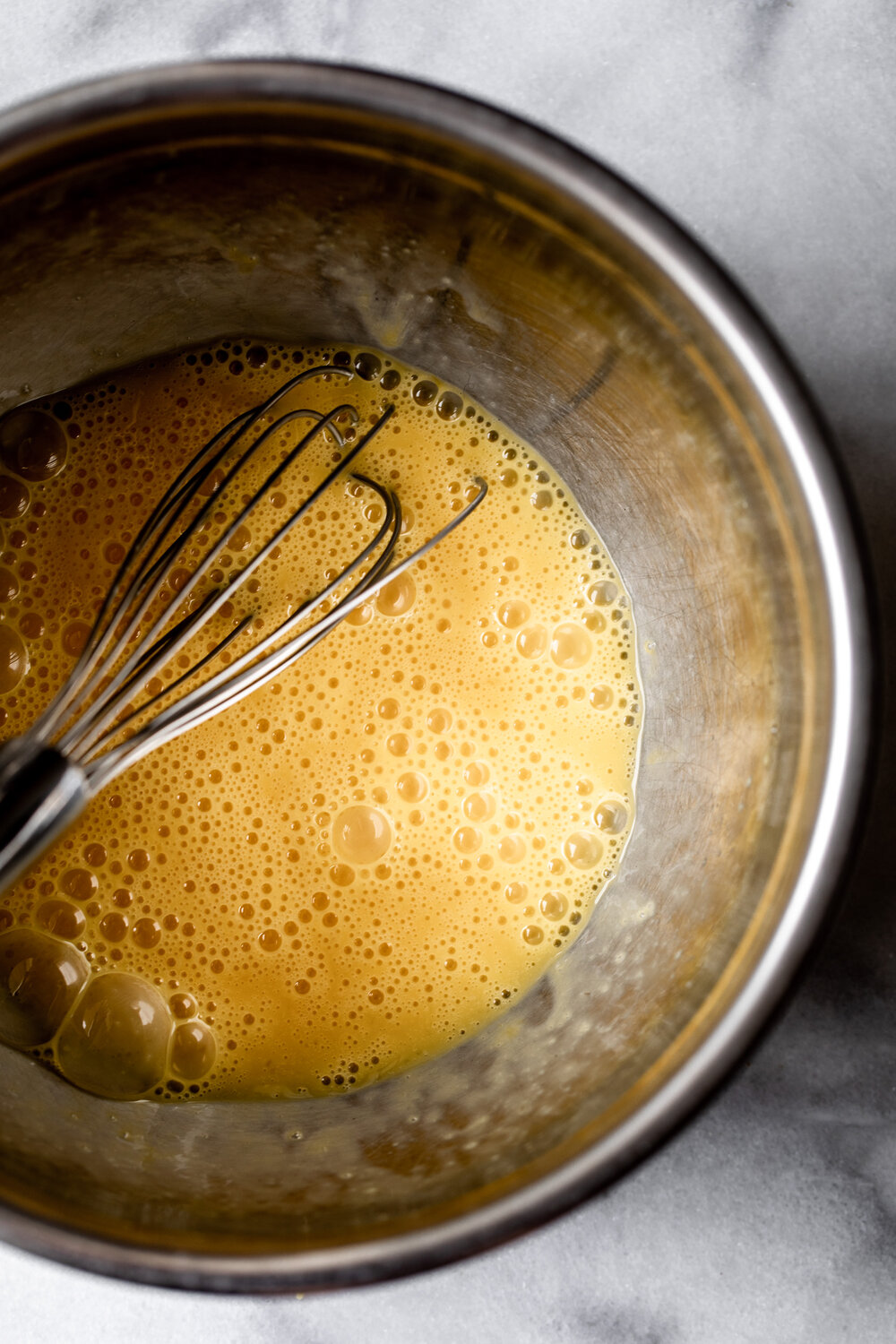
- Whisk the eggs. In a medium mixing bowl whisk the eggs until they fall off the whisk in ribbons.
- Melt butter. Heat a medium non-stick skillet over medium-low heat. Add the butter and allow to melt. Season the eggs with salt and pepper. Turn down the heat to low, add the egg mixture and let sit for just a second.
- Cook the eggs. Use a rubber spatula to move the eggs from side to side and scraping the sides constantly. It is important to continuously be moving the eggs; sometimes I like to give the pan a little shake as well.
- Continue to cook then season. Continue to cook, stirring constantly, until the eggs become creamy and start to form curds, about 15 minutes. Be patient, while it will seem like nothing is happening after about 10 minutes curds will begin to form. Stir in the creme fraiche and serve topped with the diced chives.
Swaps and Additions
- The chives can be swapped with other herbs like dill, parsley or chervil as a garnish.
- The crème fraîche can be swapped with sour cream, cream cheese or a touch of heavy cream.
Best Pairings
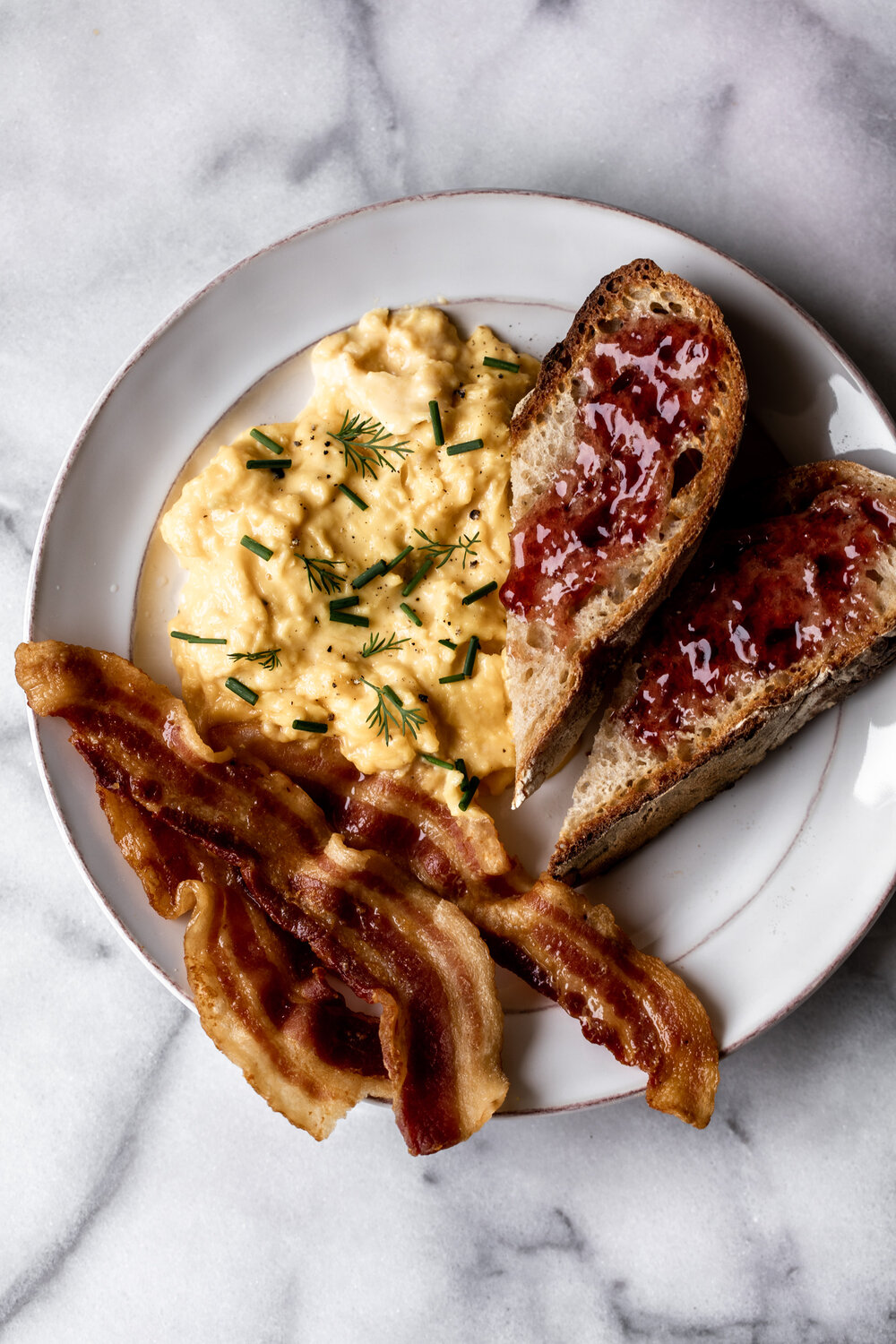
- Serve the scrambled eggs piled onto simple buttered toast, on the side with toast and jam.
- Pair with a pile of breakfast potatoes or crispy jalapeño hash browns.
- Pair with a meat like crispy oven roasted bacon, breakfast sausage or chorizo.
FAQ – Frequently Asked Questions
What are “slow scrambled eggs”?
Slow scrambled eggs are gently cooked slowly over low heat and continuously stirred to create soft, creamy curds. This method produces eggs with a luxurious, velvety texture.
Why cook scrambled eggs slowly?
Cooking the eggs low and slow gives you better control over heat, preventing overcooking. This method helps the curds remain tender and moist instead of turning rubbery and dry.
What’s the best pan for cooking slow scrambled eggs?
Use a nonstick skillet with plenty of surface area to allow even, gentle cooking. A silicone spatula is ideal for softly sweeping the eggs into creamy curds.
Should I whisk the eggs before cooking?
Yes! Whisk the eggs until they fall like ribbons from the whisk.
Why should I season scrambled eggs just before cooking?
When you whisk eggs and add salt too early, the salt begins to break down the egg proteins. This can cause the mixture to thin out and release extra moisture, leading to watery scrambled eggs.
More delicious breakfasts to try:
Made this dish? Be sure to rate the recipe and drop a comment below! Your feedback means everything (and helps others find it too)!
Slow Scrambled Eggs
Rate this Recipe
Ingredients:
- 6 eggs
- 2 tablespoons unsalted butter
- Kosher salt, as needed
- Freshly ground black pepper, as needed
- 2 tablespoons crème fraiche
- ½ teaspoon diced chives
Instructions:
- In a medium mixing bowl whisk the eggs until they fall off the whisk in ribbons.
- Heat a medium non-stick skillet over medium-low heat. Add the butter and allow to melt. Season the eggs with salt and pepper. Turn down the heat to low, add the eggs and let sit for just a second.
- Use a rubber spatula to move the eggs from side to side and scraping the sides constantly. It is important to continuously be moving the eggs; sometimes I like to give the pan a little shake as well.
- Continue to cook, stirring constantly, until the eggs become creamy and start to form curds, about 15 minutes. Be patient, while it will seem like nothing is happening after about 10 minutes curds will begin to form. Stir in the creme fraiche and serve topped with the diced chives.
Nutrition:
Calories: 299kcal | Carbohydrates: 16g | Protein: 6g | Fat: 25g | Saturated Fat: 10g | Polyunsaturated Fat: 9g | Monounsaturated Fat: 4g | Trans Fat: 1g | Cholesterol: 37mg | Sodium: 11mg | Potassium: 166mg | Fiber: 12g | Sugar: 0.4g | Vitamin A: 455IU | Vitamin C: 1mg | Calcium: 243mg | Iron: 3mg
DID YOU MAKE THIS?
TAG ME ON INSTAGRAM TO BE FEATURED ON MY STORIES! @cookingwithcocktailrings
This is the only way I will make scrambled eggs now and it’s changed my life.
AY! I’m so happy to hear you enjoyed the recipe! Thanks so much for sharing!
I’m pregnant and missing soft eggs. Is this safe for me to eat? They look really creamy but i’m wondering if i go for this texture will they still be a bit raw?
Congratulations! As long as you cook the eggs over a long time over a low heat they should be perfectly safe to eat! They aren’t raw just cooked slowly for this desired texture!