
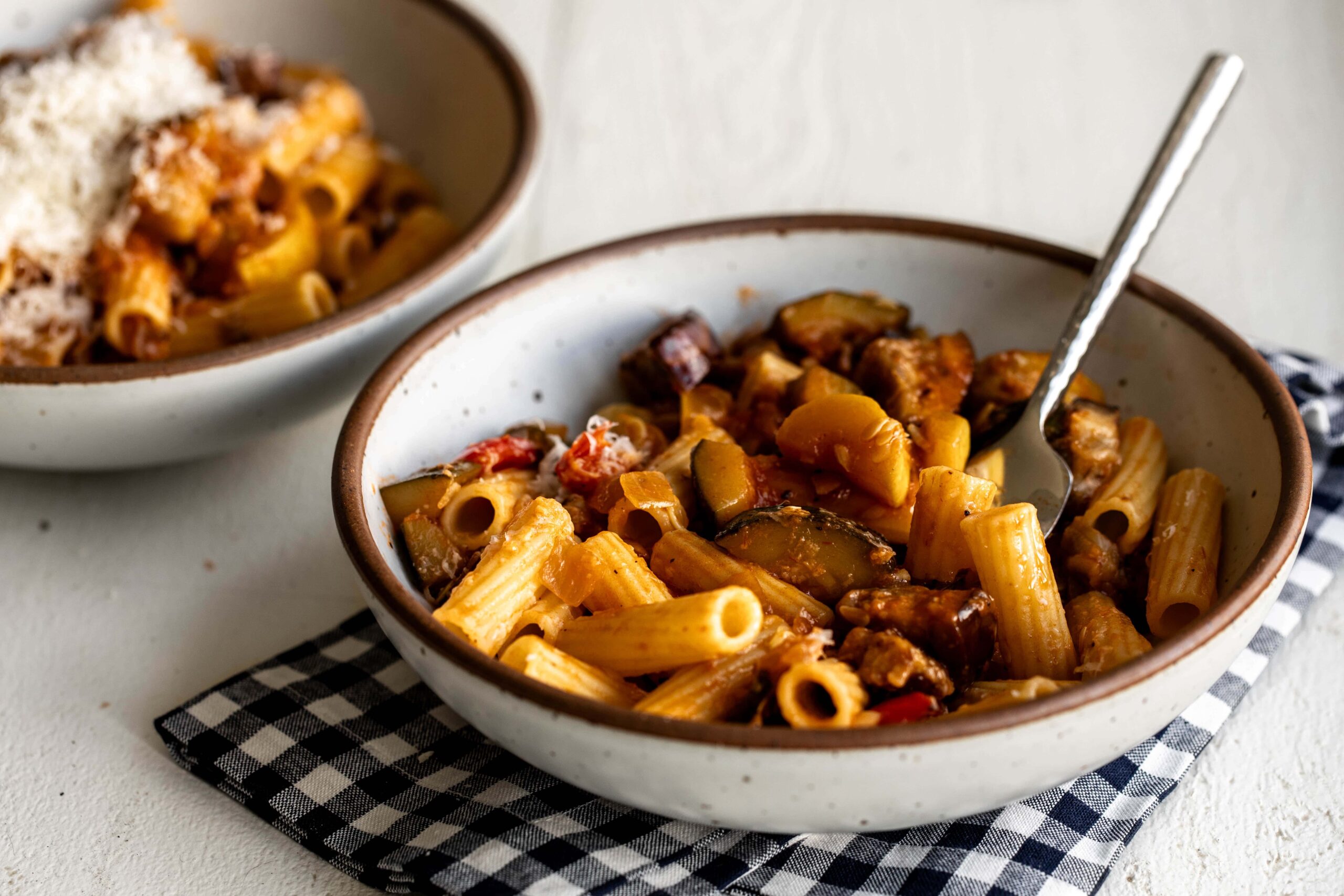
Ratatouille Pasta
jump toRECIPE
This ratatouille pasta recipe is a comforting, vegetable-packed dish that brings together the flavors of late summer produce with the heartiness of pasta. Inspired by the classic French stew, this version transforms eggplant, zucchini, squash, and bell pepper into a jammy tomato-based sauce tossed with rigatoni and plenty of Parmesan cheese. It’s a flavorful vegetarian dinner that feels cozy yet vibrant, perfect for weeknights or casual entertaining. If you enjoy this, try my butternut squash gnocchi with pancetta and sage or my shaved Brussels sprouts salad next.
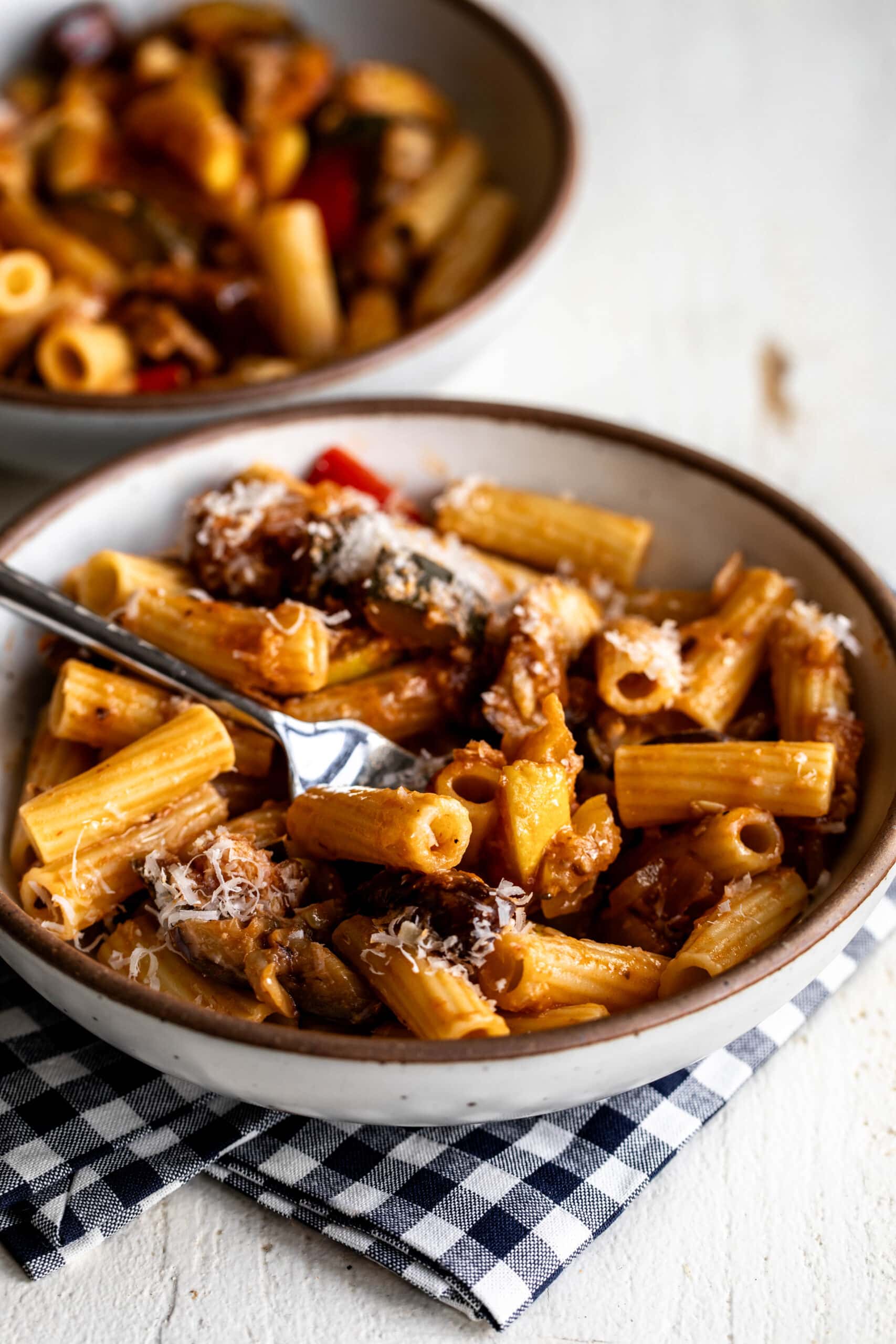
Why You’ll Love This Recipe
- Veggie-forward and satisfying – A great way to enjoy seasonal vegetables in a hearty pasta dish.
- Comfort food with a twist – Inspired by French ratatouille but finished with Italian pasta and Parmesan.
- Make-ahead friendly – Leftovers reheat beautifully, making it great for meal prep.
Key Ingredients in This Recipe
- Onion – I use yellow onion for its mellow flavor when cooked. These onions, with a brownish yellow papery skin, are a great all-purpose cooking onion. Shallots can be used in place of the onion in this recipe.
- Eggplant – When selecting eggplant at the store or farmer’s market, look for firm, slightly heavier ones without brown spots or blemishes. The eggplant is cooked separately and added later to be sure it’s tender and doesn’t turn gray and soggy.
- Squash – I use a combination of both zucchini and yellow summer squash in this recipe. While they are in season during the summer months, they can often be found at the grocery store year round. Squash has a high water content so it’s important to give them room in the pot so the water can evaporate and the pieces can brown. If you don’t have a large heavy-bottomed pot, I recommend adding the vegetables in batches.
- Bell pepper – Bell peppers are sweet with a mild flavor. They don’t have any heat but add a sweet flavor, especially when sautéed. The colors of bell pepper differ based on maturity – it comes down to the time of harvesting. Red bell peppers are fully ripe.
- Tomato paste – Rather than using fresh tomatoes as with most traditional ratatouille recipes, I add a bit of concentrated tomato paste to the base of this sauce. Rather than buying cans of tomato paste I prefer to buy tubes to better store the leftovers.
- Vegetable broth – To keep this ratatouille vegetarian, I use vegetable broth though chicken broth can also be used.
- Pasta – I use rigatoni but any tubular pasta shape like penne, pipe rigate or paccheri will do.
A full ingredient list with exact amounts can be found in the recipe card below.
Pro Tip
For the best flavor and texture, salt and drain the eggplant before cooking. This step removes excess moisture and prevents the eggplant from becoming soggy or bitter.
Swaps & Substitutions
- Eggplant – Use globe, Chinese, or Japanese eggplant depending on what’s available.
- Squash – Substitute with all zucchini, all yellow squash, or even delicata squash in fall.
- Bell pepper – Any color works—red is sweeter, while green gives a sharper, earthy flavor.
- Broth – Vegetable broth keeps it vegetarian, but chicken broth adds a richer base.
- Cheese – Swap Parmesan for pecorino Romano or a dairy-free alternative if needed.
- Spice it up – Add red pepper flakes or a pinch of chili powder for heat.
Special Equipment
Heavy-bottomed Dutch ovens are perfect for making vegetable-packed sauces like this ratatouille. They retain and distribute heat evenly, allowing the vegetables to caramelize without burning, and the high sides make it easy to simmer everything together. If you’re looking to invest in one, I recommend this Staub Cast Iron Round Cocotte.
How to Make Ratatouille Pasta (Step-by-Step)
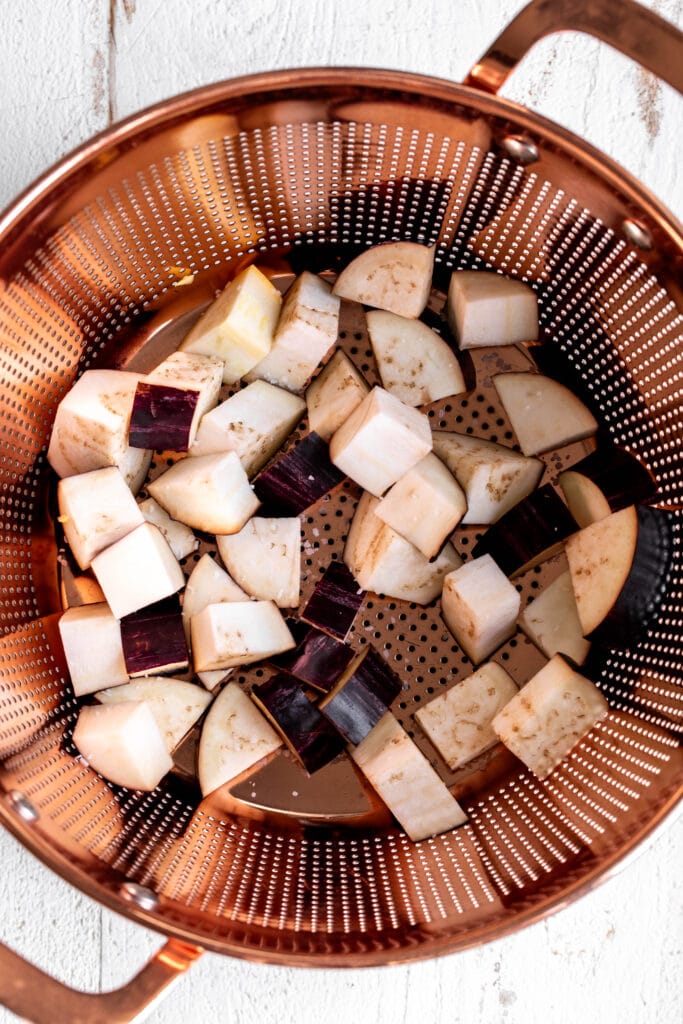
Add the eggplant to a colander and season with salt. Let sit for 15 to 30 minutes, then pat with paper towels. The eggplant may start to discolor but that’s ok, it may oxidize as it loses excess moisture.
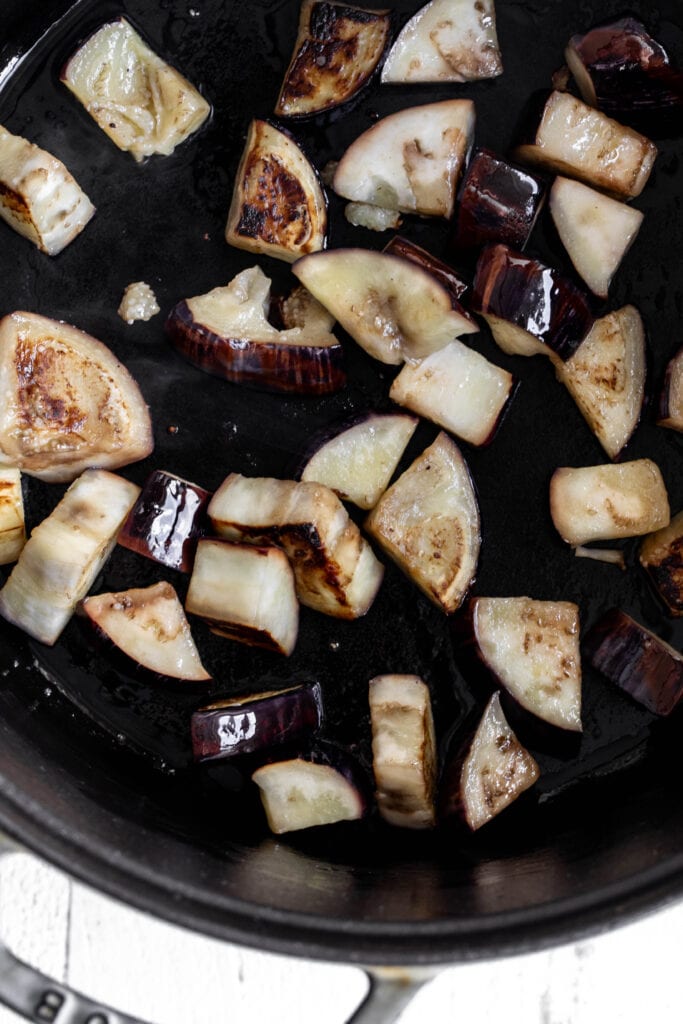
Heat a large heavy-bottomed pot over medium heat. Add the olive oil and heat through, then add the eggplant and stir occasionally, until golden brown all over, about 6 to 8 minutes. Use a slotted spoon to remove from the pan to a plate, reserving as much oil as possible in the pot.

Return the pot to medium heat, add onion and sauté until just tender, about 4 minutes.
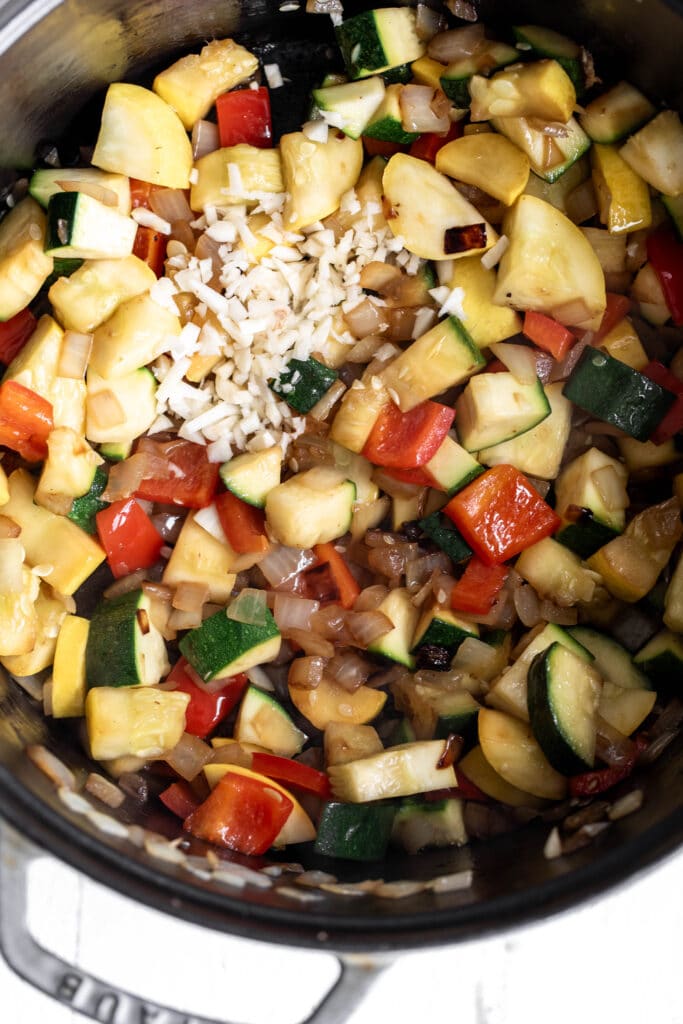
Add the zucchini, summer squash, pepper and stir to combine, cooking until vegetables are softened and golden brown, about 6 minutes. Add the garlic and cook until fragrant, about an additional 30 seconds.
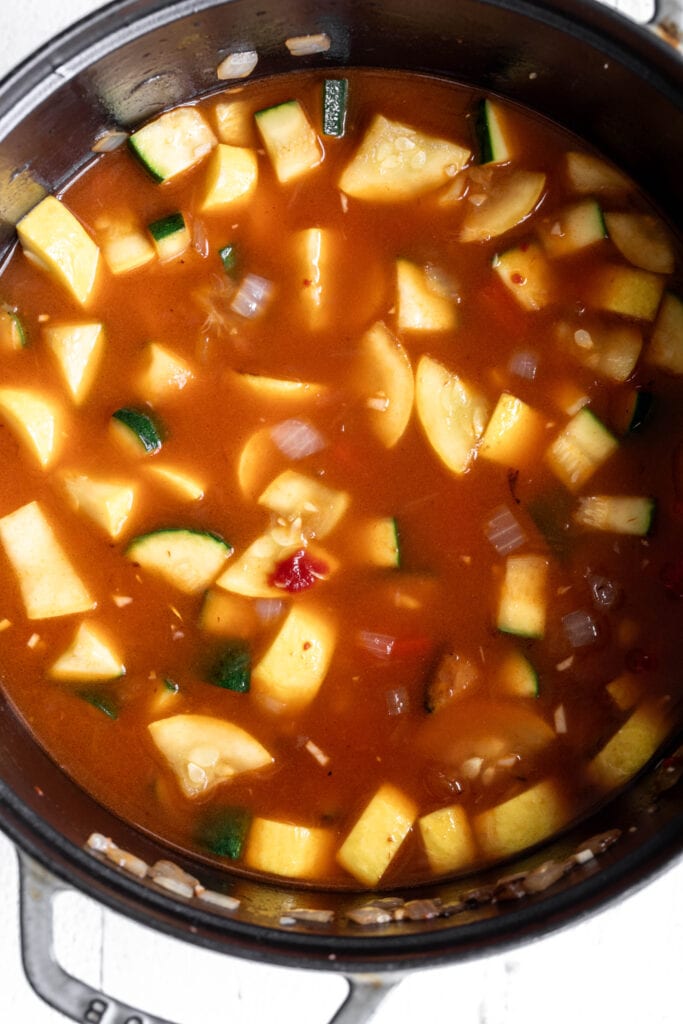
Stir in the tomato paste followed by the vegetable stock and simmer until the sauce thickens and resembles a stew, about an additional 20 minutes.

Bring a large pot of water to a boil over medium-high heat. Add the pasta to the boiling water and cook, stirring occasionally, until al dente, about 10 minutes. Set aside 1 cup (237g) of the pasta water then drain and return the pasta to the pot.
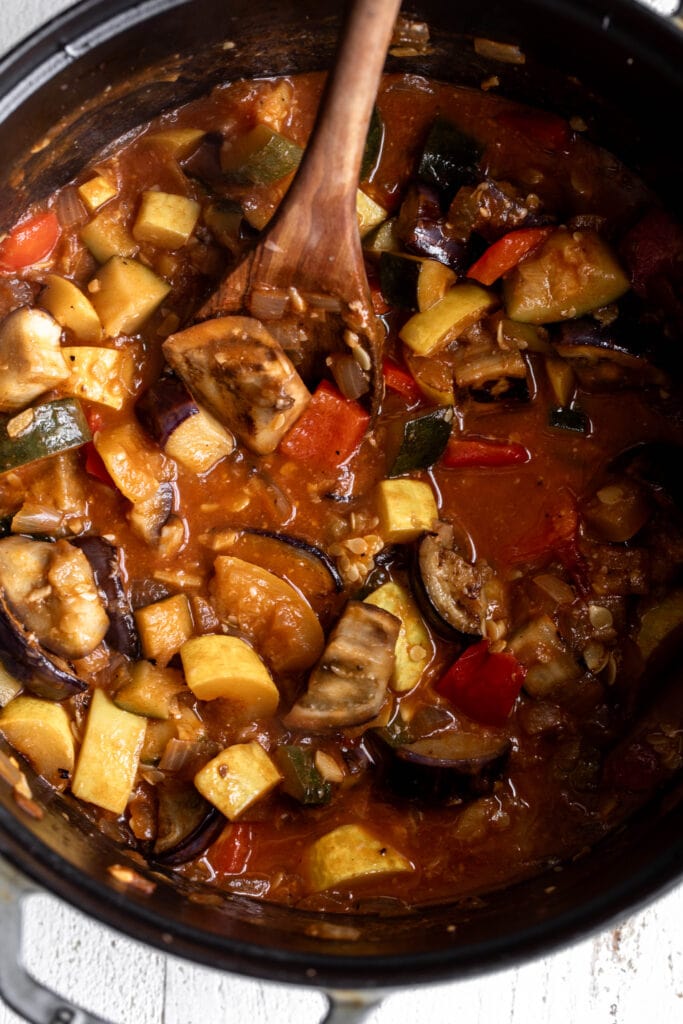
Add the eggplant to the sauce and stir to combine with ½ cup (118g) of the pasta cooking water and ½ cup (118g) of the Parmesan.
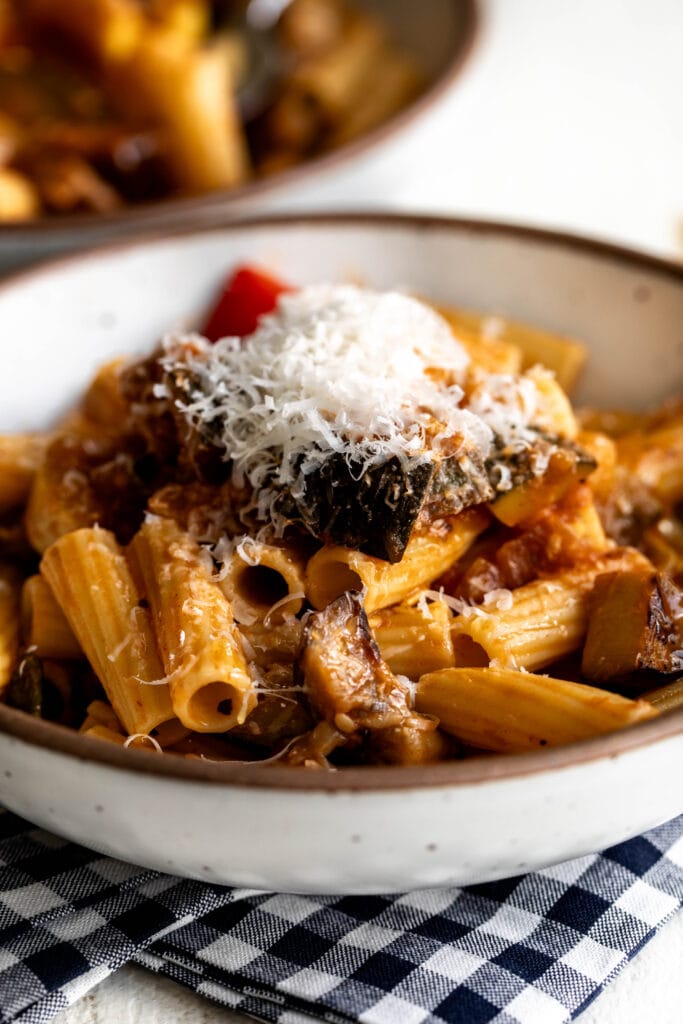
Spoon sauce over pasta and stir to combine. Divide pasta among serving bowls and top with additional Parmesan cheese. Serve warm.
How to Serve Ratatouille Pasta
- With extra Parmesan or pecorino grated on top.
- Alongside crusty bread or garlic knots to soak up the sauce.
- As a vegetarian main course with a simple green salad on the side.
- Topped with fresh basil or parsley for extra brightness.
How to Store Ratatouille Pasta
- Refrigerate – Store leftovers in an airtight container for up to 5 days.
- Reheat – Warm on the stovetop with a splash of water or broth until heated through.
- Freeze – Freeze the sauce separately (without pasta) for up to 2 months. Thaw overnight and toss with freshly cooked pasta.
FAQ – Frequently Asked Questions
Yes, the sauce can be made a day in advance. Just cook the pasta fresh and toss before serving.
Rigatoni is classic, but penne, ziti, paccheri, or even orecchiette work well.
Absolutely—grilled chicken, shrimp, or even Italian sausage pair beautifully with the ratatouille sauce.
Yes, simply omit the Parmesan or use a plant-based cheese alternative.
Other Recipes to Try
If you enjoy this ratatouille pasta recipe, give these a try and follow me on Instagram for more updates:
Thanks for cooking with me! If you made this recipe, leave a 🌟 rating and share your thoughts or tips below. I’d love to hear from you!
Ratatouille Pasta
Rate this Recipe
Equipment:
Ingredients:
- 1 medium eggplant, chopped
- Kosher salt, as needed
- ¼ cup extra-virgin olive oil
- ½ medium yellow onion, chopped
- 1 medium zucchini, chopped
- 1 medium summer squash, chopped
- 1 medium red bell pepper, seeded and chopped
- 3 cloves garlic, chopped
- 3 tablespoons tomato paste
- 3 cups vegetable stock
- ¾ pound rigatoni or other tubular pasta shape
- ½ cup freshly grated Parmesan, plus additional as needed, for serving
Instructions:
- Add the eggplant to a colander and season with salt. Let sit for 15 to 30 minutes, then pat with paper towels. The eggplant may start to discolor but that’s ok, it may oxidize as it loses excess moisture.
- Heat a large heavy-bottomed pot over medium heat. Add the olive oil and heat through, then add the eggplant and stir occasionally, until golden brown all over, about 6 to 8 minutes. Use a slotted spoon to remove from the pan to a plate, reserving as much oil as possible in the pot.
- Return the pot to medium heat, add onion and sauté until just tender, about 4 minutes.
- Add the zucchini, summer squash, pepper and stir to combine, cooking until vegetables are softened and golden brown, about 6 minutes. Add the garlic and cook until fragrant, about an additional 30 seconds.
- Stir in the tomato paste followed by the vegetable stock and simmer until the sauce thickens and resembles a stew, about an additional 20 minutes.
- Bring a large pot of water to a boil over medium-high heat. Add the pasta to the boiling water and cook, stirring occasionally, until al dente, about 10 minutes. Set aside 1 cup (237g) of the pasta water then drain and return the pasta to the pot.
- Add the eggplant to the sauce and stir to combine with ½ cup (118g) of the pasta cooking water and ½ cup (118g) of the Parmesan.
- Spoon sauce over pasta and stir to combine. Divide pasta among serving bowls and top with additional Parmesan cheese. Serve warm.
Notes:
Nutrition:
TAG ME ON INSTAGRAM TO BE FEATURED ON MY STORIES! @cookingwithcocktailrings
Rate + Review
WHAT DID YOU THINK OF THIS RECIPE?