

Beef Panang Curry
jump toRECIPE
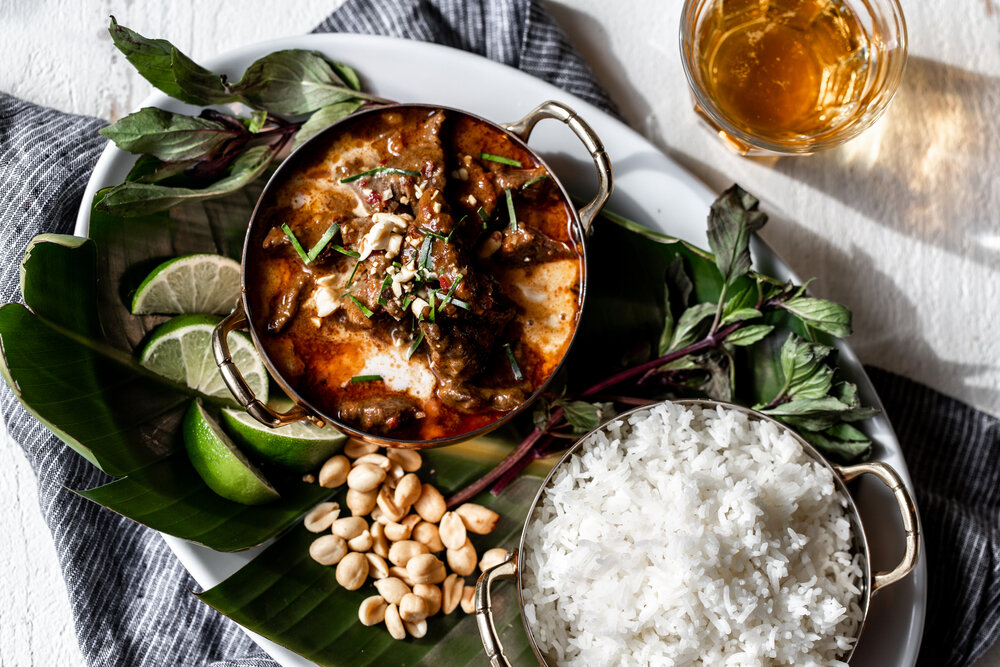
I first fell in love with panang curry at Night + Market Sahm in Venice, California, where they serve the rich, thick curry with flaky roti and sticky rice. Panang curry is a traditional Southern Thai dish known for its velvety, gravy-like texture, nutty undertones, and the perfect balance of sweet, savory, and citrusy flavors.
This beef panang curry recipe is my take on the classic, made as a comforting one-pot meal that’s weeknight-friendly. While traditional versions often cook the beef separately to keep the spice paste pure, I prefer simmering the beef directly in the sauce. This deepens the flavor and keeps the cooking simple. After testing both homemade and store-bought curry pastes, I found store-bought to be spicier with a more cohesive flavor, making it an easy choice for this recipe. With just over an hour of mostly hands-off cooking, you’ll have a rich and flavorful Thai curry that tastes restaurant-quality but is simple enough to make at home.
Key Ingredients in This Recipe
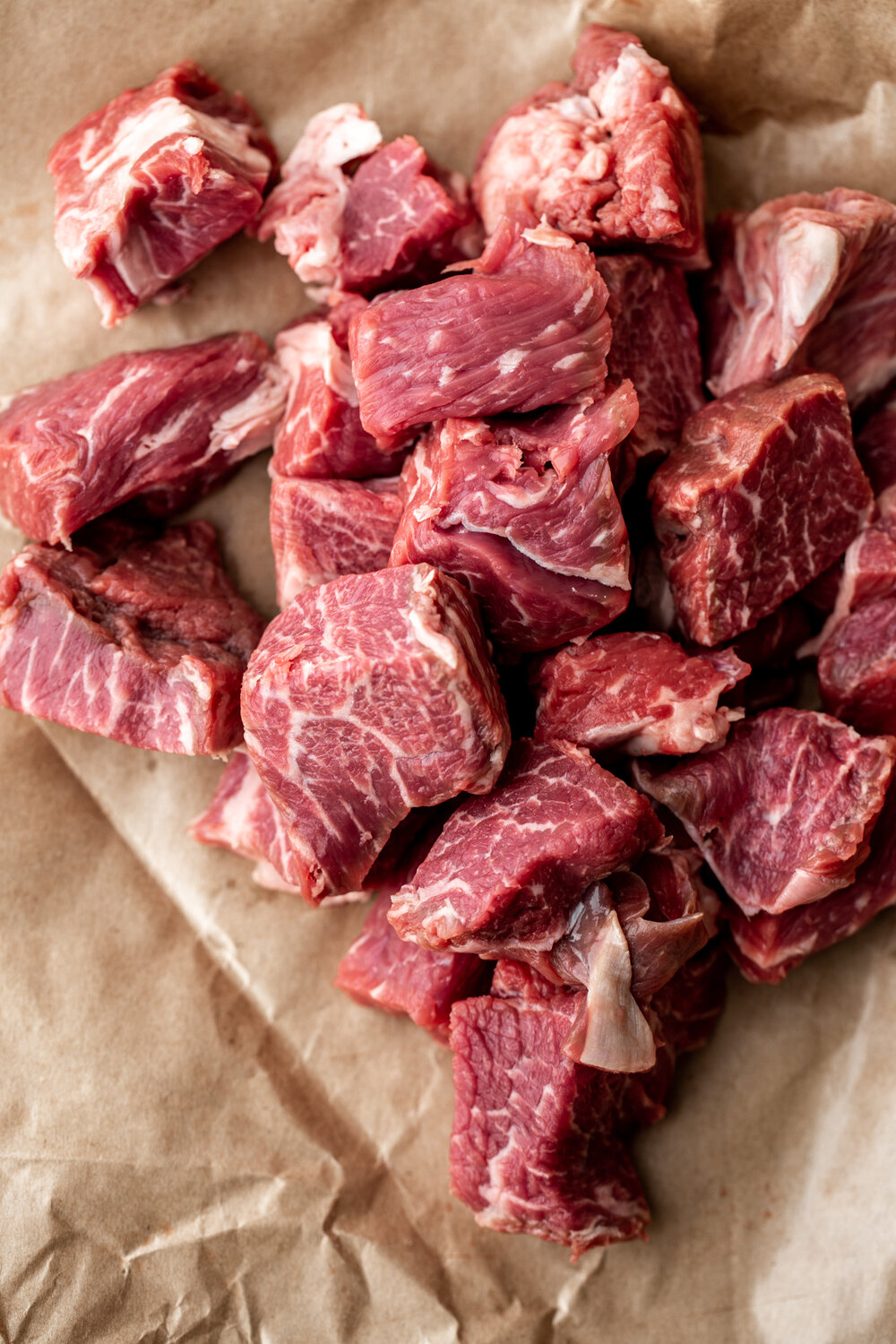
- Beef – Many versions of this dish use a thin cut of beef like sirloin, but I prefer to use cubes of beef like chuck roast that slowly break down and become fork-tender in the curry. Cheaper cuts of beef work well in this recipe. As they simmer the beef breaks down and the meat becomes tender.
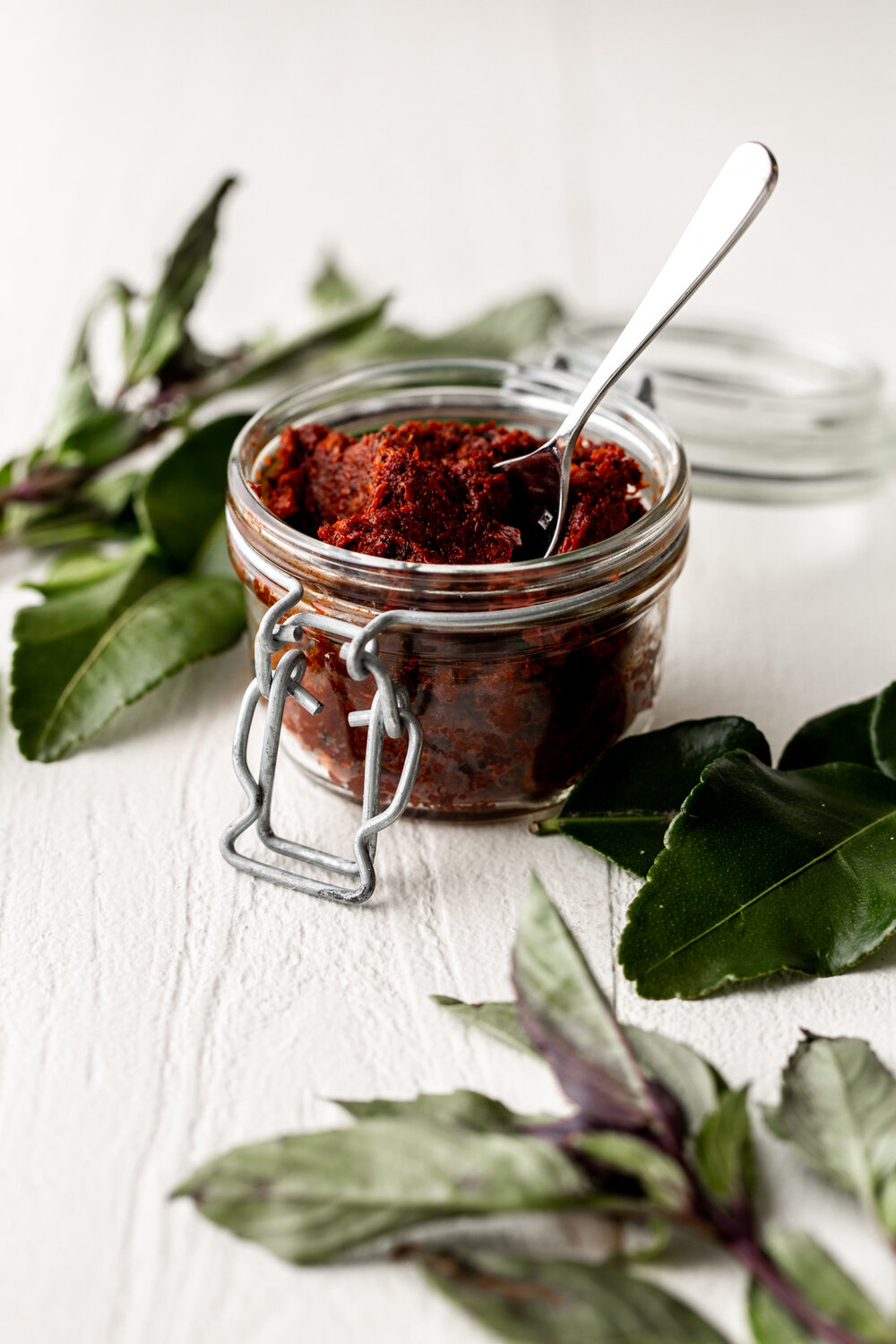
- Red curry paste – Traditional panang curry paste isn’t tough to make. However it can be tricky to track down the typical ingredients – a combination of red pepper, lemongrass, shallots, garlic, galangal, lime leaves and shrimp paste. Look for a store-bought Thai red curry paste with these ingredients on the container for the best flavor profile. I like using Mae Ploy Red Curry Paste.
- Peanut Butter – Stir in chunky peanut butter at the end of the cooking process. Not only does it help to emulsify the sauce but it adds a creamy, nutty and rich flavor to the curry. I prefer using chunky peanut butter for the added texture of the peanuts.
- Lime leaves – Lime leaves are frequently used in Southeast Asian cooking. They add bright, citrus flavor and can be found at most Asian markets. They freeze well so I like to buy a few packages and keep them around to use as needed. If you cannot locate makrut or kefir lime leaves then a combination of half lime zest and half lemon zest works as a substitute.
- Fish sauce – I love the funky umami flavor fish sauce adds to any dish. The flavor comes from a process of fermenting fish over a long period of time.
- Coconut milk – Coconut comes from the creamy liquid inside mature coconuts. While frequently used in place of dairy, it adds a subtle coconut flavor to this flavorful curry.
A full ingredient list with exact amounts can be found in the recipe card below.
Swaps and Substitutions
- If you can’t find Thai basil swap for julienned sweet basil.
- If you can’t find kaffir lime leaves, replace with a combination of lemon and lime zest to garnish the dish for added aroma and a bright finish.
special equipment
Dutch ovens are the best for braising. They can go from stovetop to oven and both retain heat and distribute it evenly. The heavy, tight fitting lid keeps the steam and liquid in while the ingredients slowly cook. If you’re looking to start braising I’d recommend one of these Dutch ovens:
-
-
- 7-quart Staub Dutch Oven
- Le Creuset (both are more of an investment purchase)
- Lodge (a much more affordable option)
-
How to Make Beef Panang
- Season the beef. Season the beef on all sides with salt and pepper. Heat a large Dutch oven over medium heat and heat through.
- Sear the beef. Add the beef and sear until all sides are golden brown, about 6 minutes. Remove to a plate and set aside.
- Fry the curry paste. Return the pot to heat. Next, add the coriander, cumin, red curry paste and sugar, stirring constantly to fry the paste until it deepens in color and becomes fragrant, about 1 minute.
- Simmer the curry. Add the coconut milk to the pot with the beef and 1 cup of water. Cover and simmer the mixture over medium-low heat until the beef is fork-tender, about 1 hour and 30 minutes. Add additional water ¼ cup at a time if the sauce becomes too thick and dry.
- Add the remaining ingredients. Stir in the fish sauce, peanut butter and half the julienned lime leaves.
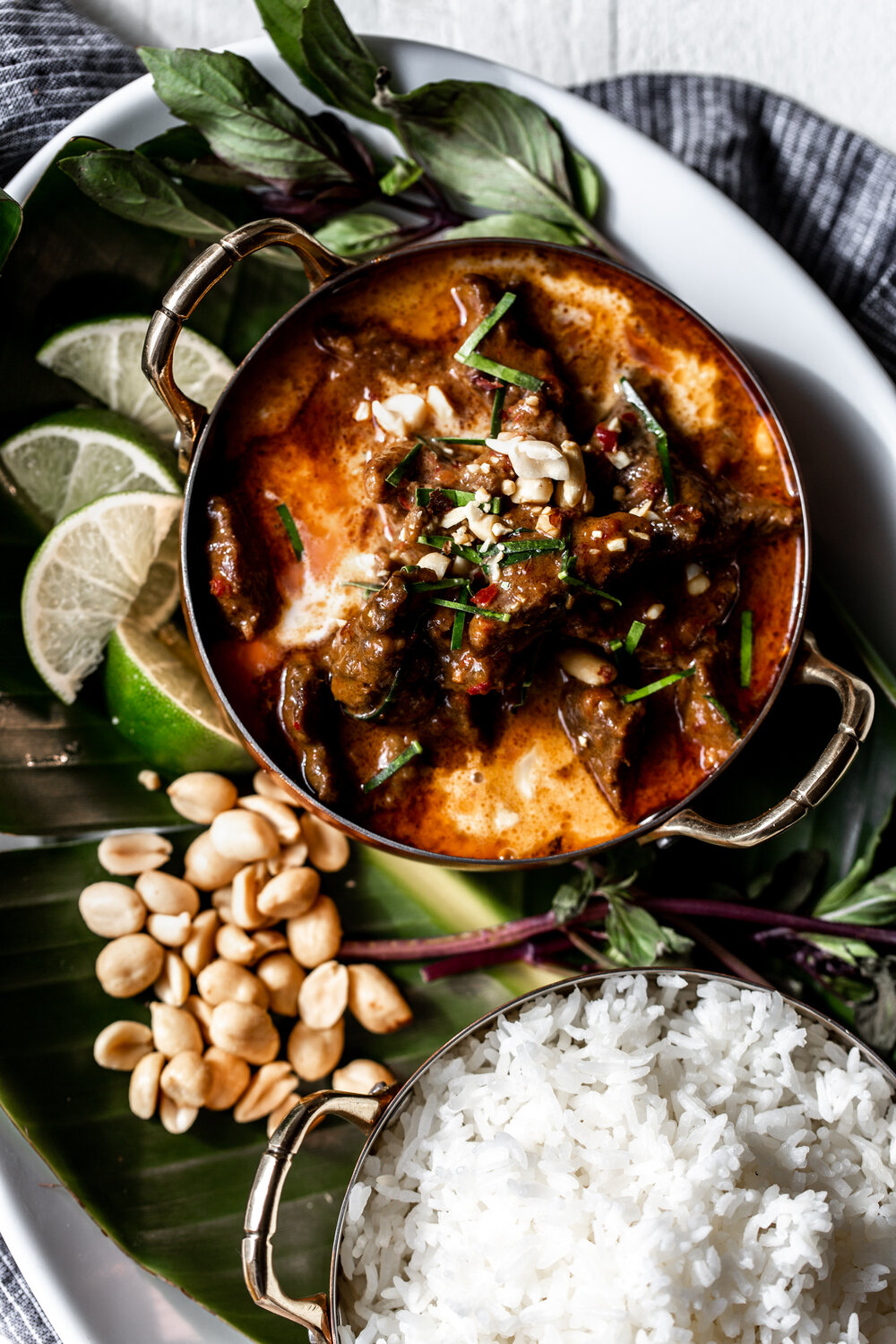
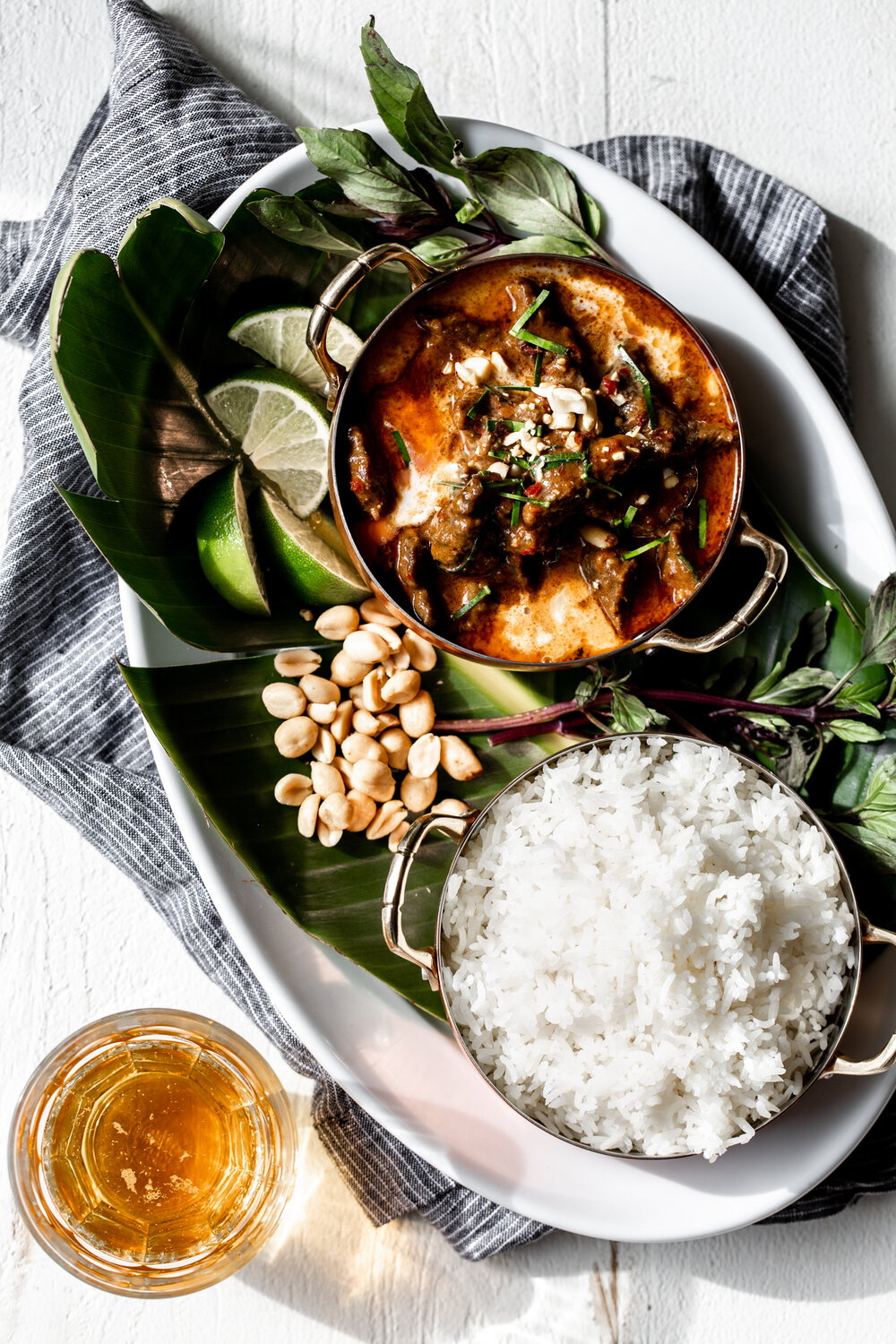
- Serve. Garnish with the remaining lime leaves and peanuts then serve the panang beef curry with jasmine rice, Thai basil and lime wedges.
How to Store Beef Panang
Allow the curry to cool to room temperature before storing. Transfer to an airtight container and refrigerate for up to 4 days. The flavors will actually deepen as it sits, making it even more delicious the next day.
How to Reheat Beef Panang Curry
- On the stovetop: Warm the curry over medium-low heat, stirring occasionally, until heated through. If it’s too thick, add a splash of water or coconut milk.
- In the microwave: Heat in 1-minute intervals, stirring in between, until warmed through.
FAQ – Frequently Asked Questions
After testing both homemade and store-bought curry pastes, I found store-bought to be spicier with a more cohesive flavor, making it an easy choice for this recipe.
Many versions of this dish use a thin cut of beef like sirloin, but I prefer to use cubes of beef like chuck roast that slowly break down in the braise and become fork-tender. Cheaper cuts of beef work well in this recipe. As they simmer the beef breaks down and the meat becomes tender.
Yes! With just over an hour of mostly hands-off cooking, you’ll have a rich and flavorful Thai curry that tastes restaurant-quality but is simple enough to make at home.
Serve it hot over jasmine rice or with crispy roti. Garnish with fresh Thai basil (or sweet basil) or julienned kaffir lime leaves (or replace with a combination of lemon and lime zest) for added aroma and flourish.
Allow the curry to cool to room temperature before storing. Transfer to an airtight container and refrigerate for up to 4 days. The flavors will actually deepen as it sits, making it even more delicious the next day!
On the stovetop, warm the curry over medium-low heat, stirring occasionally, until heated through. You can also Warm the curry over medium-low heat on the stovetop, stirring occasionally, until heated through. If it’s too thick, add a splash of water or coconut milk. You can also heat in the microwave in 1-minute intervals, stirring in between, until warmed through.
Other Recipes to Try
If you enjoy this beef panang, I recommend trying these recipes:
Thanks for cooking with me! If you made this recipe, leave a 🌟 rating and share your thoughts or tips below. I’d love to hear from you!
Beef Panang Curry
Rate this Recipe
Ingredients:
- 1½ pounds chuck steak, cut into 1” cubes
- Kosher salt, as needed
- Freshly ground black pepper, as needed
- 1 teaspoon ground roasted coriander
- 1 teaspoon ground cumin
- 3 tablespoons red curry paste
- 1 tablespoon palm sugar or dark brown sugar
- 1 (13.5 ounce) can coconut milk
- 1 tablespoon fish sauce
- 2 tablespoons chunky peanut butter
- 6 Kaffir lime leaves julienned, divided
- 1 tablespoon chopped peanuts
- Jasmine rice, for serving
- Thai basil leaves, for garnish (optional)
- Lime wedges, for garnish
Instructions:
- Season the beef on all sides with salt and pepper. Heat a large Dutch oven over medium heat and heat through.
- Add the beef and sear until all sides are golden brown, about 6 minutes. Remove to a plate and set aside.
- Return the pot to heat and add the coriander, cumin, red curry paste and sugar, stirring constantly to fry the paste until it deepens in color and becomes fragrant, about 1 minute.
- Add the coconut milk to the pot with the beef and 1 cup of water. Cover and simmer the mixture over medium-low heat until the beef is fork-tender, about 1 hour and 30 minutes, adding additional water ¼ cup at a time if the sauce becomes too thick and dry.
- Stir in the fish sauce, peanut butter and half the julienned lime leaves.
- Garnish with the remaining lime leaves and peanuts then serve the beef panang curry with jasmine rice, Thai basil and lime wedges.
Notes:
- If you can’t find Thai basil swap for julienned sweet basil.
- If you can’t find kaffir lime leaves, replace with a combination of lemon and lime zest to garnish the dish for added aroma and a bright finish.
Nutrition:
TAG ME ON INSTAGRAM TO BE FEATURED ON MY STORIES! @cookingwithcocktailrings


Rate + Review
WHAT DID YOU THINK OF THIS RECIPE?