

Homemade Peking Duck (Easy Faux Version)

jump toRECIPE
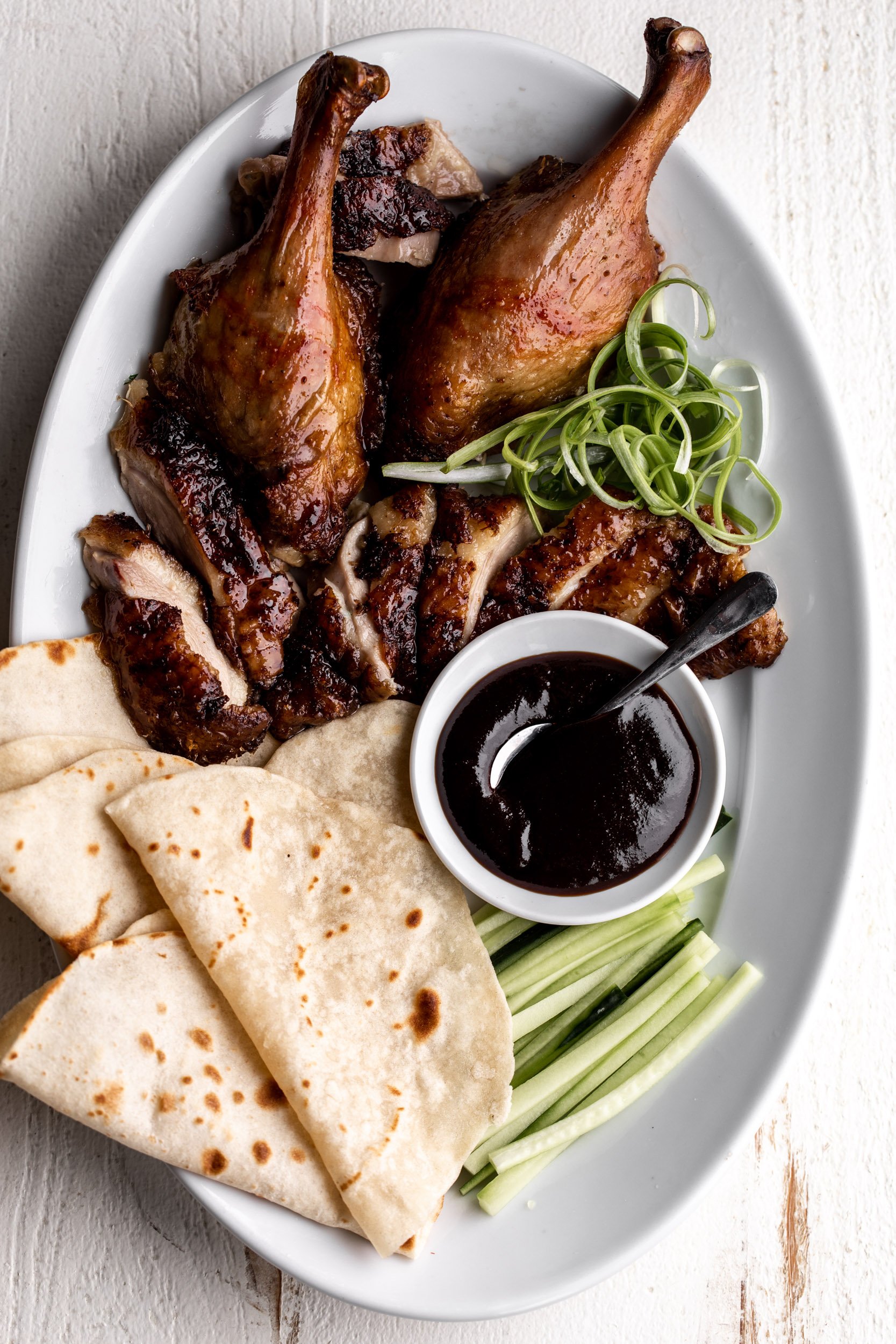
One of my Chinese favorites made with a twist for a more “at home” version. I serve this peking duck recipe with Mandarin style pancakes, a bit of hoisin and topped with cucumber and green onions. They’re like Asian duck tacos, and I think I could eat them almost every day. I crave that crispy, golden skin and tender meat.
Authentic Peking duck is known for its crisp, lacquered skin; a result of a time-intensive process that traditionally involves pumping air under the skin and drying the skin of the bird. This faux Peking duck recipe offers a simplified, at-home method that delivers similar results without any special equipment. Pouring boiling water over the duck causes the skin to shrink and tighten, while gently separating the skin from the meat with your fingers mimics the traditional air-pumping technique. While the cooking method is intentionally non-traditional, the duck is served with classic Peking duck accompaniments for a familiar, restaurant-style experience at home. If you’re planning a little dinner party or get-together, serve it with this shrimp toast recipe or juicy pork and chive pan-fried dumplings to round things out.
Why You’ll Love This Recipe
- Much faster than the traditional method. No air pumps, no hanging the duck for days, just shortcuts that still deliver restaurant-quality results.
- Juicy, flavorful meat. Separating the skin from the meat allows the fat to render properly while keeping the duck tender.
- Looks fancy, but is totally doable. The kind of recipe that feels special without being overly complicated.
What is Peking Duck?
Peking duck is a dish that originated in Beijing, China with first mentions of the dish tracing back to the 13th century. Peking ducks are now traditionally cooked in an oven called a gualu, which allows the ducks to hang inside to cook. This it the method which can often be seen in windows around Chinatown, NY.
Process for Traditional Peking Duck vs. At Home
Typically the duck is slaughtered and seasoned with a maltose/ soy glaze then hung to dry overnight. On day 2 the skin is separated from the meat like a balloon (whereas I use my fingers). The duck is then blanched in boiling water to tighten the skin and once again hung and left to dry overnight once more, On the final day the duck is roasted upright in a brick oven and served. Because of the complex preparation many restaurants require advance notice for ordering peking duck so they have time to make it.
Key Ingredients in This Recipe
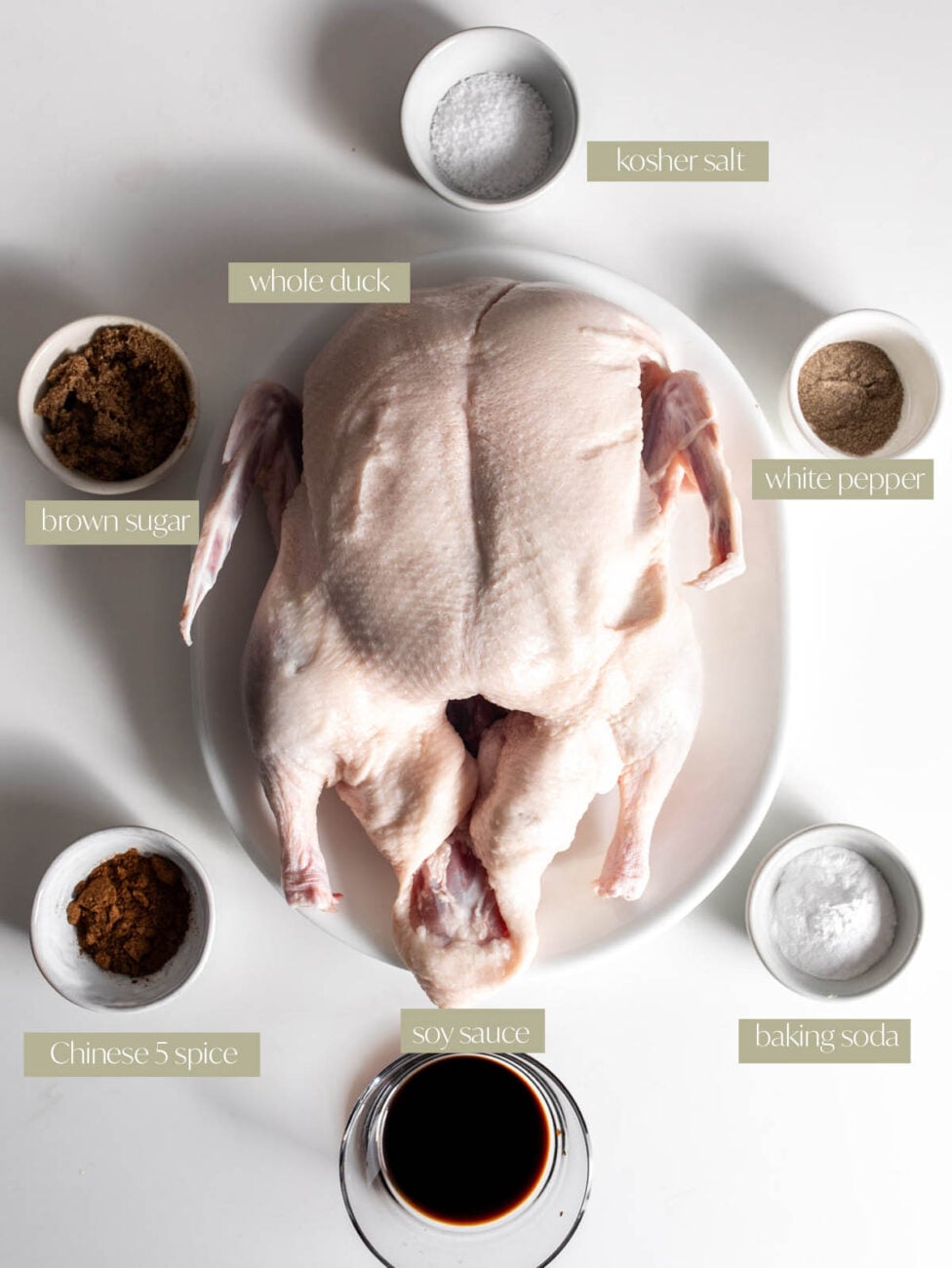
- Duck – Look for Pekin duck or Rohan duck. American Pekin duck is mallard derived from breeds in China. While it can often be difficult to find whole duck (and traditionally the duck is prepared with the head attached), I lucked out and found Tasty Duck on the Internet and they who sent me whole ducks to use! I have also used Rohan duck from the brand D’Artagnan found at upscale grocery stores, especially around the holiday season.
- Chinese five-spice powder – This fragrant, warm seasoning blend is made from a mix of Chinese cinnamon, fennel seed, star anise, cloves and either ginger, white peppercorns or Sichuan peppercorns (depending on the blend and area of China).
- Brown sugar – I use dark brown sugar in this recipe which refers to the amount of molasses in the sugar. Dark brown sugar contains about 6.5% molasses (in comparison to 3.5% in light brown sugar). Be sure to tightly pack the brown sugar in a measuring cup to get an accurate measurement.
- Soy sauce – I use reduced sodium soy sauce so that I can control the amount of salt in the recipe, adding more if needed.
- Baking soda – Baking soda is added to the marinade for the duck because it raises the skin’s pH, which helps it brown faster and crisp up while it roasts in the oven.
A full ingredient list with exact amounts can be found in the recipe card below.
Swaps and Substitutions
- Duck: If you can’t find whole duck, the same preparation can be used for four duck breasts, which can be located much more easily. Roast for about 25 minutes instead, the internal temperature should still read 135ºF.
- Mandarin pancakes: I like serving the roast duck with traditional Mandarin-style pancakes which are made from a combination of flour and hot water though you could also substitute them for small homemade scallion pancakes.
How to Make This “Faux” Peking Duck Recipe at Home
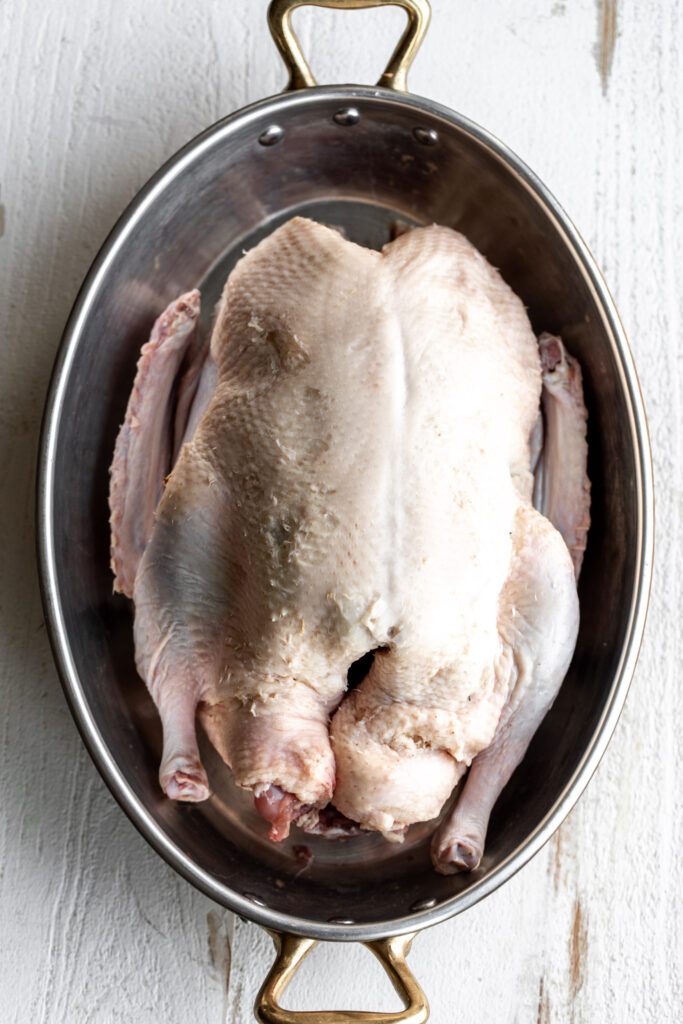
Rinse the duck and pat it completely dry. Remove the neck and giblets and discard. Remove excess fat and discard. Prick the skin of the duck all over with a fork, particularly around the breast.
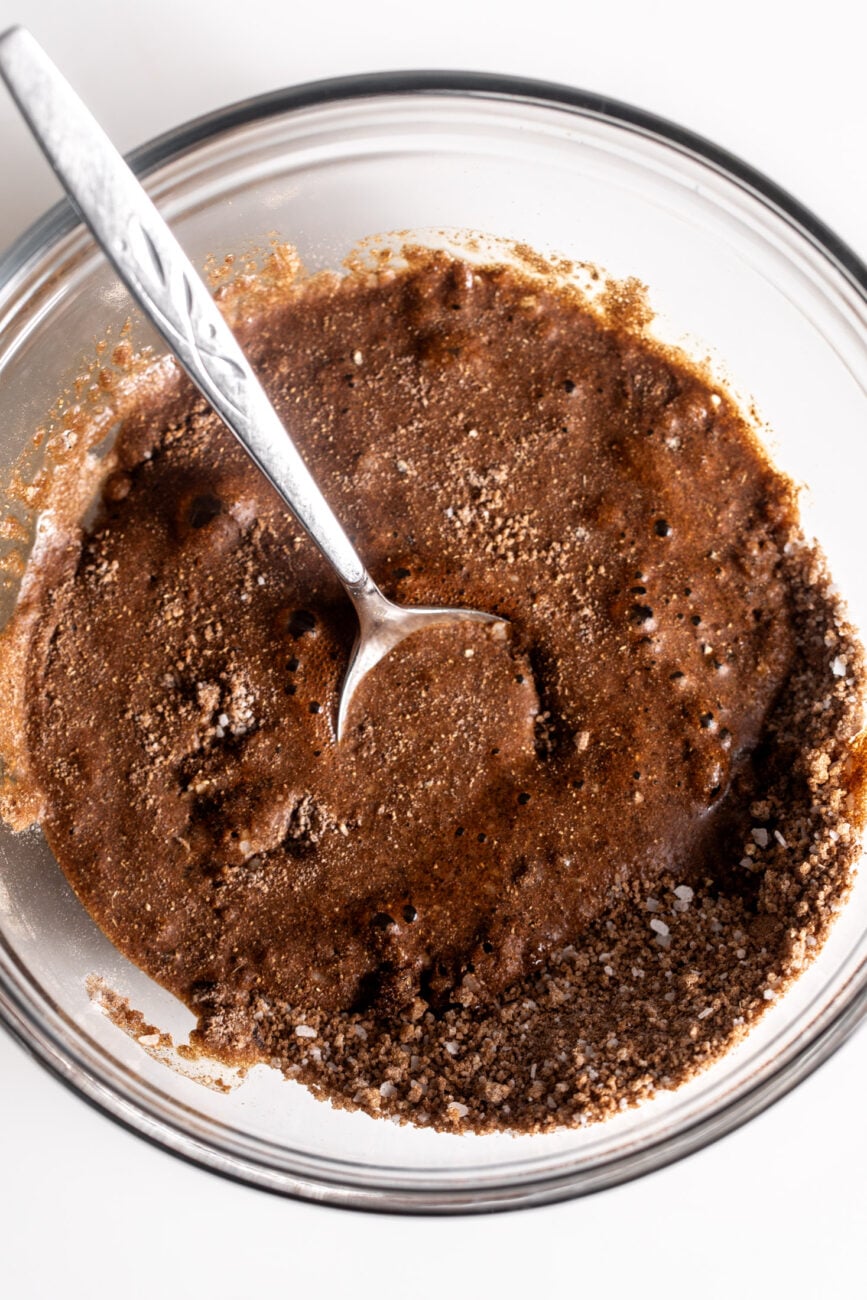
In a small bowl whisk together the baking soda, salt, pepper, 5-spice powder, soy sauce and brown sugar. The mixture will fizz. Rub the mixture all over the duck then place on a plate and refrigerate, uncovered, and let dry overnight.

The next day, use your fingers to gently separate the skin of the duck from the meat. Pat the duck completely dry with paper towels inside and out.
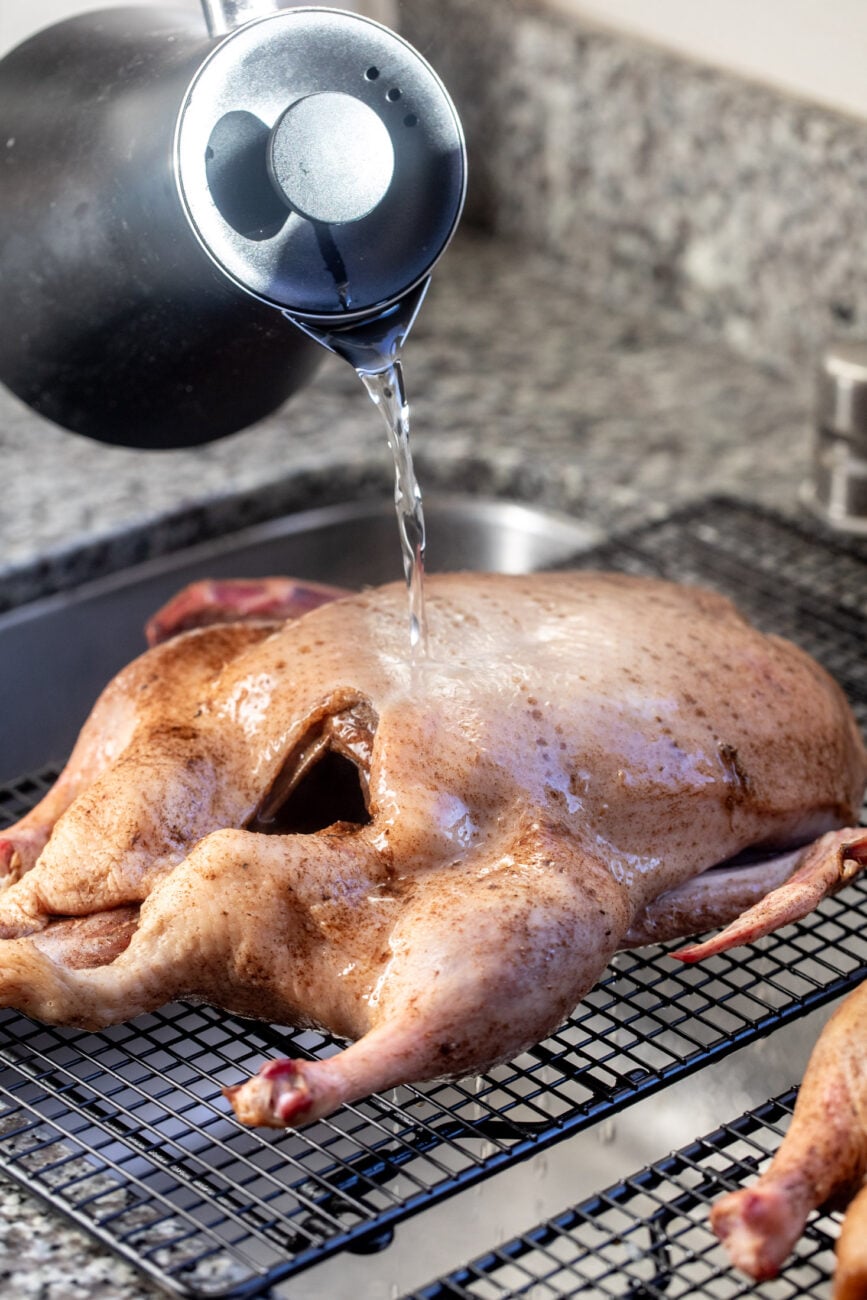
Bring a quart of water to a boil. Place a duck on a roasting rack over the sink. Blanch the duck with the boiling water by pouring it over it. The skin will tighten and dry out more. Dry throughly with paper towels.
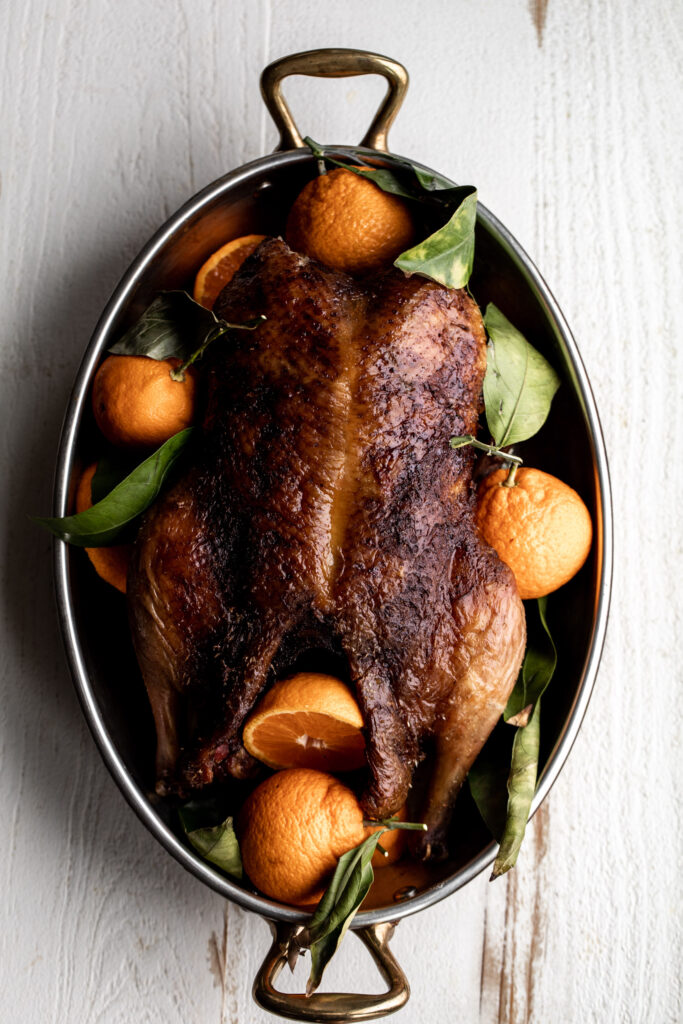
Preheat the oven to 425ºF (220ºC). Place the duck on a rack in a shallow roasting pan and cover with aluminum foil. Roast for 30 minutes. Remove the foil and prick the duck again. Continue roasting, uncovered, until the juices run slightly pink when pricked in the thickest part of the thigh (the internal temperature should read 135ºF), about 40 to 45 minutes longer. Remove from the oven and let stand for 10 minutes.

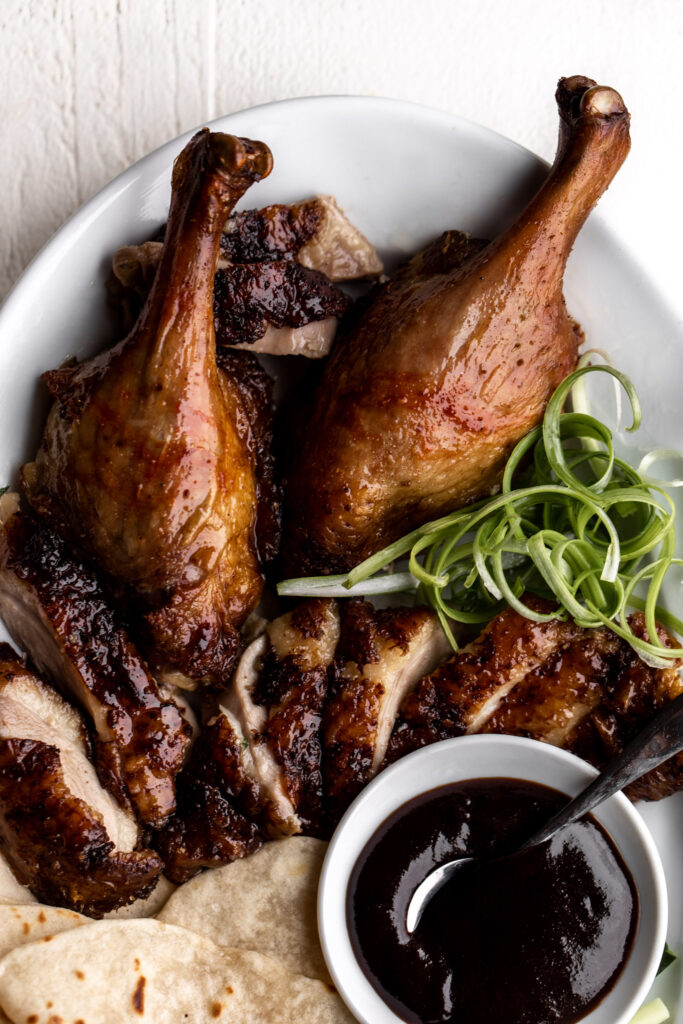
Carve the duck and serve with the pancakes, hoisin, cucumber and green onions.
Storing and Reheating Leftover Duck
Store leftover duck in an airtight container in the refrigerator for up to 3 days. I recommend chopping and reheating the meat in the microwave. Reheat the duck skin in the oven under the broiler to help re-crisp the skin.
FAQ – Frequently Asked Questions
No, this is a faux version inspired by traditional Peking duck. The technique is simplified and non-traditional with the goal of recreating the delicious crispy flavorful skin and classic flavor experience at home.
The boiling water causes the skin to shrink and tighten instantly, which helps separate it from the meat and jump-starts the drying process needed for crispy skin.
Baking soda is added to the marinade for the duck because it raises the skin’s pH, which helps it brown faster and crisp up while it roasts in the oven.
No special tools are required. A roasting rack and a pan are helpful, but this recipe is designed to be made with standard kitchen equipment.
Yes. You can prepare and dry the duck in the refrigerator up to 24 hours in advance, which can actually help the skin crisp even more when roasted.
Traditional accompaniments like Mandarin pancakes or steamed buns, hoisin sauce, sliced scallions, and julienned cucumbers pair beautifully and help recreate the classic experience.
This method works best with a whole duck since the skin separation and fat rendering are key to the final result. Duck breasts won’t yield the same effect.
Store leftover duck in an airtight container in the refrigerator for up to 3 days. I recommend chopping and reheating the meat in the microwave. Reheat the duck skin in the oven under the broiler to help re-crisp the skin.
Other Recipes to Try
If you enjoy this crispy peking duck recipe, I recommend checking out some of these:
Thanks for cooking with me! If you made this faux homemade peking duck recipe, leave a 🌟 rating and share your thoughts or tips below. I’d love to hear from you!
Homemade Peking Duck (Easy Faux Version)
Rate this Recipe
Ingredients:
- 1 (5-6 pound) whole duck, preferably Long Island Pekin
- 2 teaspoons baking soda
- 2 teaspoons kosher salt
- ½ teaspoon ground white pepper
- 2 teaspoons Chinese 5-spice powder
- 3 tablespoons soy sauce
- 2 tablespoons dark brown sugar
- Mandarin-style pancakes
- ½ cup hoisin sauce
- 1 bunch green onions, julienned
- 1 large English cucumber, peeled and julienned
Instructions:
- Rinse the duck and pat it completely dry. Remove the neck and giblets and discard. Remove excess fat and discard. Prick the skin of the duck all over with a fork, particularly around the breast.
- In a small bowl whisk together the baking soda, salt, pepper, 5-spice powder, soy sauce and brown sugar. The mixture will fizz. Rub the mixture all over the duck then place on a plate and refrigerate, uncovered, and let dry overnight.
- The next day, use your fingers to gently separate the skin of the duck from the meat. Pat the duck completely dry with paper towels inside and out.
- Bring a quart of water to a boil. Place a duck on a roasting rack over the sink. Blanch the duck with the boiling water by pouring it over it. The skin will tighten and dry out more. Dry throughly with paper towels.
- Preheat the oven to 425ºF (220ºC). Place the duck on a rack in a shallow roasting pan and cover with aluminum foil. Roast for 30 minutes. Remove the foil and prick the duck again.
- Continue roasting, uncovered, until the juices run slightly pink when pricked in the thickest part of the thigh (the internal temperature should read 135ºF/ 57ºC), about 40 to 45 minutes longer. Remove from the oven and let stand for 10 minutes.
- Carve the duck and serve with the pancakes, hoisin, cucumber and green onions.
Notes:
Nutrition:
TAG ME ON INSTAGRAM TO BE FEATURED ON MY STORIES! @cookingwithcocktailrings
This was INCREDIBLE. Peking duck at home
I am a big fan of Peking Duck and have had it in many restaurants. This “home version” equaled that of the restaurants in taste and quality – it was delicious!
Peking Duck at home – excellent recipe!